Could a prehistoric goat be the only known cold-blooded mammal? Thousands of years ago, a small goat found itself trapped on a resource-limited Mediterranean island, leading to this extraordinary evolutionary twist.
Myotragus balearicus
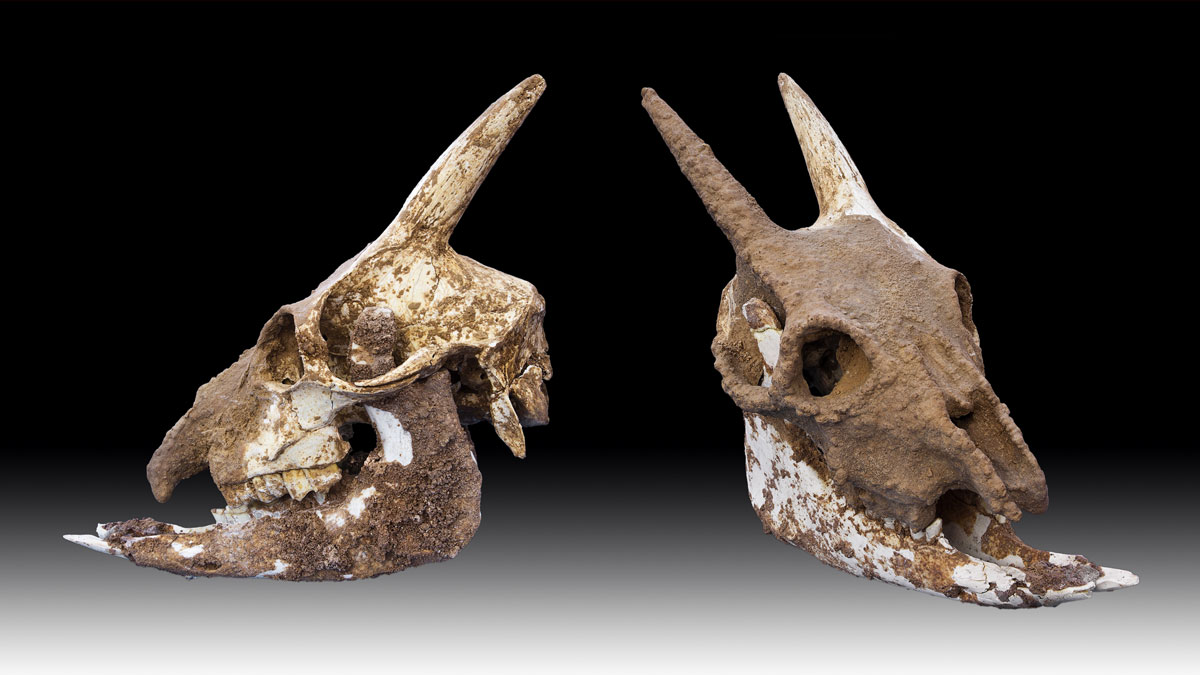
This peculiar species, known as Myotragus balearicus, originally roamed the land that connected what are now the Balearic Islands to mainland Europe. However, it became isolated on the island of Mallorca when rising sea levels cut it off. This limited habitat resulted in significant morphological adaptations, including shorter limbs and smaller brain and sensory organs.
This prehistoric mammal, reaching heights of only about 45 centimeters, also exhibited bone characteristics typically associated with reptiles. Researchers studying the fossils discovered lamellar tissues similar to those found in crocodiles, indicating the ability to control or even halt growth depending on available resources.
Further analyses revealed that M. balearicus reached sexual maturity at around 12 years of age, in stark contrast to modern goats that mature in under a year. This suggests that the species led a much slower and less acrobatic lifestyle compared to its contemporary relatives.
As summarized by researchers Meike Köhler and Salvador Moyà-Solà in a study published in PNAS in 2009, “Myotragus not only reduced its aerobic capacity and behavioral traits but also flexibly adapted its growth rates and metabolic needs.”
An excellent model of study
Typically, ectothermic species have slow-growing lamellar bone structures. However, fast-growing fibrolamellar bones, often found in warm-blooded creatures, have also been discovered in certain dinosaurs and birds, indicating a possible intermediate state.
M. balearicus serves as an exceptional study model since it had no natural predators on Mallorca. This unique circumstance led to the development of reptilian characteristics to cope with resource scarcity, allowing it to thrive for approximately 5.2 million years -significantly longer than many continental species.
Despite these remarkable adaptations, the arrival of humans on the island precipitated a decline in the plants consumed by these tiny prehistoric herbivores, leading to their extinction around a thousand years later.