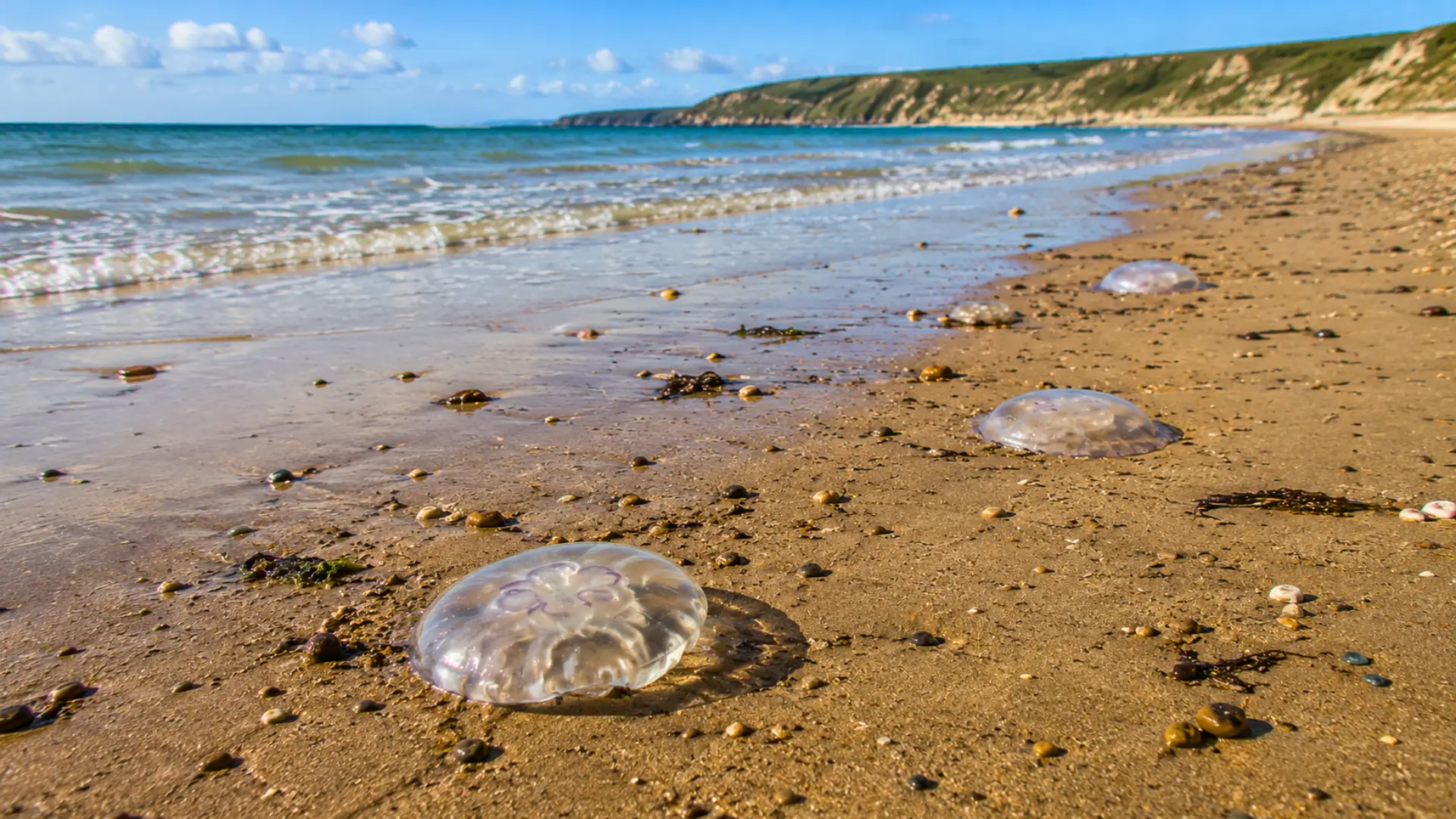
In recent days, the beaches of Calvados have been overrun by jellyfish, discouraging swimming. Is this a direct effect of the heatwave, a sign of climate change, or simply a familiar marine pattern reemerging each summer?
When Calvados beaches are covered in jellyfish during the summer season
On some beaches in Calvados, the sight can be quite perplexing. Instead of the warm sand, towels, and laughter expected, thousands of gelatinous shapes litter the shore, left behind by the tide. In just a few hours, the scene transforms, and swimming loses its usual summer appeal.
This striking phenomenon does have its origins. Experts, like Matthieu Boizumault, an aquarist technician at the Cité de la Mer in Cherbourg, explain that jellyfish presence along this coastline from June to September is quite typical. What stands out this year is their visible abundance.
Carried by currents, jellyfish drift ashore uncontrollably
A common misconception is to picture jellyfish as vigorous swimmers. In reality, they do not swim much on their own but are mostly at the mercy of ocean currents. When a water mass pushes them toward the beach, their course can change abruptly.
The process of stranding is somewhat disarming. A wave, a swirl, a few trapped bubbles under their bell, and the jellyfish can no longer descend correctly. From that moment, the sea takes over. This tiny detail can sometimes explain sudden accumulations, creating an illusion of an organized invasion.
Moreover, pleasant weather may indirectly influence their appearance. When light and warmth cause plankton to rise to the surface, jellyfish tend to follow this floating feast, making them more visible near swimmers. However, this does not necessarily mean a substantial increase in their population.
Heat, plankton, and warmer water: conditions that encourage their surface presence
It’s tempting to immediately associate this stranding with the heatwave. Yet, the direct connection is more nuanced. The heat episode might shift surface balances. Alone, it does not tell the whole story. Various phenomena at sea interact before producing such a massive display.
One intriguing factor for specialists is that warmer seas at the end of winter could promote the reproduction of certain jellyfish species. While there is no definitive evidence for this specifically in Calvados, it raises broader concerns about coastal ecosystem changes.
Underlying these translucent creatures is a pressing question. If winter conditions change, if plankton cycles shift, if coastal waters consistently warm by even a fraction of a degree, jellyfish appearances could become more pronounced. They might seem more frequent, or simply linger longer in human perception.
Even stranded, some jellyfish remain stinging and require caution
The most misleading aspect of these stranded creatures is their appearance. A stationary jellyfish looks inert, almost delicate, perhaps even dead. Yet, some species retain their stinging ability long after washing ashore. The danger does not disappear with low tide, and curiosity can come at a cost.
If contact occurs, the useful reflex is not intuitive. Rinse with seawater, not freshwater. Then, gently remove any remaining stingers from the skin. Sand can assist in dislodging the stinging cells. A healthcare professional must be consulted if pain persists or intensifies.
This recurring scene on Normandy’s beaches tells a story larger than a mere summer inconvenience. Jellyfish remind us that the shore is never a static environment. Beneath its apparent tranquility lies a dynamic world, sensitive to weather patterns, seasons, and possibly already influenced by significant climate upheavals.