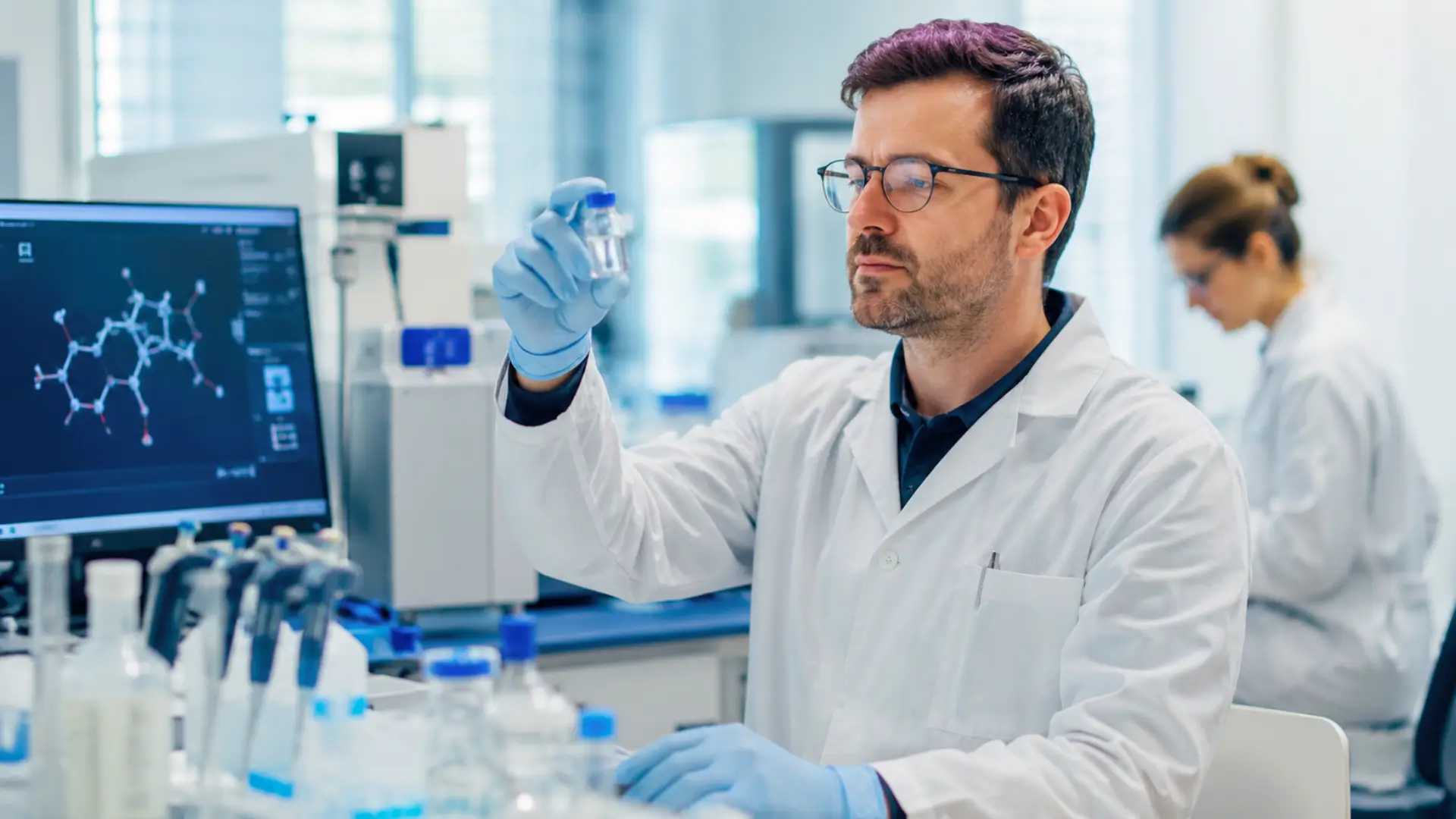
What if the next breakthrough against certain cancers didn’t look like a laboratory robot or a futuristic machine, but rather like a tiny, autonomous molecule? In Poitiers, a fascinating lead is already drawing attention far beyond academia.
Innovative approach to cancer treatment in Poitiers
At first glance, the story may seem surprising. Professor Sébastien Papot, who hails from the realm of organic chemistry rather than surgery or clinical oncology, is leading an intriguing project in Poitiers. His team has envisioned a remarkable concept: designing programmed molecules that can operate autonomously within the body, resembling invisible robots.
This ambition stems from a long-standing medical dilemma. Traditional chemotherapy is known for its aggressive approach but often harms healthy cells as well. For nearly two decades, the IC2MP team, associated with CNRS and the University of Poitiers, has been exploring a different strategy: recognizing tumors before delivering the anticancer agent.
Targeting the tumor microenvironment transforms treatment strategies
For years, various targeted treatments have aimed to identify specific markers on cancer cells. However, solid tumors are notoriously heterogeneous. Within the same mass, some cells present the target while others do not. Consequently, some cancer cells can evade treatment, ultimately leading to resistance.
The innovative approach developed in Poitiers shifts the focus entirely. Rather than targeting the cancer cell directly, it aims at the tumor microenvironment, a unique area surrounding the tumor. Certain enzymes, such as glucuronidases, are present in higher concentrations there. This is the specific chemical signal that the programmed molecule is designed to detect.
This strategy offers significant advantages. It could bypass the internal diversity of tumors and potentially target notoriously challenging cancers, such as those affecting the pancreas, lungs, colon, or triple-negative breast cancer. Most importantly, it may reduce collateral damage. While the conceptual shift seems subtle, it may lie at the heart of this innovation.
Molecules remain inactive until specific tumor signals are detected
The molecule crafted by the team is an intricate composition. At its core is a powerful anticancer agent, MMAE (monomethyl auristatin E), which is seldom used alone due to its toxicity. Additionally, it includes an enzymatic trigger, a component that binds to blood albumin, and a self-immolative linker designed to trigger the release of the payload.
Once injected, it binds to albumin and circulates throughout the body. In tumor tissues, its concentration increases, remaining dormant until the appropriate signal is detected. Upon contact with the enzymes present in the microenvironment, a cascade effect is initiated. The logic is straightforward yet profoundly sophisticated: wait for the right environment and then release the therapeutic agent as close to the target as possible.
Promising preclinical results before the critical human trials
Initial academic publications have already reported compelling results in mouse models, showcasing significant reductions in breast and pancreatic tumors, with some achieving complete remissions. More recently, further research has validated this approach with prodrugs linked to albumin that are activated in the tumor microenvironment.
In the meantime, Seekyo, a startup co-founded in 2018 to advance this technology into clinical applications, has structured a program named SKY01. This company emphasizes high plasma stability, improved pharmacokinetics, and potential applicability to several difficult-to-treat solid tumors. The narrative is now moving beyond the confines of laboratory research.
However, the next phase is undoubtedly the most challenging. In oncology, many preclinical promises fail when confronted with human realities. When a French technology offers a more precise treatment that could be less toxic and beneficial for various solid tumors, it naturally garners attention far beyond the laboratory.