
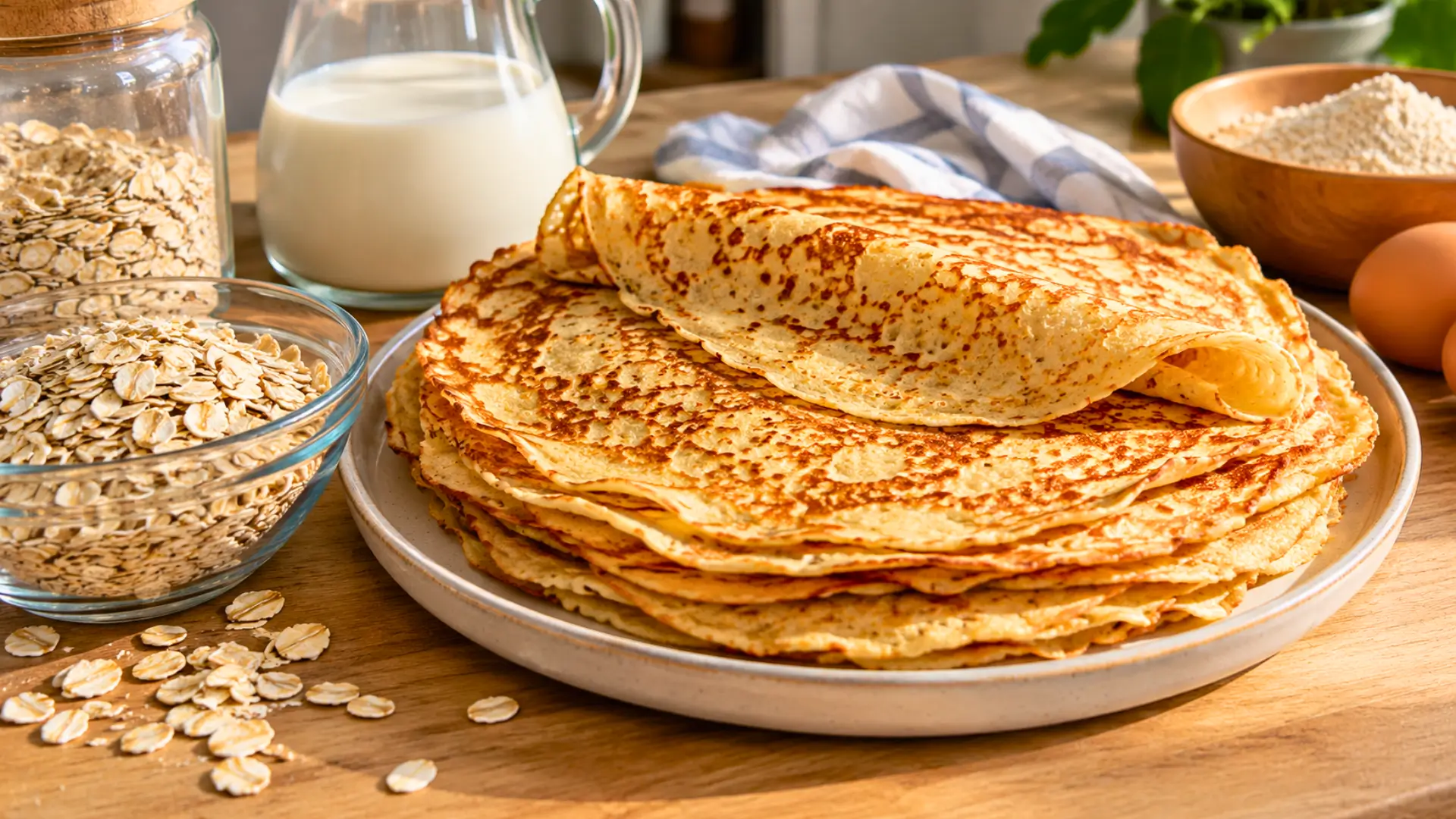
What if the secret to fiber-rich pancakes lies in a simple box of oats? By substituting flour with rolled oats, this surprisingly easy recipe transforms a classic dish. Its true benefits, however, reach far beyond just flavor.
Transforming pancake batter with a simple box of oats
Imagine suddenly craving pancakes, only to find your pantry devoid of flour. It seems like a culinary setback, but fear not -an ingredient typically reserved for breakfast can come to your rescue: rolled oats. Ground into a fine powder, they can completely replace wheat flour with no complicated preparation needed.
This clever alternative, popularized by nutritionist Nathalie Majcher, takes advantage of a little-known fact about oats: they can be transformed into homemade flour using just a blender. Their natural fiber content adds a nutritious twist to the recipe while maintaining the indulgent charm that pancakes are known for.
Three ingredients, a few minutes in the blender, and a batter ready to hit the pan
The recipe is nearly culinary magic. To whip up six to eight pancakes, you’ll need 150 grams of rolled oats, three eggs, and 380 milliliters of milk or a plant-based milk like almond, soy, or oat. There’s no added sugar required, though customization can be done afterward.
Simply blend all the ingredients for one to two minutes, aiming for a perfectly smooth batter that flows easily onto a lightly greased hot pan. Unlike some traditional recipes, there’s no need to let the batter rest. Cook the pancakes in the usual manner, flipping them gently when the first side starts to brown.
A little surprise awaits distracted cooks, however. Oats gradually absorb liquid, causing the batter to thicken if it sits too long. A few spoonfuls of milk can restore the desired consistency. The resulting pancakes tend to be slightly thicker, with a rustic texture and a subtle grainy flavor that pairs well with both sweet and savory toppings.
Nutritional advantages beyond simple substitution
The differences extend beyond texture. Rolled oats offer significantly more dietary fiber compared to the standard white flour typically used. They contain beta-glucans, soluble fibers studied for their positive effects on digestion and cholesterol levels. According to the Harvard T.H. Chan School of Public Health, oats are a valuable addition to a balanced diet.
These fibers have a fascinating property: when mixed with water, they form a gel-like substance that can slow digestion, promoting a longer-lasting feeling of fullness. However, it’s important to keep in mind that while oats provide additional nutritional benefits, they are not lower in calories than white flour, and the overall effects depend on the complete recipe.
Healthier pancakes, but one detail not to overlook
Oats also present another advantage: they allow for greater variety in the grains consumed daily. Their proteins, fiber, and micronutrients enhance the nutritional profile of the pancakes. However, to label these as miraculous health snacks might be an exaggeration. The amount of toppings, the type of fat used, and portion sizes still play a critical role in meal balance.
People with celiac disease should exercise caution. Although oats naturally lack gluten, they can become cross-contaminated during processing. The Celiac Disease Foundation advises choosing oats that are specifically labeled gluten-free and consulting a healthcare provider before including them in your diet.
Some individuals with this condition may also react to avenin, a protein unique to oats. This highlights the fact that even simple dietary substitutions may not be suitable for everyone. For the majority, this recipe offers a delectable opportunity to rethink classic recipes and explore the possibilities right in your pantry.