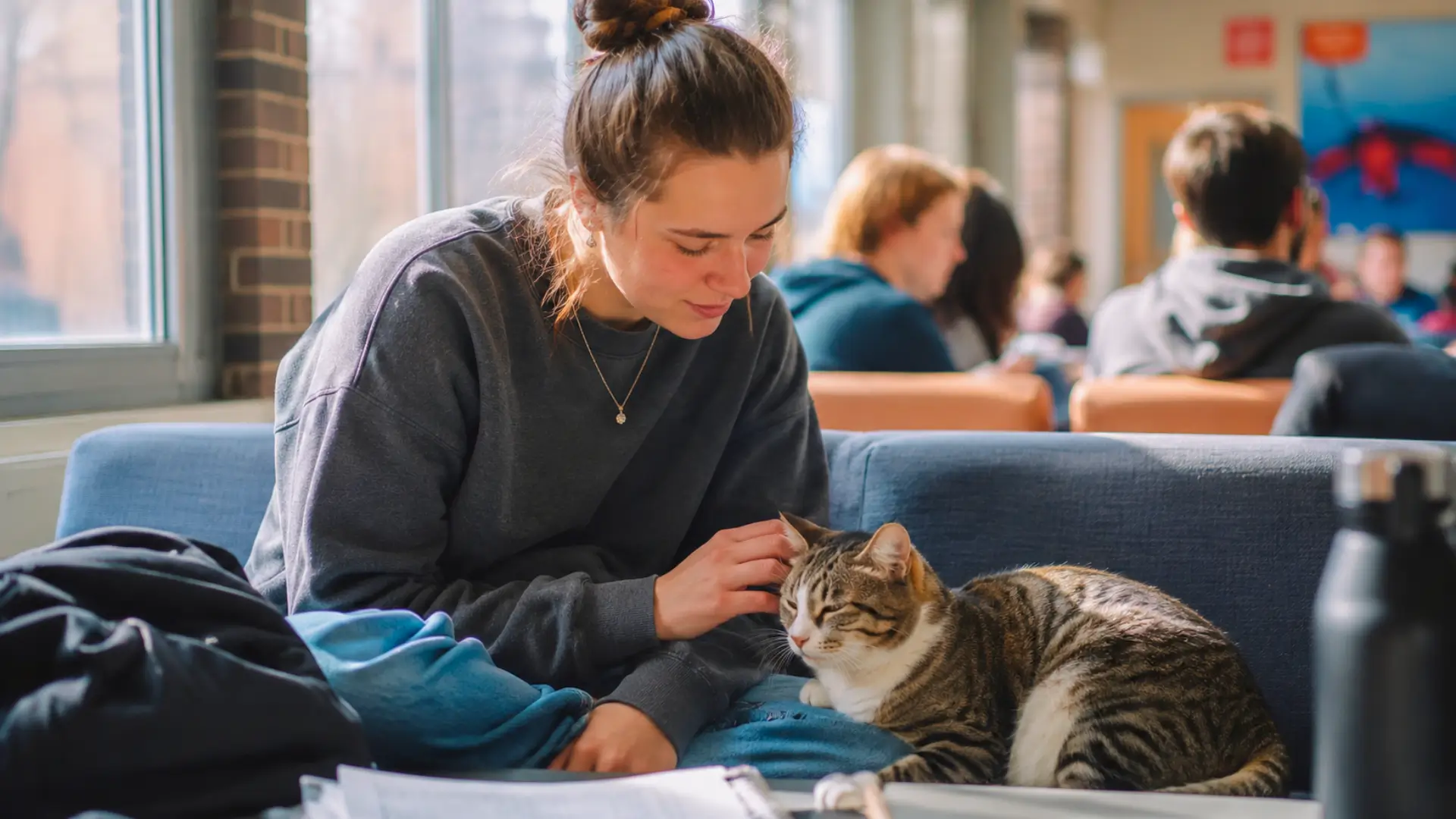
Why do some people instinctively seek out a cat when feeling stressed? A large-scale university study reveals that a specific emotional trait predicts this attraction. Surprisingly, these sensitive profiles may find the most meaningful comfort in the presence of felines.
Dogs dominate university stress-relief programs
At universities, stress-relief sessions featuring animals often present a cheerful parade of Labradors. Cats, however, tend to be noticeably absent. A study involving over 1,400 participants, including students and staff from more than twenty institutions, sought to explore the interest in feline visits.
Published in the journal Anthrozoös, the study highlighted a surprising trend. Over 85 percent of animal-assisted programs on campuses focused solely on dogs. Researchers Patricia Pendry and Joni Delanoeije aimed to uncover who expressed a desire for cats and, more importantly, why.
High emotionality as a key factor in cat attraction
Findings reveal more than just opposing camps of dog lovers and cat enthusiasts. In fact, the interest in cats correlated strongly with high emotionality, a stable tendency to experience emotions intensely.
Participants scoring high on emotionality were significantly more drawn to interactions with cats. Moreover, this connection persisted even after accounting for other factors, such as previous experience with cats, gender, and interest in dog programs.
However, it is important to exercise caution in drawing sweeping conclusions. Frequently petting a cat does not reliably define a person’s personality. Instead, the study primarily measures expressed preference, not psychological diagnosis. Nevertheless, it suggests that highly sensitive individuals recognize in cats a comforting presence that aligns with their emotional experiences.
Measurable stress relief after a few minutes of interaction
This attraction may be rooted in biological mechanisms. In another experiment conducted at Washington State University, students interacted with animals, and after just ten minutes, their salivary cortisol levels significantly decreased.
Additionally, repetitive petting and the warmth of a cat’s fur play crucial roles in this dynamic. Focusing on a calm animal helps divert the mind from anxious thoughts. Though the mechanisms are complex, the sound of purring isn’t a remedy, yet this sensory break can ease stress levels.
Contrary to some beliefs, cats are not inherently aloof. They offer a type of interaction that includes proximity and pauses. A cat might approach, accept some gentle strokes, and then retreat. For a sensitive person, this unobtrusive rhythm can be more soothing than a constant presence.
A calming relationship that could transform well-being approaches
Results were consistent among both students and employees, indicating that academic status was less significant than individual characteristics. However, allergies or fears regarding cats diminished interest without negating the link to emotionality.
These insights suggest a potential shift in well-being programs, which currently tend to prioritize dogs. Including a variety of animals could attract wider demographics. It’s essential, though, to select suitable cats and ensure the animals’ well-being.
So, what does this craving to pet a cat after a challenging day reveal? It may not uncover profound secrets about personality. Instead, it reflects an intuitive form of self-regulation. Ultimately, a calm cat, with its boundaries and serenity, can provide a valuable space for certain temperaments.