About a century and a half ago, the renowned British naturalist Charles Darwin proposed that some members of a group containing 450 plant species were carnivorous. Recent findings have confirmed this intriguing hypothesis.
A hypothesis dating back to the 19th century
To officially qualify as a carnivorous plant, a species must show adaptations for attracting, trapping, digesting its prey, and absorbing nutrients. Among the numerous studies examining these fascinating adaptations, the most notable has focused on the Venus flytrap (Dionaea muscipula).
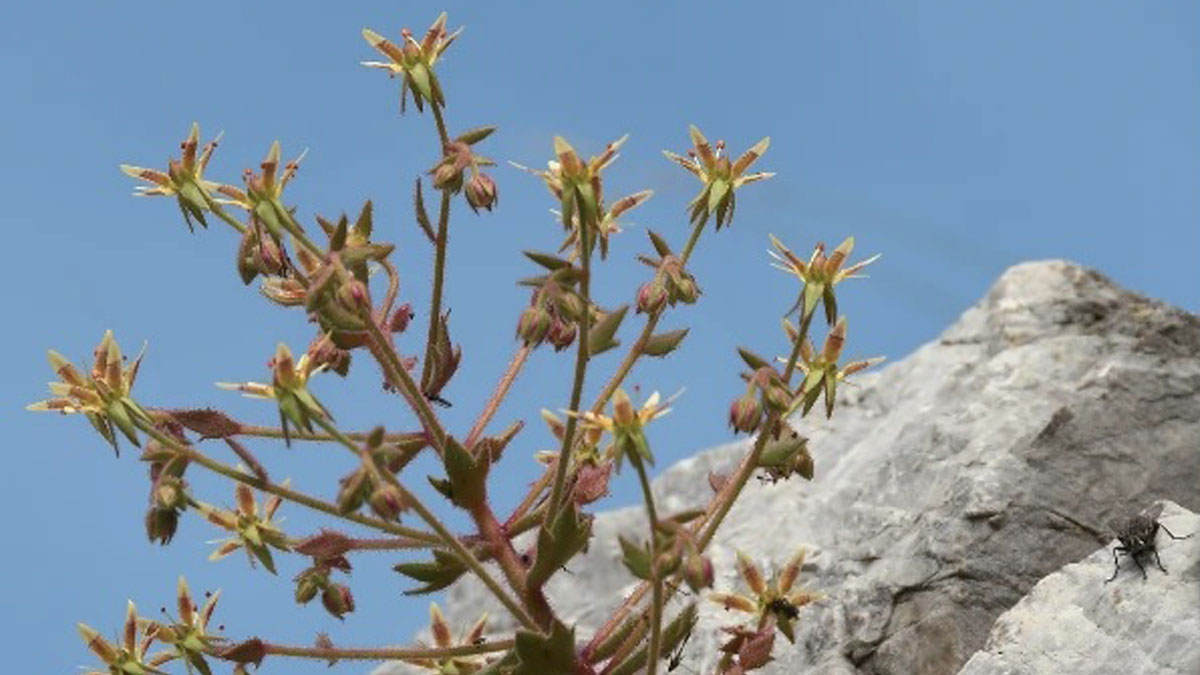
In 1875, sixteen years after detailing his theory of natural selection in The Origin of Species, Darwin expressed his fascination for two species within the genus Saxifraga. These plants, known for trapping insects, were found in Arctic and alpine regions of the Northern Hemisphere, as well as in the Andes mountains.
Although he was unable to prove this during his lifetime, Doug Soltis and his colleagues from the University of Florida have now provided proof. Their work, published in Nature Communications, specifically focused on a species known as Saxifraga candelabrum, which grows on the slopes of Mount Wufeng in the Yunnan province of China.
Demonstrating that Darwin was right once again is both a humbling lesson and an incredible source of satisfaction, exclaimed the researcher. I like to think he would have been thrilled by this discovery.
Solid proof of carnivory
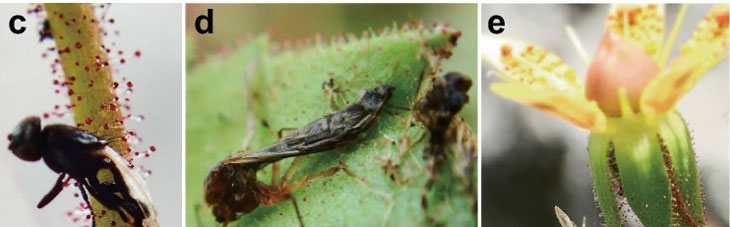
Over the past few decades, botanists had reported that the sticky filaments covering the leaves of S. candelabrum primarily captured small insects. Mature plants typically had more than 70 insects stuck to their surfaces, predominantly species of gnats, detailed co-author Hang Sun of the new study.
The team aimed to investigate whether the secretions produced by the plant’s ciliated structures contained digestive enzymes capable of breaking down prey, which they confirmed. They also utilized “isotopic tracers” to validate that the plant absorbed nutrients derived from the digestion of insects.
Genetic sequencing demonstrated that Saxifraga shared a genetic repertoire with Drosera spatulata and Roridula gorgonias, involving genes responsible for prey attraction, digestion, and nutrient assimilation. This genomic data confirms that S. candelabrum is a true carnivorous plant, concluded Sun.
Previously, researchers had shown that a small African plant typically relying on a vegetarian diet could shift to a carnivorous one.