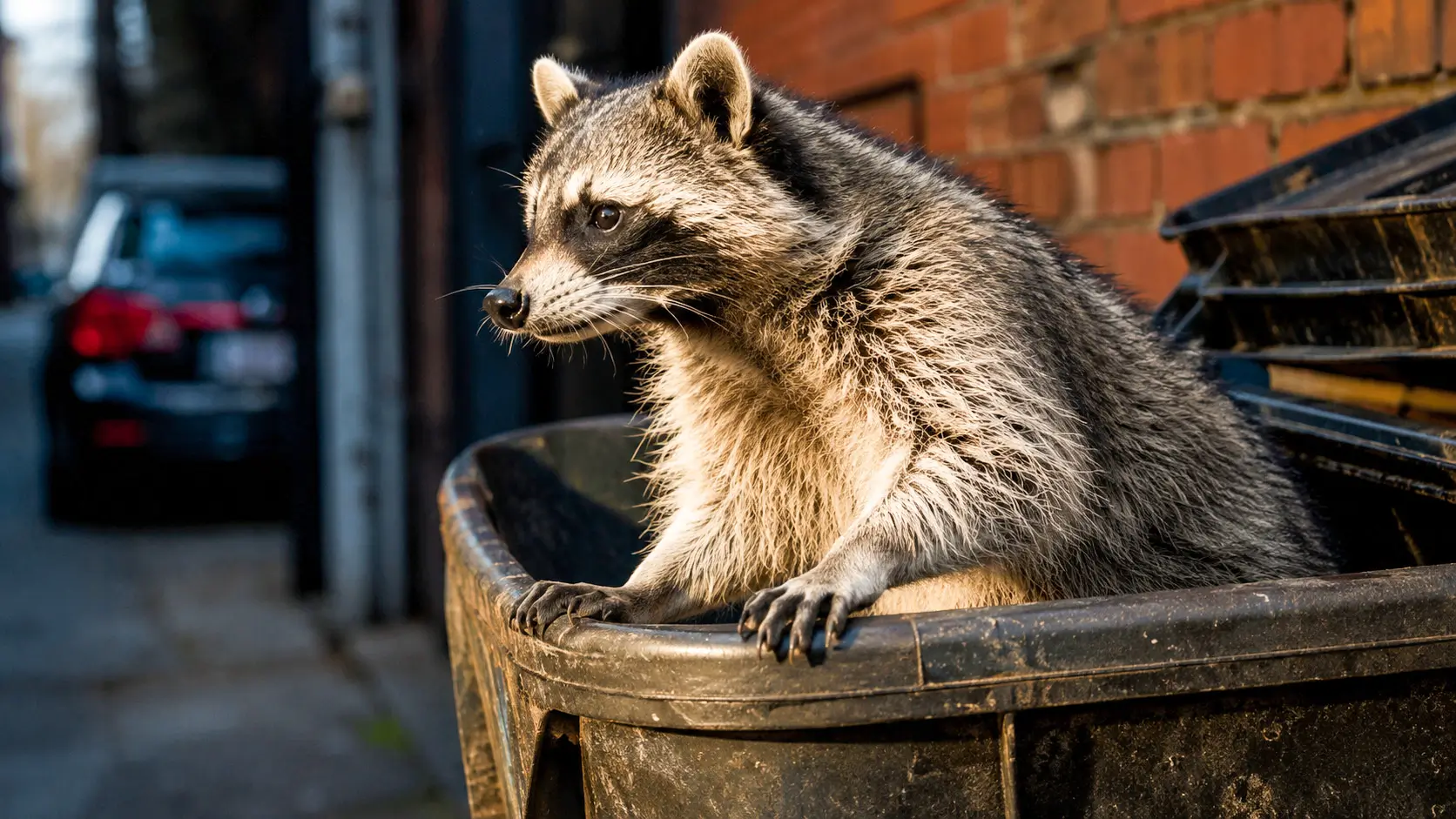
Raccoons in cities show striking evolutionary changes shaped by urban environments, with notable alterations in their snouts that hint at a fascinating, silent adaptation process.
A 3.56% shorter snout: insights from 20,000 raccoon photos
The statistic is striking: urban raccoons have snouts that are 3.56% shorter than their rural counterparts. While this difference may seem trivial, it has piqued the interest of biologists as it aligns with a well-documented pattern found in domesticated species.
This research was conducted by a team at the University of Arkansas, Little Rock, led by biologist Raffaela Lesch. Their study, published in October 2025, utilized an extensive database of raccoon photographs compiled by citizen scientists on the platform iNaturalist.
Sixteen undergraduate and graduate students scrutinized between 1,000 and 1,200 images each, collectively analyzing nearly 20,000 photographs of raccoons across the contiguous United States.
A known biological mechanism: the subtle role of neural crest cells
This phenomenon is described within the framework of domestication syndrome, a collection of traits frequently observed in species under human influence, such as shorter snouts, floppy ears, and reduced pigmentation. Charles Darwin highlighted this pattern over 200 years ago, when contrasting domestic dogs and cats with their wild relatives.
The most robust explanation points to the neural crest, a group of cells that migrate early in embryonic development to shape cartilage and pigmentation. Certain mutations can slow their proliferation, resulting in a shorter snout and reduced fear of humans, both consequences of the same mutation.
The garbage bin sorts them: natural selection without training or human intent
In urban settings, there is no deliberate selection of which raccoons reproduce. Instead, the trash bins do the sorting. More daring individuals, who are less aggressive towards humans, have easier access to food waste. This advantage allows them to survive longer, reproduce more, and pass along these traits to their offspring.
The urban environment alters the rules significantly. Large predators are nearly absent, and food sources are abundant and easily accessible. Consequently, this unique ecological pressure promotes the gentler raccoons generation after generation, all without any training, cages, or intentional human intervention.
Unlike dogs that evolved from wolves through selective breeding, no one is actively choosing or training these raccoons for their docility. Journalist Pasquale Nardone reported that urban raccoons may have snouts that are about 4% shorter than those of their rural relatives.
Methodological biases and future steps: caution is warranted
Some researchers have raised concerns about potential biases in the analysis. iNaturalist users typically photograph animals that are more visible, especially those near homes or parking lots, which may inflate the urban sample. Additionally, some discrepancies in snout length could be influenced by climate variations rather than human proximity alone.
Raffaela Lesch’s team plans to use 3D scanning techniques on raccoon skulls. Their goal is to correlate these findings with genetic and hormonal markers. They will also examine opossums and armadillos to determine whether similar trends occur among other urban dwellers in American cities.