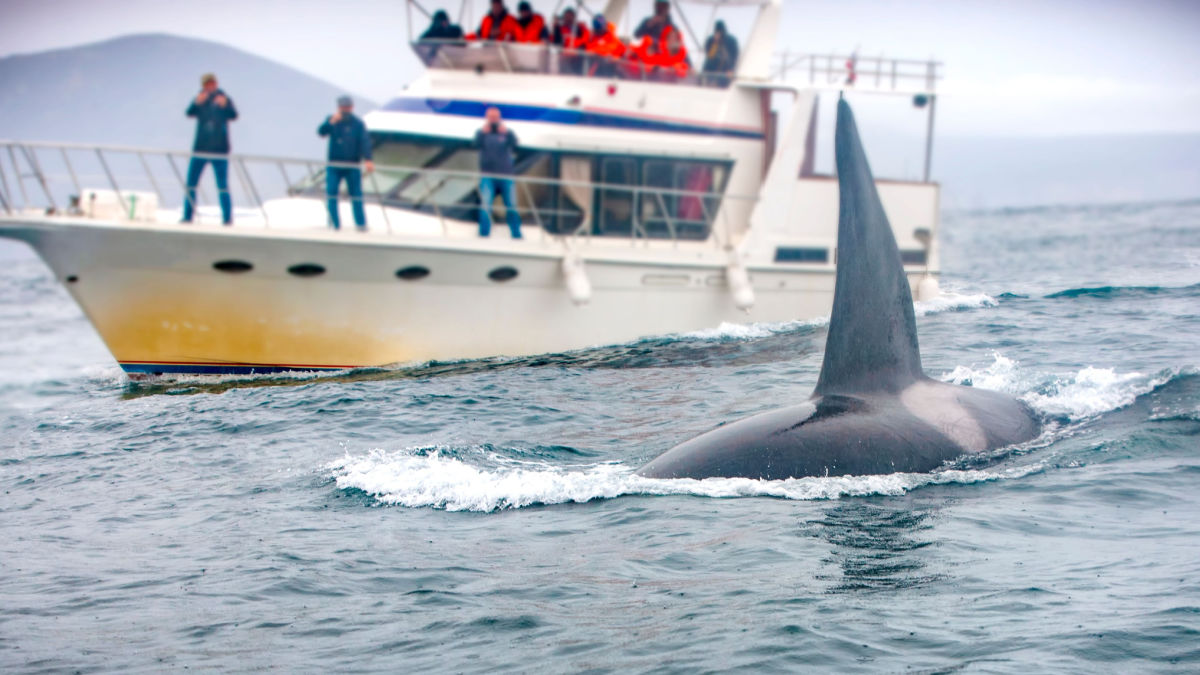
The saga continues. Almost a year after the last reported incident, orcas have resumed targeting boats off the Iberian coasts, prompting rescues of affected individuals.
The return of gladis the white
On July 24, Spanish coast guards received a distress call from a Swedish yacht in Galician waters in northwest Spain. While the vessel was successfully towed to the nearest port, another boat, the Idem, sank days earlier after its rudder was destroyed by a group of Orcinus orca.
Since these incidents began in 2020, there have been nearly 700 recorded interactions between orcas and ships. These engagements, which can last for hours, have resulted in the sinking of eight boats, including the Idem.
According to the Orca Working Group, which closely examines this phenomenon, the attacks involve about fifteen members of a subgroup that is part of a larger population of around fifty. This particular subgroup relies heavily on the Atlantic bluefin tuna, a species classified as critically endangered by the International Union for Conservation of Nature (IUCN).
A small, endangered pod of orcas off Spain and Portugal has sunk at least eight boats since 2020, and despite speculation, the real explanation might have nothing to do with revenge. https://t.co/PGvilh1KBG
– Live Science (@LiveScience) July 28, 2026
These incidents have been associated with “Gladis the white,” a dominant female believed to have developed post-traumatic stress after being struck by a boat. As the first identified member of the group to target rudders, she likely inspired her fellow orcas. Given the species’ highly social nature, scientists suspect that younger members of the group may have adopted this behavior as a form of play, leading to its spread.
Cetaceans primarily targeting sailboats
A 2022 study published in the journal Marine Mammal Science found that these cetaceans are more likely to target sailboats and tend to lose interest when they are at rest.
When such interactions occur, maritime authorities recommend shutting off engines and, if possible, lowering sails and releasing the wheel to minimize damage to the rudder.
While the true causes of this behavior remain a topic of debate, researchers emphasize that each observation provides new data to piece together this complex puzzle.
Previously, scientists had detailed the formidable tactics used by orcas to hunt great white sharks.