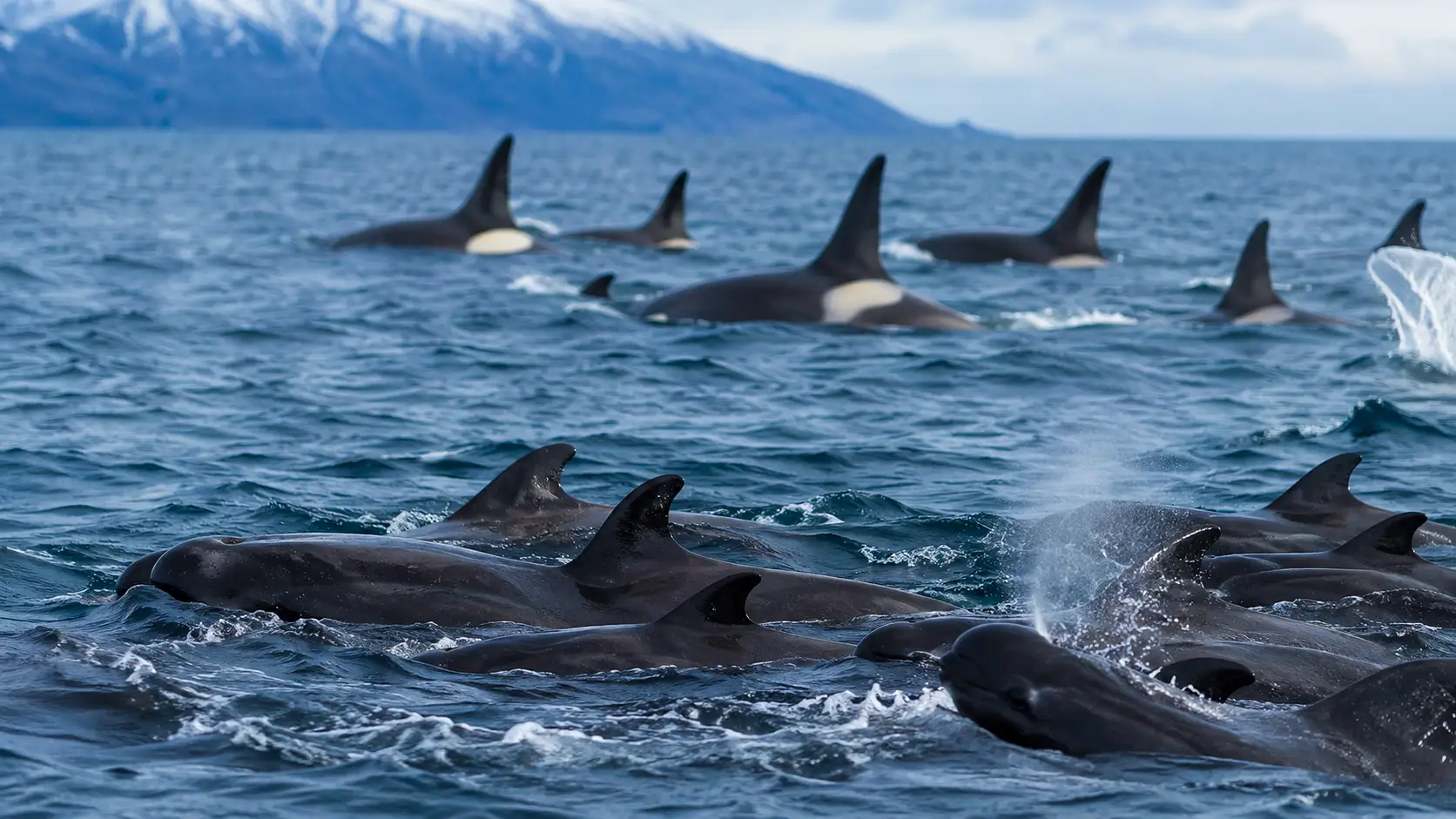
In the vast and often perilous oceanic world, the orca reigns as a top predator. However, recent research reveals that these formidable creatures often retreat when confronted with a smaller relative, the short-finned pilot whale. A mere sound signal from this smaller cetacean can trigger a swift exit from the orca.
Marine biologists observe repeated retreats of orcas in front of smaller cetaceans
While orcas are typically associated with strength and dominance in the ocean, real-world observations tell a different story. When faced with the short-finned pilot whale, these apex predators frequently opt to retreat instead of confront their smaller counterparts.
This pattern was first documented in the early 2000s, when researchers led by Renaud de Stephanis began noting a consistent behavior in the Strait of Gibraltar. Each time pilot whales appeared, orca groups responded by leaving the area.
Further insights emerged in 2012 from marine biologist Charlotte Curé. Her research showed that when pilot whales detect orca calls, they move towards the sound. This active pursuit elicits an immediate evasion response from the larger species.
Data collected in Iceland confirms the orca’s retreat during encounters at sea
A comprehensive study published in 2022 added weight to these findings, drawing from data collected between 2007 and 2020. Analyzing 24 interactions across six coastal areas of Iceland, researchers discovered that orcas retreated before any direct encounters in 68 percent of cases.
In 28 percent of instances, both species engaged in intense chases, with speeds reaching 13.5 knots, about 25 kilometers per hour. Orcas maintained a safe distance instead of risking close confrontation.
Simple vocalizations trigger panic in the super predator
To further investigate these behaviors, Anna Selbmann and her team conducted a direct experimental approach. In Iceland, scientists at the Sudurnes Science and Learning Center played recordings of pilot whale vocalizations to orcas equipped with tracking tags.
The response was immediate; the orcas clustered together, modified their own vocalizations, turned sharply, and accelerated. These findings were published in Scientific Reports in January 2026.
The study’s authors suggest that orcas interpret these acoustic signals as a direct threat. Despite their position as top predators, they associate the sounds made by pilot whales with potential danger, prompting an instant defensive retreat.
Scientific hypotheses attempt to explain this behavior of collective harassment
Many specialists propose the concept of mobbing as a possible explanation for this behavior. This tactic involves group formation to challenge and harass a dominant predator until it leaves the area. The social cohesion of pilot whales thus enhances their ability to act as formidable opponents.
Other theories suggest that competition for food or the protection of young whales might also play a role. To date, there have been no recorded physical attacks between the two species. Yet, the mere sound of a pilot whale can compel the orca to retreat in a preventative manner.