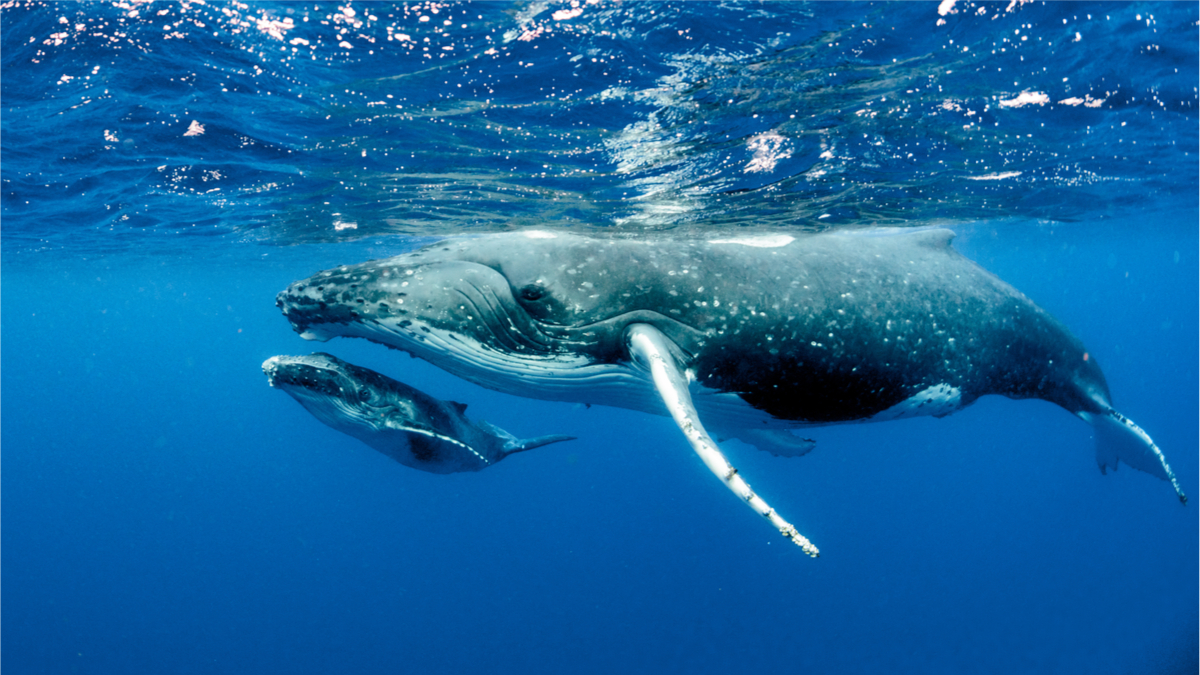
Every year, thousands of humpback whales embark on a journey from their Antarctic feeding grounds to warmer waters off the coast of Australia, where they mate and give birth. Recently, a drone pilot captured a remarkable moment: the birth of one of these majestic cetaceans.
A key moment
On July 28, 2026, while observing a pod of Megaptera novaeangliae off the eastern coastline of Australia, pilot Alexander Forrest noticed something unusual with one of the females.
“A few moments after she resurfaced, a veil of blood appeared, and I felt relief seeing a newborn calf emerge for its first breath instead of a predator,” said the Australian filmmaker and photographer. “For a few seconds, she remained motionless while the calf floated. Then she instinctively dove back down to retrieve it.”
Forrest was soon joined by two drone operators from the Australian Whale Rescue and Research Organisation (ORRCA), who continued to film the group for several hours. The footage captured not only the initial maternal care and the calf’s first dives but also interactions with other cetaceans that came to witness the birth.
Described as the first drone footage of a humpback whale’s birth, this material provides an extraordinary glimpse into one of the most critical moments in a humpback’s life. “To date, only three humpback births have been documented,” noted Annie Post from ORRCA. “The scientific value of this footage is invaluable as it will deepen our understanding of these fascinating creatures.”
Previous whale birth observations
Earlier this year, the birth of a sperm whale was filmed off the coast of Dominica in the Eastern Caribbean. This event was only the second ever documented by scientists and showcased an unexpected degree of support from both the mother and the group towards the newborn, alongside noticeable changes in vocalization.
Additionally, prior footage of an orca birth in the wild off Norway revealed how the pod formed a protective circle around the mother and calf, exhibiting cooperative behavior in this critical moment.