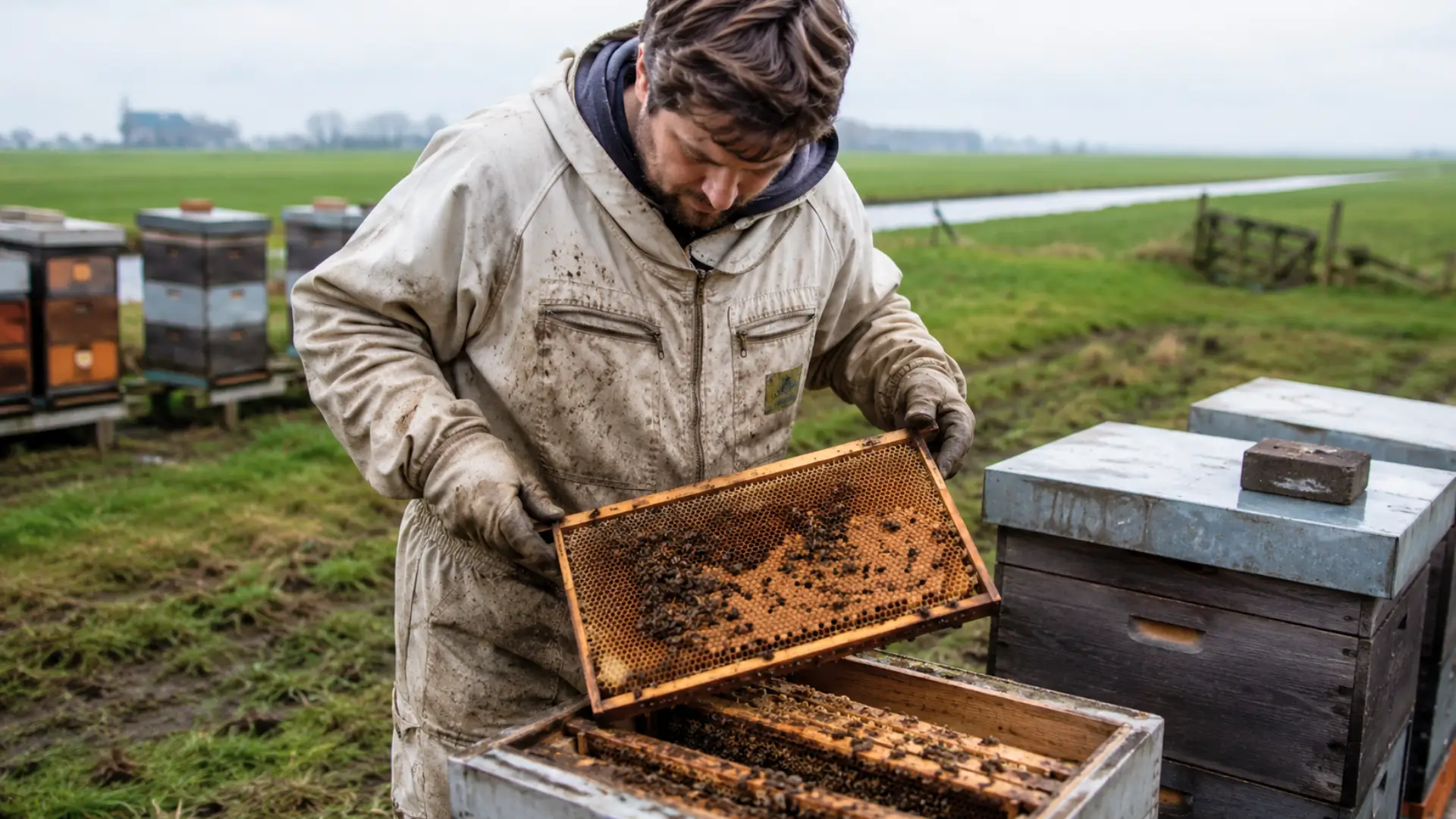
What happened to the beehives in northern Netherlands? After the winter of 2025-2026, 41.5% of bee colonies vanished in Groningen province. This striking figure not only highlights a persistent crisis but also presents a mystery that researchers have yet to unravel.
Consistently high winter mortality in Dutch beehives
As warm spring days unfold, beekeepers open their hives with trepidation. Yet again, many have encountered an abnormal silence. In the Netherlands, 24% of domestic bee colonies did not survive the winter of 2025-2026, according to Wageningen University & Research.
This alarming figure, however, is not just an isolated incident. It marks the fourth consecutive winter where national mortality rates have exceeded 20%. In the winter of 2024-2025, this figure was already at 22%. The repeated occurrence of high mortality rates signals a persistent trend that is much more complex to explain than simply unfavorable weather conditions.
Significant regional disparities with extreme losses in the north
The national average conceals dramatic differences. In Groningen province, 41.5% of colonies have vanished. In stark contrast, Overijssel reports only 16.9% losses. Merely a few kilometers can separate two radically different apicultural realities.
What accounts for the severe impact in the north? Researchers remain cautious. Factors such as beekeeper practices, floral resources, humidity, local temperatures, and initial colony conditions may all play a role. However, there is no single factor that can clearly explain why one hive survives while another collapses nearby.
A colony approaches winter like a small town cut off from the outside world. It must retain warmth, manage food supplies, and protect its queen until flowers bloom again. A lost queen, inadequate nutrition, or pre-existing disease before the cold settles in can quickly disrupt this balance, leading to the collapse of the entire community.
Varroa remains a major threat despite widespread control efforts
Among the potential culprits, Varroa destructor stands out with its ominous reputation. This mite parasitizes adult bees and their larvae, while also introducing viruses that can devastate colonies. The scientific network COLOSS identifies it as one of the predominant threats to global beekeeping today.
Yet Dutch beekeepers are well aware of this enemy. Last winter, 86.9% applied some form of treatment or control measure against Varroa. This high percentage indicates a strong commitment to combating the threat, but it does not guarantee hive survival. The timing of treatment and its effectiveness can dramatically alter the outcome.
Asian hornets advancing quickly could exacerbate pressure on colonies
Adding to this well-known threat is the Asian hornet. Positioned near hives, it preys on foraging bees returning laden with pollen. Its spread has been rapid, with 24.7% of beekeepers reporting sightings in 2024, increasing to 56.4% by 2025.
However, its precise role in winter mortality remains uncertain. The predator may inhibit foraging activity, stress the colony, and limit food reserves accumulated before winter. Rather than directly causing collapse, it could act as a prolonged siege. Nevertheless, scientists anticipate its influence will grow in the coming years.
The survey is based on responses from 840 beekeepers, representing nearly 8% of the roughly 11,000 active beekeepers in the Netherlands. Integrated into the international COLOSS program, it helps compare losses and their risk factors. A crucial question remains: what insights do researchers still need to comprehend the devastation in Groningen?