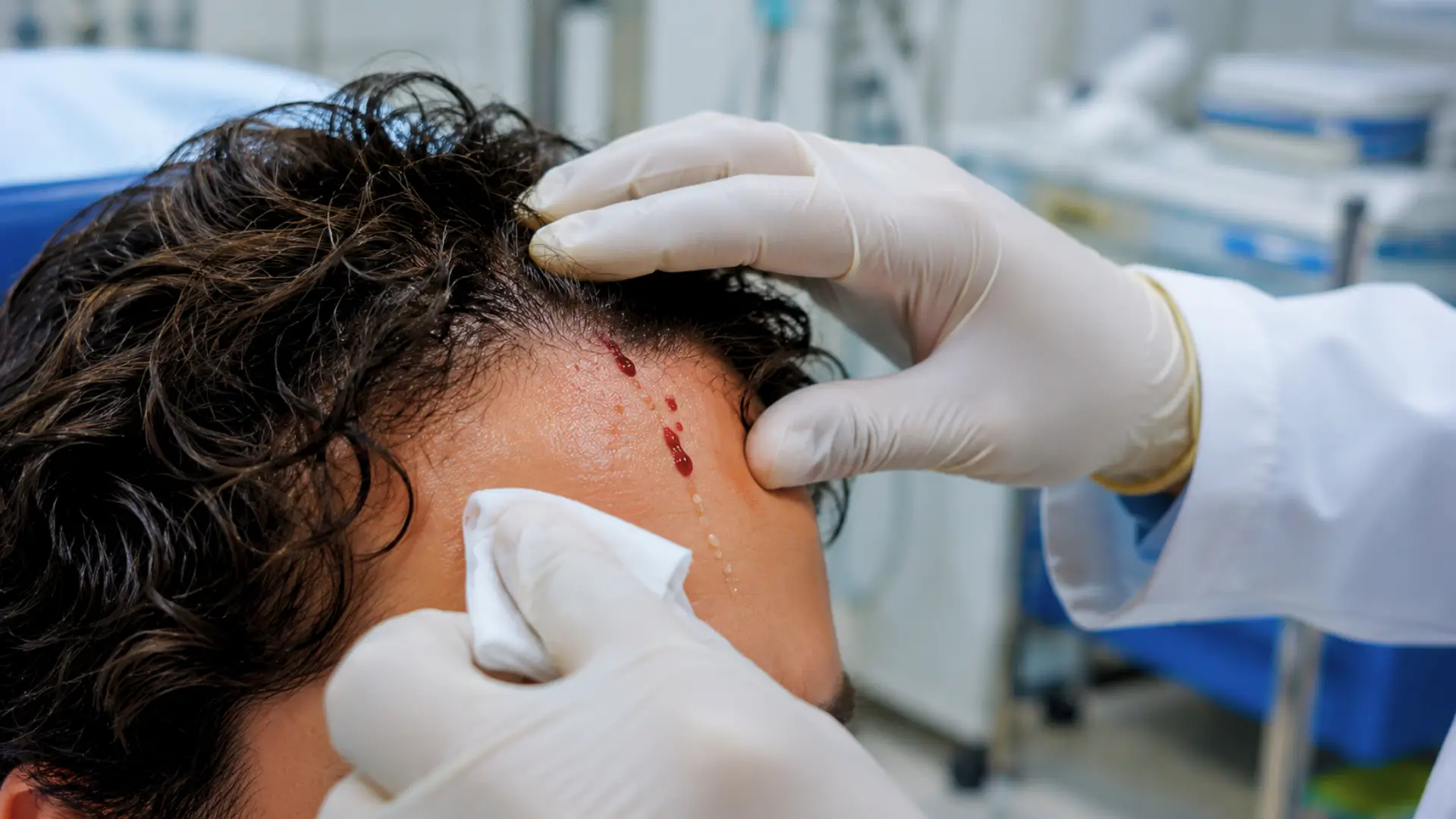
No cuts, no scrapes, yet blood appears on the forehead. This almost surreal scenario was reported following a severe panic attack. Behind this spectacular phenomenon lies hematidrosis, an extremely rare medical occurrence that continues to intrigue researchers.
A forehead covered in blood with no visible injury
The situation was alarming. A patient presented to the emergency room with drops of blood on the forehead, yet no wounds could be found upon examination. Dr. Priyam Bordolo, who reported the case on social media, noted that the event began during a severe panic attack.
Given such bleeding, physicians do not automatically assume it is stress-related. Comprehensive tests are necessary to rule out coagulation disorders, trauma, or other illnesses. In cases of hematidrosis, this exclusion process is essential for an accurate diagnosis.
Hematidrosis: a rare phenomenon where blood appears on intact skin
The term sounds like it belongs in a fantasy novel: hematidrosis, or hematohidrosis. However, cases do exist in medical literature. This phenomenon refers to the spontaneous appearance of a blood-tinged fluid on apparently intact skin, often occurring on the face with no visible injuries.
Medical observations have also documented blood on the scalp, around the eyes, or various other body parts. Some reports even mention blood-tinged tears. This phenomenon is striking, yet its extreme rarity means knowledge is still limited, primarily based on isolated cases.
One commonly cited point is intense emotional stress. Fear, anxiety, or significant psychological events often precede such occurrences. A review of the medical literature associates stress as a related factor; however, some patients display no identifiable triggers.
How could a surge of stress cause blood to surface?
The main hypothesis revolves around the sympathetic nervous system, activated during danger. A panic attack triggers an intense response, akin to an immediate biological alarm. The heart races, sweating increases, and stress hormones flood the bloodstream, preparing the body to flee or react.
In hematidrosis, tiny blood vessels surrounding the sweat glands may become fragile, allowing blood to seep into their ducts. This blood then reaches the skin’s surface with sweat. However, this explanation remains a hypothesis. The precise mechanism is still uncertain.
A spectacular symptom that primarily prompts doctors to rule out other causes
Seeing blood without an injury might immediately suggest anxiety. However, this assumption can be misleading. Such a scenario demands a thorough medical evaluation. Numerous diseases or coagulation disorders can also lead to unusual bleeding. Hematidrosis is a rare diagnosis, made only after excluding other potential causes.
There is currently no universal treatment for this condition. Some studies indicate improvement following stress management. Beta-blockers such as propranolol have occasionally been used, showing encouraging results, but available data remains insufficient for establishing a definitive protocol.
This phenomenon highlights the powerful connection between mind and body. An emotion can trigger genuine and intense physical reactions. Hematidrosis serves as an extreme illustration of this relationship, raising an open question: how far can stress still bewilder the human body?