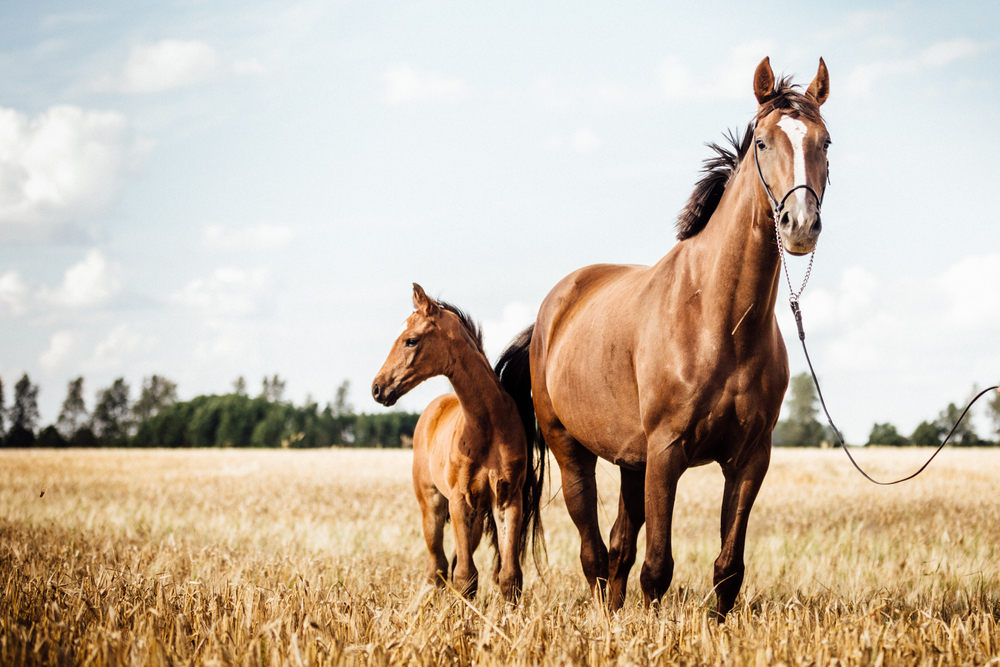
The evolutionary journey of various organisms can often be traced through the remnants they leave behind. For the horse, the most fascinating clues are found in their legs.
Vestigial structures
Modern equines are monodactyl, meaning they have a single complete digit per limb. However, a study published in 2018 suggested that traces of the five digits from their distant ancestors still exist in horses today. Subsequent research in 2020 provided compelling evidence that five digital condensations do indeed appear during equine embryonic development.
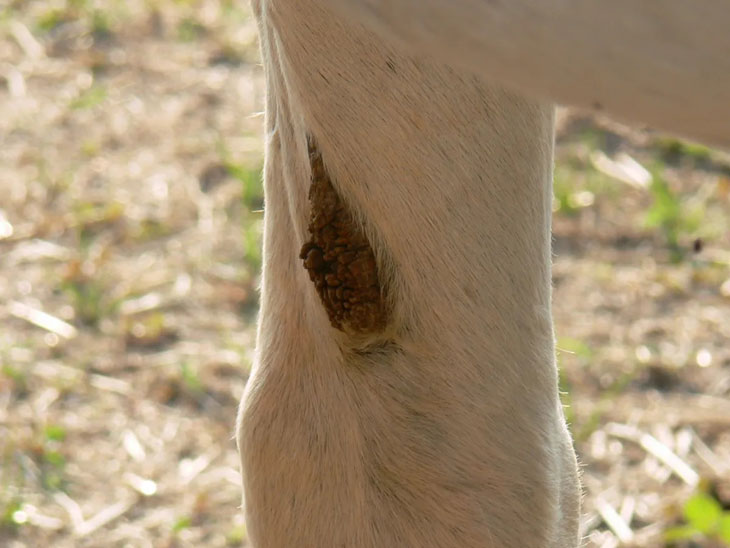
But limbs are not the only place where vestigial structures are observed in these animals. Growths of keratin, the primary component of human nails and hair, often develop just above the knee on the front legs and below the hock on the hind legs. Commonly referred to as “chestnuts,” these benign, crusty nodules can detach naturally when they become “ripe.”
There are various theories about their function. Some researchers suggest that chestnuts might be remnants of an olfactory gland found in their prehistoric relatives, a feature still present in some modern ungulates like deer. Interestingly, until the 20th century, some believed these structures helped horses see in the dark, a rather quirky misconception.
Due to their unique shape and texture, which resemble human fingerprints, chestnuts can sometimes be used for horse identification.
Ergots
Another notable structure found on equine limbs is the ergot, which consists of calloused growths located at the back of the fetlock. Despite their position, these growths are anatomically equivalent to the joints at the base of human toes rather than the ankles.
Some researchers believe ergots are direct vestigial digits, while others argue they are more akin to ancestral digital pads.
These growths are more frequently observed in horses with “feathering,” a term that refers to the tufts of hair found at the base of the legs in certain breeds, such as the Shire, known as the largest horse breed today.