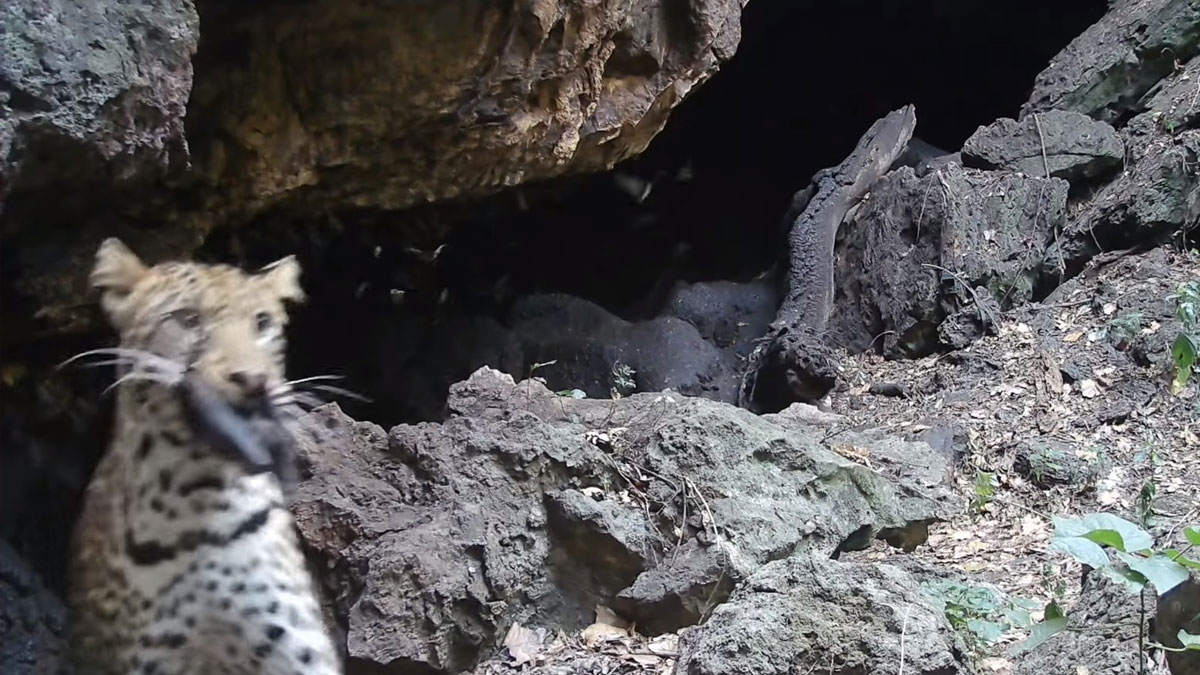
In the southwestern region of Uganda, a cave has captured the attention of virologists. This cave, home to a colony of bats carrying a dangerous virus, is also frequented by predators that feed on these mammals, scavengers, and even humans.
A potent mix
Camera traps placed at the entrance of this cave in Queen Elizabeth National Park have captured an astonishing number of wildlife interactions. Over the course of a year, researchers recorded more than 300 such events. Fourteen different species were identified, including Nile monitor lizards, leopards, genets (small carnivores related to mongooses), baboons, red-headed vultures, fishing eagles, black sparrowhawks, and Verreaux’s eagle-owls.
Interestingly, several of these species were found near the fruit bats that inhabit the cave, which serve as the reservoir for the Marburg virus. This virus is a close relative of Ebola and is known to cause deadly hemorrhagic fevers. Notably, leopards were observed leaving the cave with a bat in their mouths on at least 43 occasions.
While the virus can circulate indefinitely and asymptomatically among the bats, the cave also attracts a number of tourists. According to the researchers behind a new study published in Current Biology, although visitors are required to remain at least thirty meters from its entrance, camera footage revealed around twenty incursions involving 214 people, including schoolchildren and scientists.
One of the most publicized cases of virus transmission to humans involved a 40-year-old Dutch woman who, upon returning from Uganda in 2008, suffered from severe liver failure and bleeding. She reportedly died less than a week after being hospitalized.
Close monitoring
For virologists, environments like the Python cave represent significant “risk zones.” Each interaction between species heightens the chances of pathogen transmission and adaptation.
As human activities expand and natural habitats become fragmented, these interfaces between wild animals and human populations are expected to multiply, raising concerns about the emergence of new pandemics in the coming decades.
As researchers note, “As surveillance devices become more widespread, genomic data should be supplemented with visual and behavioral observations. Without this information, we risk missing critical ecological conditions that foster the emergence of pathogens.”
Previously, researchers had announced the discovery of twenty new viruses, including two deadly ones, among bats in China.