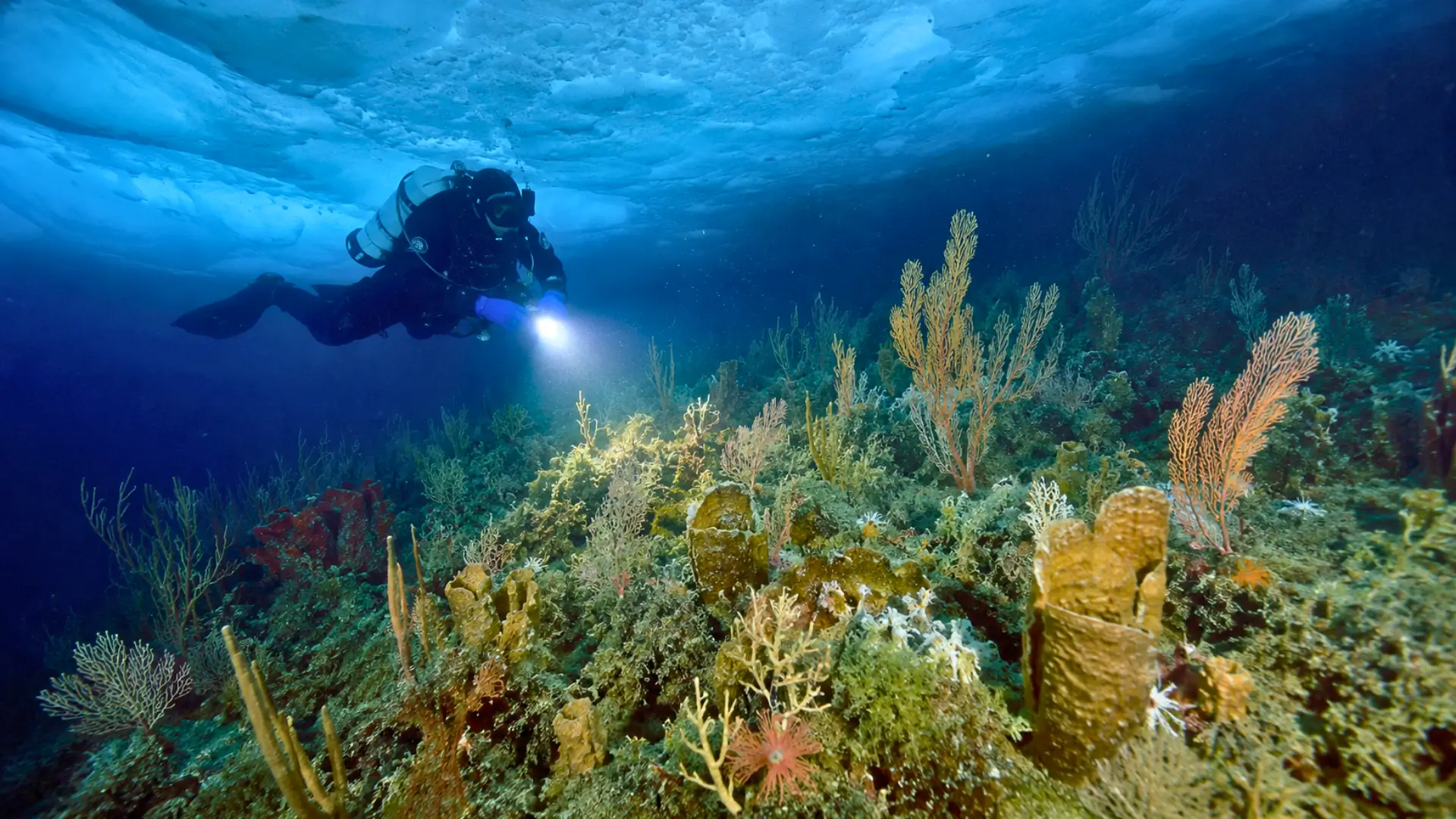
Under the Antarctic ice sheet, a team of divers uncovered a vibrant ecosystem that defies imagination, located 130 meters below the surface. This surprising find comes from a French expedition exploring the future of our oceans.
An extreme dive reveals an unseen ecosystem
The environment above appears hostile to life, dominated by ice, fierce winds, and piercing sunlight. However, beneath this stark surface lies another reality. For three months, the Under The Pole expedition explored this hidden world along the Antarctic west coast, conducting research as part of the DEEPLIFE program with the CNRS.
Diving to a staggering 130 meters, far deeper than typical recreational diving, these explorers braved sub-zero waters where every action demands significant energy. Some dives lasted nearly three hours, necessitating carefully planned heating equipment and meticulous logistics.
What they discovered was astonishing. Instead of a barren seafloor, they encountered dense formations of gorgonians, corals, and sponges, resembling an underwater forest. The term “animal forest” is not merely poetic; it captures a complex, living architecture that provides a refuge for numerous species.
A surprising abundance at depth
The expedition also revealed unexpected bursts of color. While the surface of the Antarctic typically presents shades of white, blue, and gray, divers reported a visual explosion in the deeper waters. The contrast between the vibrant colors of marine life and the drab surface is striking, and the density of organisms quickly impresses observers.
This area, known as the mesophotic zone, lies between 30 and 200 meters below the surface, where light becomes scarce yet is not entirely absent. Despite its importance, this region remains inadequately understood, situated between depths accessible to traditional divers and those reached by robots. It represents a scientific blind spot where significant ecosystems may be hidden.
Gorgonians, sponges, and corals as key habitats for Antarctic biodiversity
These underwater structures are not only visually stunning; they play an essential role as refuges for marine life. Many species find nourishment, shelter, and breeding grounds among the flexible branches of gorgonians, the masses of sponges, and the coral formations. This complex ecosystem resembles an inverted canopy, thriving beneath the waves.
The ten-year research program, running from 2021 to 2030, aims to assess the density of these underwater forests, the size of the organisms, the variety of species, and even the flow of currents. The aim is to gather robust data to understand how these habitats function and their potential resilience.
This research is of critical importance. These ecosystems may be vital in maintaining biodiversity as climate change poses ever-growing threats. In a region already stressed by warming, the pressures on krill are increasing, making these underwater forests indispensable biological refuges that are simultaneously valuable and vulnerable.
This remarkable discovery underscores the urgency to protect polar depths
The paradox is striking. While these ecosystems remain largely undocumented, they are already under threat. The Ocean Decade initiative has recognized marine animal forests as vulnerable marine habitats. This acknowledgment is crucial. Identifying a habitat is often the first step toward political advocacy for its protection.
Under The Pole aims not only to uncover the invisible but also to bring these observations into discussions around marine protected areas. The objective is straightforward. Deep-sea regions cannot be ignored. Focusing solely on surface protection is akin to saving only the roof of a cathedral while neglecting the nave.
What unfolds beneath Antarctica goes beyond mere exploration. The observed forest at 130 meters serves as a reminder that even the most extreme regions are not empty margins. They are living libraries with many pages yet to be uncovered. Perhaps the greatest scientific discoveries of the 21st century will begin in these long-overlooked silent realms.