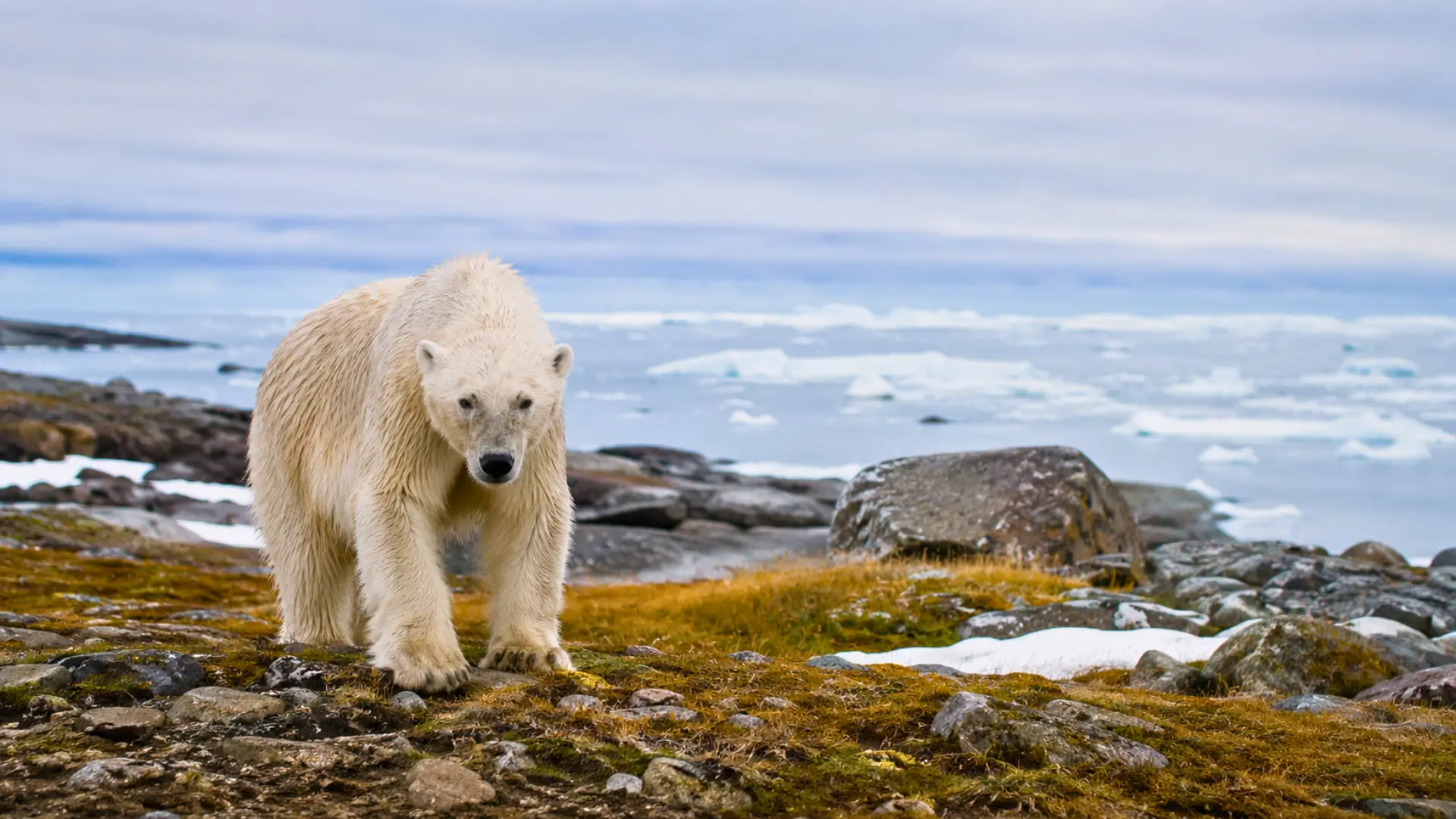
As sea ice dwindles for extended periods, polar bears lose not only their hunting grounds but also valuable time and energy, leading to significant weight loss. A recent study highlights that even instinctive survival strategies may no longer be adequate, potentially foreshadowing a troubling future.
Longer ice-free summers disrupt polar bear survival
For years, the situation seemed straightforward: a predator adapted to the ice must wait for its return to hunt seals. However, in the western Hudson Bay, Manitoba, this waiting period has become prolonged. The duration of summer ice loss is now lengthening, and this shift impacts the very mechanics of survival.
It is not merely a change in landscape. The polar bear is a massive creature designed for fat, not for foraging on the tundra. Unlike grizzly bears, which can diversify their diet, polar bears rely on a specific, nutrient-dense resource: seals that they hunt from the ice.
Tracking twenty bears reveals an unsustainable energy loss
To uncover the challenges bears face on land, researchers from the Alaska Science Center of the USGS tracked twenty polar bears for 19 to 23 days between August and September from 2019 to 2022. Utilizing cameras, GPS collars, energy expenditure measurements, and pre- and post-weighing, this meticulous summer monitoring had rarely been accomplished before.
The results, published in Nature Communications, overturn a comforting idea. On average, the bears lost nearly one kilogram each day. This means that even with limited movement, exploration, or attempts to feed, their energy balance remains severely negative.
A startling detail emerged. Some male bears spent over 40 percent of their time scouring for food: berries, grasses, seaweed, and even bird or caribou carcasses. Meanwhile, others lay down to conserve energy. Ultimately, only one bear managed to gain weight, thanks to an unusual opportunity: a marine mammal carcass washed ashore.
Land-based diets cannot substitute for seal hunting on ice
In recent years, a recurring hypothesis proposed that polar bears might adapt their behavior to resemble grizzly bears. While intriguing in theory, reality tells a different story. An adult male polar bear can weigh up to 600 kilograms, with energy needs that starkly contrast with those of its terrestrial counterpart.
This is where the comparison breaks down. Grizzly bears can exploit a variety of land-based resources, whereas polar bears are highly specialized. Their metabolism demands prey that is rich in lipids, which the land fails to provide adequately. Thus, while some sustenance can be found, it is insufficient to survive increasingly prolonged ice-free seasons.
In Hudson Bay, the most vulnerable are already paying the price of warming
This research does not exist in isolation. In western Hudson Bay, the polar bear population has already declined by approximately 30 percent since the 1980s, coinciding with several weeks of expanded ice-free seasons. Therefore, the data from sensors aligns with decades of field observations indicating that reserves are depleting more rapidly.
Not all bears will suffer equally. Researchers note that younger bears and females with cubs are particularly at risk. When energy is scarce, it is often the most fragile organisms that are the first to succumb. Hunger does not strike evenly, even among apex predators.
The most unsettling aspect might be this quiet transformation. Once a symbol of climate change, the polar bear now represents a very tangible biological limit. The urgent question is no longer whether it will adapt, but how long a creature attuned to ice can endure on land that has never truly sustained it.