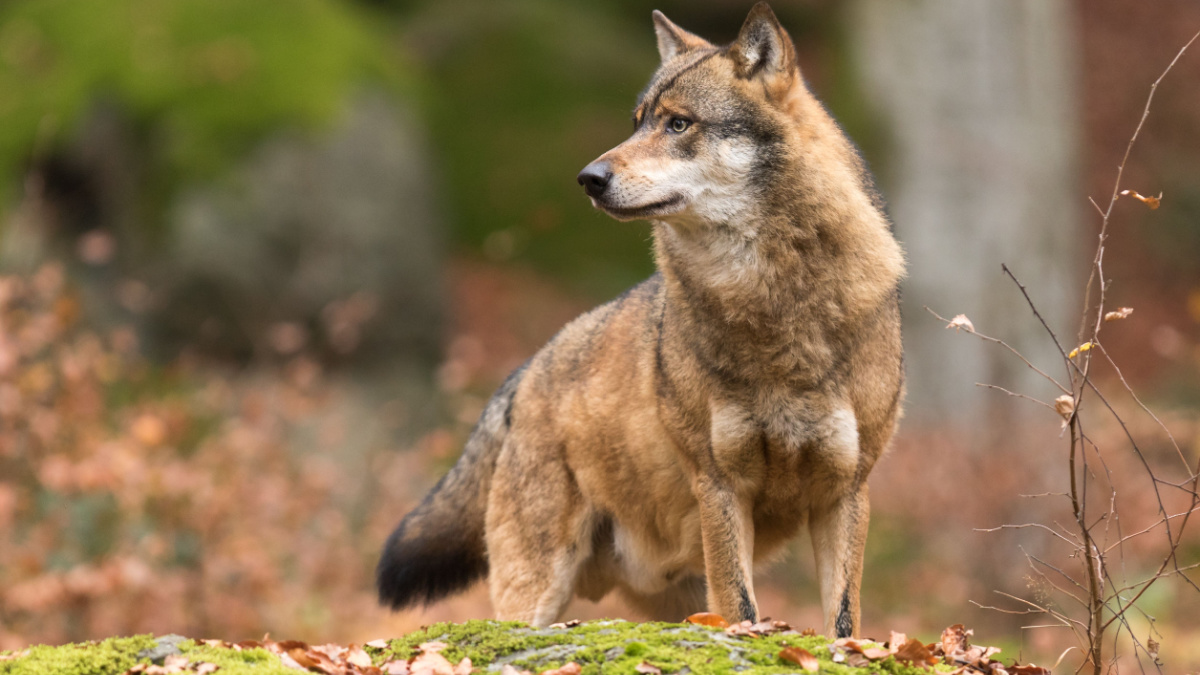
Research on wolf skulls from Europe, Asia, and North America sheds light on how environmental and human factors shape the morphology of the gray wolf, one of the most widely distributed terrestrial predators.
Three main factors
The shape of the skull in Canis lupus is primarily influenced by three key factors. The first factor identified is geographic location. Wolves residing at higher latitudes tend to have larger skull volumes compared to those in southern areas. This finding supports Bergmann’s rule, which states that animals in colder environments develop larger body sizes to conserve heat.
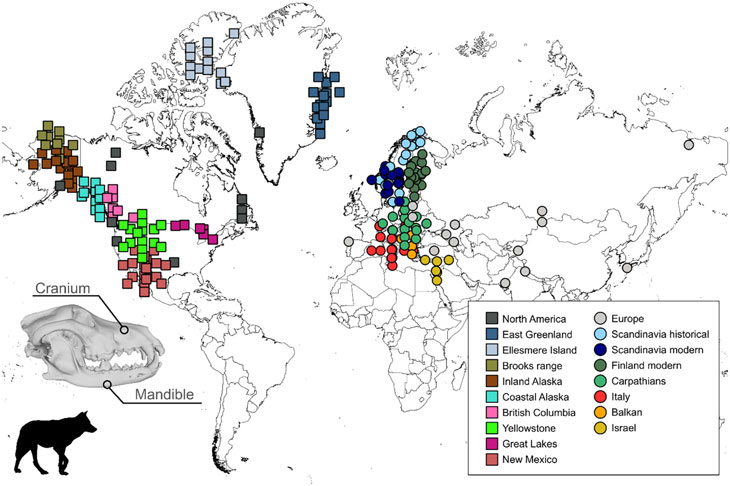
The second factor relates to prey size. Generally, wolves that hunt larger herbivores possess more voluminous skulls. For example, Yellowstone wolves, known for preying predominantly on elk, exhibit skull volumes comparable to those of gray wolves found in significantly more northern regions of North America.
Lastly, habitat fragmentation and population pressures -primarily due to human development and extensive hunting practices over centuries -represent the third factor. When a new animal population expands from a small group of individuals, the resulting loss of genetic diversity can lead to the enhancement of certain morphological traits.
This scenario has been documented in various regions, including Italy, the Arctic, and coastal Alaska. A striking example is the gray wolves of Norway and Sweden. Once near extinction in the 1960s, the species rebounded following the establishment of a small eastern population in that area of Scandinavia. As a result, these wolves now feature wider frontal bones, more pronounced cheekbones, and a more downward-sloping muzzle.
Implications for gray wolf conservation
This study, published in the journal Diversity and Distributions, highlights our impact on wildlife and may inform conservation strategies for the gray wolf. These predators play a crucial role in regulating populations of wild ungulates, which can damage crops.
The authors note that the findings underscore how human influence extends beyond mere population size effects. It can also reshape the evolutionary trajectory of species over multiple generations.
Recently, another study revealed a remarkable 58 percent increase in wolf populations across Europe in just ten years.