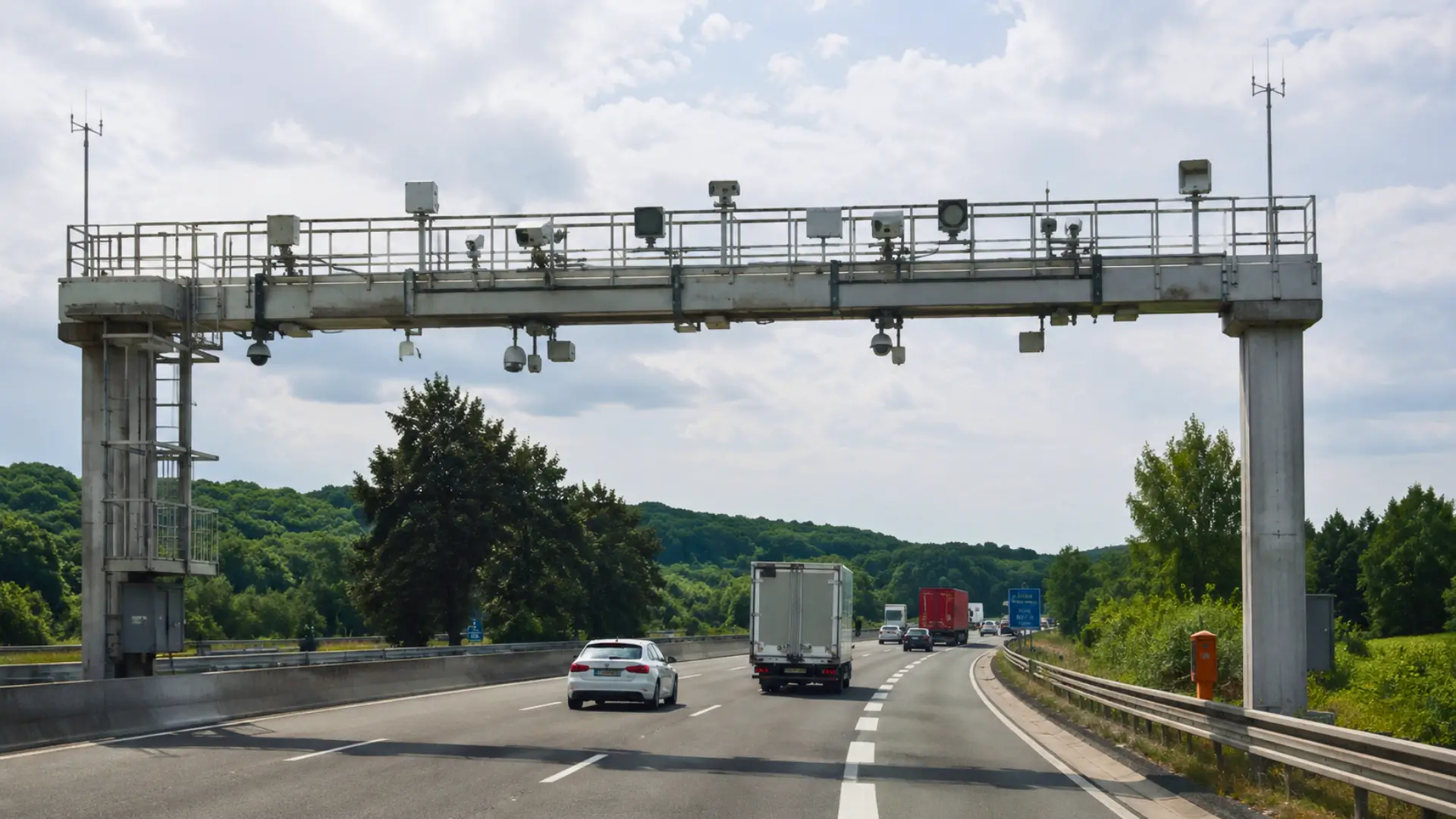
They were intended to generate billions for the public purse but have instead become a glaring symbol of government waste. How did 174 gantries set up for an eco-tax end up representing a financial burden over a decade later, haunting French roads?
The emergence of eco-tax gantries in 2013
In the summer of 2013, drivers started noticing unusual structures rising above the roads. These eco-tax gantries, equipped with sensors and cameras, looked straight out of a bureaucratic science fiction setting. Their stated purpose was straightforward: to track heavy trucks and implement a kilometer-based tax aimed at funding infrastructure.
However, the scale of the initiative was impressive. It involved 174 gantries, numerous auxiliary installations, a dedicated data center, and thousands of devices for trucks. Everything was in place and connected, yet this sophisticated system would never collect a single euro.
This failure marked a significant turning point. The Court of Auditors labeled it a very costly failure. Almost 957 million euros were paid to the Ecomouv’ consortium after the contract was terminated, in addition to administrative expenses. The image of rusting gantries along the roads is not just symbolic; it represents a stagnating financial loss.
The uprising of the red caps turns tax into a political disaster
The eco-tax concept did not appear out of nowhere; it emerged following the Environmental Grenelle initiative. It mirrored approaches already seen in various European nations, intending to have heavy trucks contribute to road wear and environmental costs. However, as implementation neared, social tensions escalated, especially in Brittany, where an agricultural crisis fueled growing discontent.
By autumn 2013, the red caps movement transformed a technical tax into a significant political issue. The government not only suspended the initiative but ultimately buried its revised version in 2014. What is astonishing is not merely the abandonment itself. The contracts were so complex they effectively left the State with a costly exit strategy.
Behind the abandonment: a staggering bill of compensations, lost materials, and revenue
The scandal lies not only in what had already been paid but also in what was never collected. According to the Court of Auditors, the loss of expected revenue during the planned operational period reached approximately 9.83 billion euros, which was intended to fund transportation via the French transport infrastructure financing agency.
Additionally, the depreciation of the gantries became another shock. While some materials were resold, they fetched meager prices, sometimes only 2 percent of their original value. In any industrial narrative, this figure suggests a catastrophic liquidation. Here, it instead narrates the story of a project envisioned as modern that ultimately became a burdensome surplus.
As the gantries stand, another irony emerges. The costs associated with dismantling them are also significant, estimated at around 7 million euros. Leaving them in place incurs expenses, while removal carries its own costs. Rarely has a public decision seemed to navigate such an expensive path.
While france retreats, Germany capitalizes on an effective eco-tax
The contrast is all the more striking given that the concept was far from novel. In Germany, the LKW-Maut has been operational since 2005 and has expanded over the years. It also relies on taxing trucks based on the distance traveled, funding the road network while progressively increasing environmental incentives.
This type of system produced tangible effects on fleets. The modulation based on vehicle categories and emissions encouraged fleet renewal. In subsequent years, greener trucks gained ground. While the German framework successfully influenced behaviors, the French version stalled before even reaching its first large-scale test.
The most striking aspect lies elsewhere. In replace of the eco-tax, the government raised diesel taxes. The Court of Auditors finds this approach poorly targeted, as foreign trucks contribute minimally while aging roads and redundant gantries serve as reminders of how a delayed policy abandonment can lead to extensive costs.