The dense tropical environments of South America are home to a rich array of wildlife, but observing these creatures can be quite challenging. Recent advancements using thermal cameras have offered researchers a rare glimpse into this elusive fauna.
Cloaked wildlife
Many arboreal mammals are nocturnal and live high in the canopy, making them difficult to observe, especially in dense foliage and often inaccessible environments. Understanding their behaviors, particularly feeding and reproductive habits, is essential for conservation efforts.
With the rise of home surveillance systems and drones, thermal cameras have become more accessible. This technology was utilized by researchers in a recent study published in the Journal of Tropical Ecology.
The researchers set up two elevated platforms about 500 meters apart in the Cocobolo Nature Reserve in Panama, enabling them to study nocturnal wildlife over the course of a week.
“As soon as a mammal was spotted in thermal mode, recording began, and the animal was tracked until it disappeared from the camera’s view,” they explained. “If necessary, the device switched to night vision to facilitate identification. While our primary focus was on arboreal species, terrestrial mammals were also filmed.”
205 hours of observation
Throughout 205 hours of monitoring, the team made 651 observations, focusing mainly on mammals. They identified 14 nocturnal arboreal species and 11 terrestrial species.
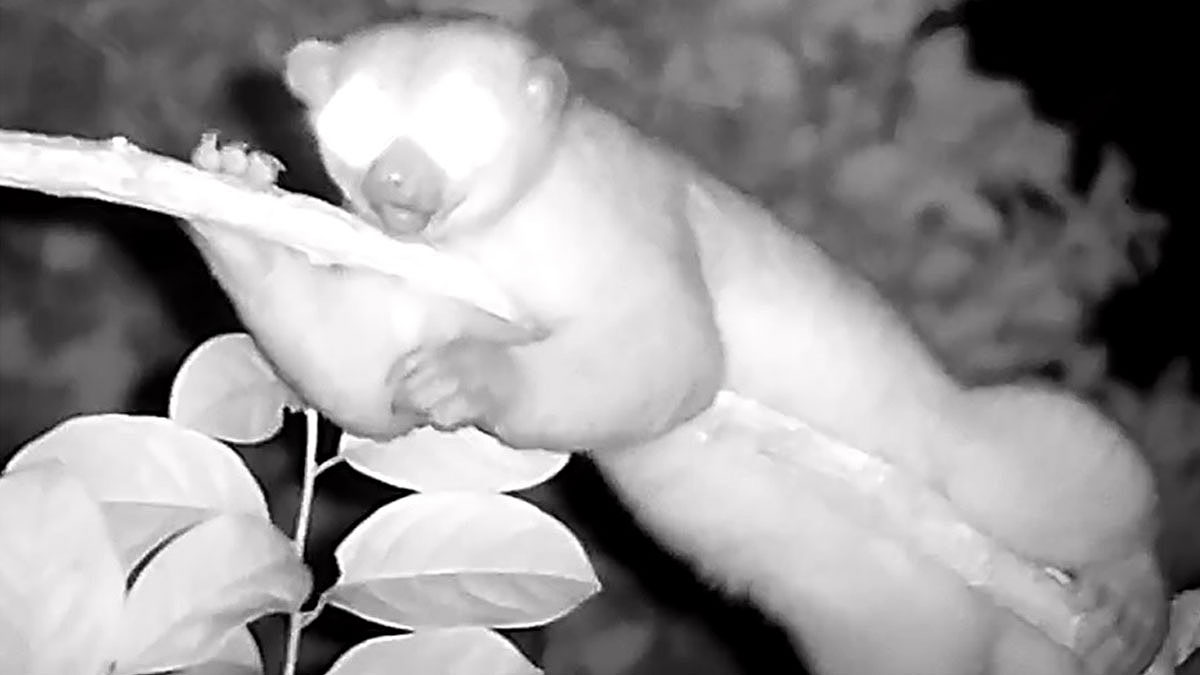
Among the wildlife recorded were a kinkajou relaxing on a branch, a margay exploring the leaf litter, a pair of Andean porcupines in a mating display, a woolly opossum on alert, and even a hungry silky anteater.
Notably, most animals appeared undisturbed by the cameras or researchers, suggesting that this technique could be expanded to further study this elusive wildlife.