In North American forests, powerful predators are altering their behaviors in response to an unexpected threat: humans. Recent studies reveal just how profoundly this fear can transform ecosystems.
Human voices disrupt bears’ feeding habits
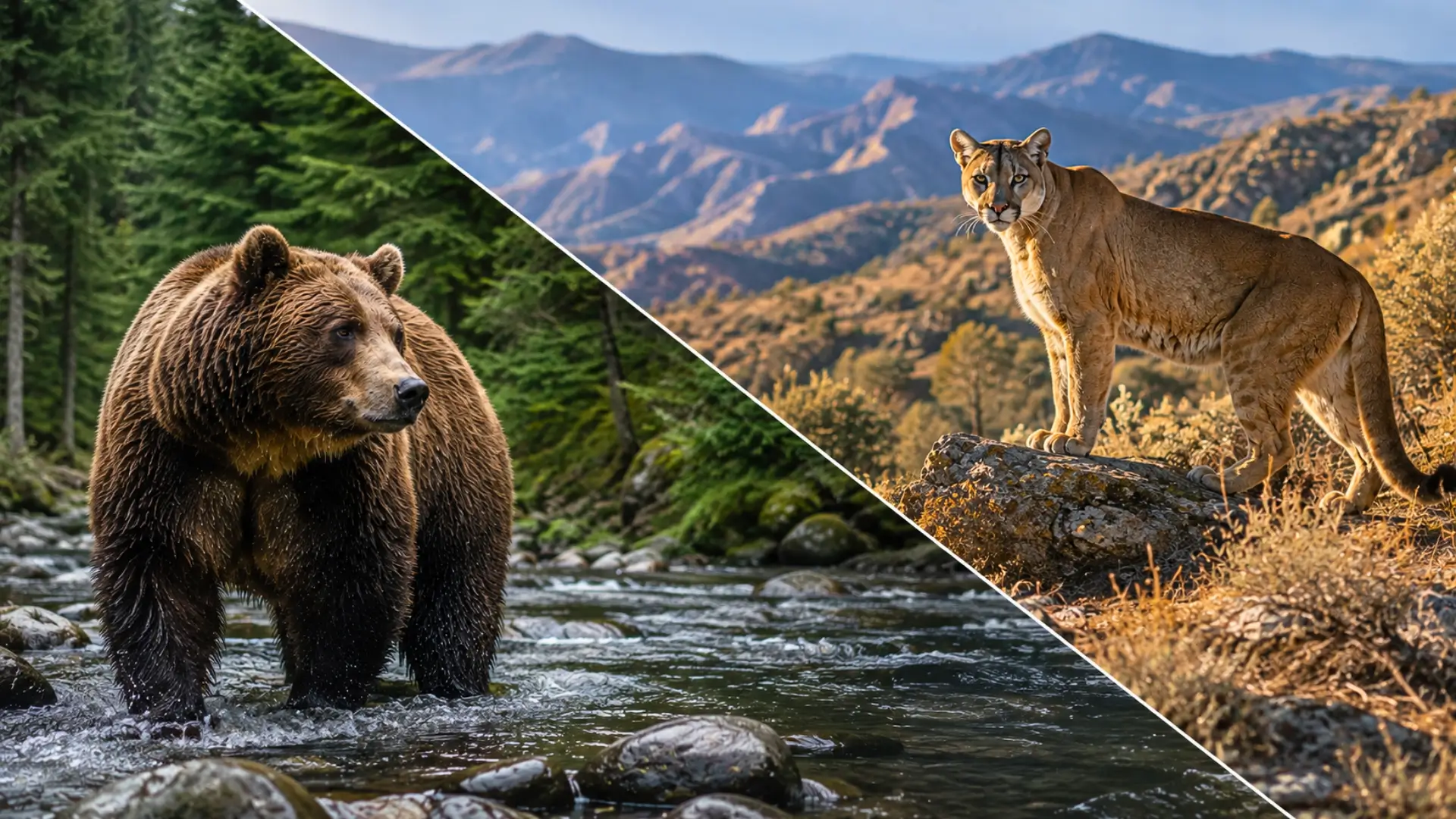
Along the rivers of Alaska, salmon attract bears in droves. However, researchers have found that a simple cue can interrupt their feast: a human voice. They set up speakers near the waterways that transmitted various sounds whenever a bear approached.
Seagull calls did not seem to bother the bears much. The sound of a vehicle prompted them to retreat further. Yet, when human conversations were played, the bears became nearly ten times more likely to flee. They abandoned their meals as if the mere presence of human voices sufficed to alter their feeding behavior.
This experiment, published in Current Biology, illustrates how large carnivores respond to our presence well before any direct contact occurs. Researchers highlight that this reaction also affects ecosystems since bears typically move essential nutrients by transporting their prey into the forest.
Cougars are aware of hiker patterns in California’s mountains
Far away in California’s Santa Cruz Mountains, a similar study reported on a different dynamic. Biologists tracked 36 cougars outfitted with GPS collars over six years, observing how these cats share their territory with hikers, runners, and cyclists. They compared the cougars’ movements with data from the Strava app.
The outcomes were surprising. The cougars did not merely react when encountering humans; they also anticipated their presence. They avoided areas close to heavily trafficked trails, sometimes by over 30 meters. A hiker might pass through a forest without realizing it, yet a cougar had already adjusted its path. This avoidance strategy shows that large predators incorporate our habits into their daily behavior.
Fear of humans affects more than just fleeing animals
The impact goes beyond movement patterns; it also shapes ecosystems. When bears catch salmon, they often carry their prey far from the rivers. The remains subsequently enrich forest soils with essential nutrients. Less activity means reduced natural redistribution. Researchers explain that this creates a landscape of fear, with animals modifying their behaviors to steer clear of humans.
Our voices, vehicles, and recreational activities become alarming signals. They indirectly transform interactions between species and the flow of matter in nature. This invisible pressure acts on a large scale. It does not rely on direct contact but rather on the mere perception of risk. Scientists observe a cascading effect on forests, rivers, and food webs.
Findings challenge our coexistence with large predators
In the case of cougars, researchers provide nuance to a common assumption. Some individuals exposed to human activities appear to get used to our presence. However, this tolerance does not imply increased danger. Conflict zones are generally avoided by these cats, even in very populated areas.
Scientists analyzed 678 interactions between humans and cougars from 2018 to 2023. They demonstrate that the density of human presence better explains encounters than the animals’ behavior. Cougars do not seek contact; they adapt to our presence.
These findings call for a reevaluation of natural space management. Adjusted schedules or tranquil zones could lessen interactions and allow large carnivores to move without unnecessary stress. These studies reveal a surprising reality: predators observe us, anticipate our movements, and avoid us. Understanding how long this discreet coexistence can last in increasingly frequented landscapes is now essential.