
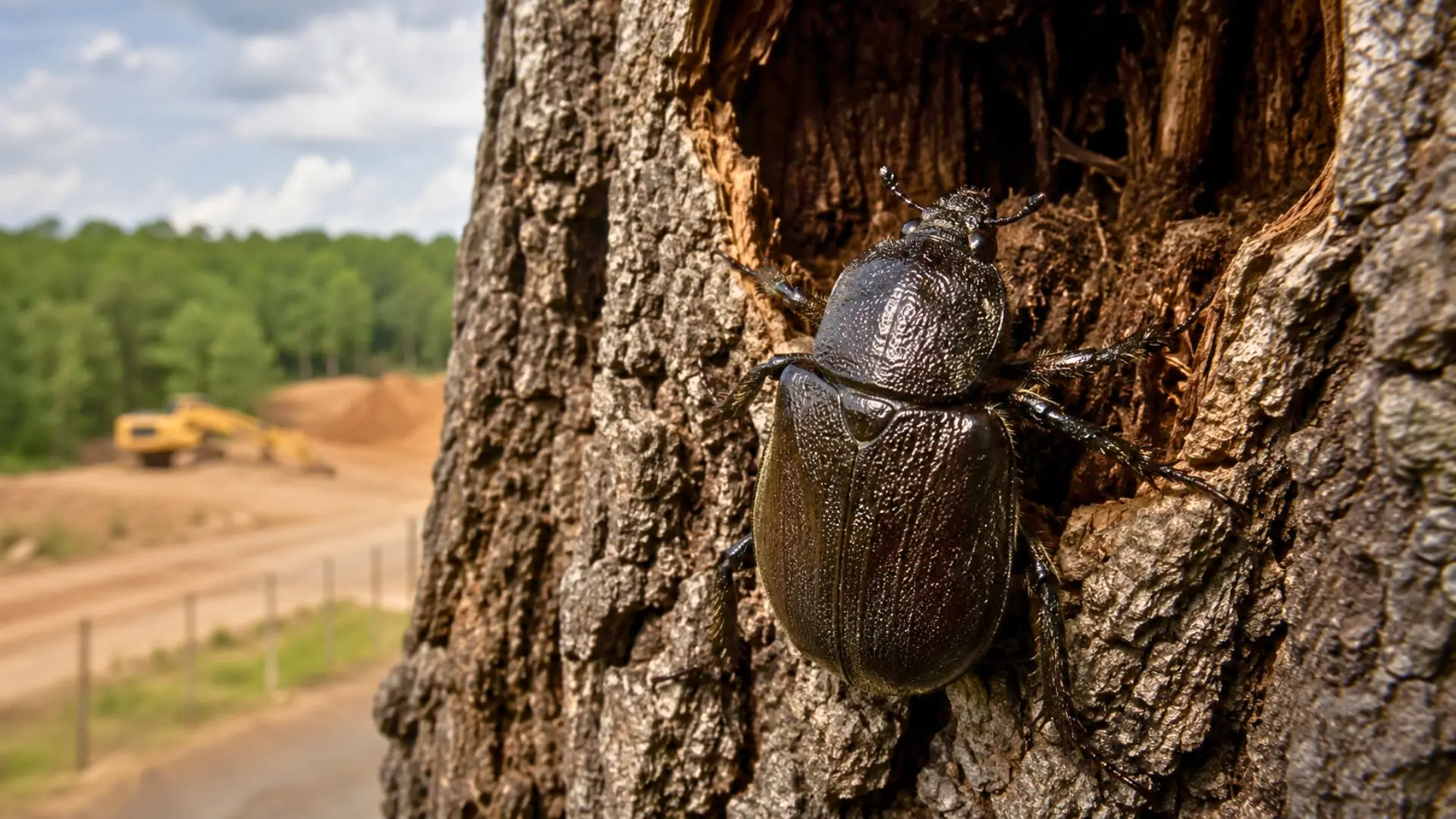
A remarkable intersection of ecology and engineering unfolded during the construction of the A28 highway in Sarthe, France, when an unexpected encounter with a protected beetle halted progress for six years.
A protected beetle halts construction efforts
The saga began in 1996 when the protected beetle, known as the pique-prune, was discovered in Sarthe. This small beetle, measuring less than four centimeters, is safeguarded by stringent European laws stemming from the 1979 Bern Convention. As a result, construction company Cofiroute had to pause its machinery between Écommoy and Montabon starting in 1997.
Known scientifically as Osmoderma eremita, this sedentary insect rarely travels more than 300 meters over its adult life. Its larvae grow in the decaying wood of old trees for two to four years, making the presence of this beetle a strong indicator of the ecological health of ancient forests.
Local officials face a political puzzle
The halt in construction ignited frustration among local representatives. Gérard Burel, then president of the General Council of Orne, expressed regret over the late discovery. By 1999, Environment Minister Jean-Claude Gayssot even considered modifying the highway’s route to bypass the affected area.
Environmental advocates from France Nature Environnement Sarthe rallied to protect the wooded area bordering the Bercé forest. Christian Damenstein, a former president of the Friends of the Forest group, emphasized that the legal arguments related to the beetle were their only means to impact the highway project.
Faced with administrative and environmental deadlock, relevant ministries took a long time to reach a conclusion. Ultimately, a decision by Alain Lambert, the Budget Minister, resolved the impasse, affirming that the highway would indeed be rerouted to protect the beetle’s habitat.
Engineers find innovative solutions
In July 2003, to safeguard the beetle without significantly delaying the transport route, engineers implemented unprecedented measures. They relocated an interchange and even cut the bases of some old chestnut trees to replant them in a protected natural area.
The resumption of construction ultimately enabled the completion of the highway connection to Tours at a cost of 300 million euros. However, another biological constraint surfaced when the white-clawed crayfish was discovered, necessitating additional local conservation measures.
Two decades later, ecological coexistence thrives
The construction was finally concluded in 2005, when then-Prime Minister Dominique de Villepin opened the final section on October 21. This event marked the culmination of a long-term project that began in 1987 and was significantly influenced by the need to consider biodiversity.
Now, two decades after its inauguration, the environmental management measures remain active and effective. A designated Natura 2000 area is under meticulous management by local authorities, ensuring the survival of pollarded trees essential for the beetle’s continued existence.
Currently, around ten willing farmers are collaborating on local conservation efforts, planting grafted young chestnut trees to prepare for the species’ future needs. Financial support for this initiative is bolstered by European Union grants.



