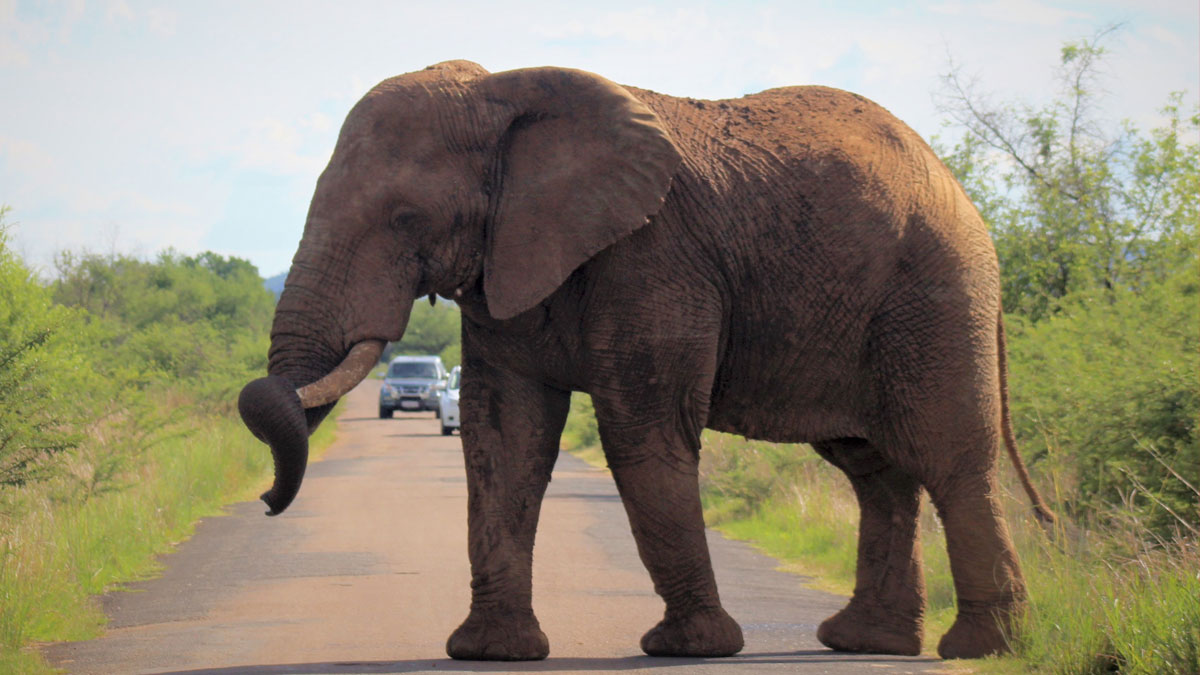
The rapid urban and agricultural development in southern Africa is significantly fragmenting elephant habitats and increasing interactions with local communities.
Disputed lands
Southern Africa is home to around 290,000 savanna elephants (Loxodonta africana), whose populations are slowly recovering from decades of intense poaching. Meanwhile, human populations in this region are surging, resulting in new infrastructure and agricultural expansion.
To better understand the ramifications of this situation, researchers analyzed data from 2004 to 2020. Collected in Namibia, Botswana, and parts of Angola and Zambia, the data revealed areas where elephant ranges overlap with lands occupied by 38 rapidly growing human communities.
Their research considered built and agricultural areas, road infrastructure, fences, forest and grass cover, water sources, and climatic variations. The models suggested a substantial rise in human-elephant conflicts in the coming decades. These conflicts are expected to increase during the rainy season, while water shortages will also push elephants into agricultural areas, where they may damage crops.
“These projections regarding land use, demographics, and climate suggest that the area of high conflict zones between elephants and human populations is likely to increase by 33 to 100 percent by 2085, with a corresponding rise in incident frequency,” the authors noted in their study published in PNAS Nexus.
Necessary actions
Overall, this research indicates that the expansion of human activities is the main driver of increasing conflicts between people and elephants, a trend that climate change will likely exacerbate.
Identifying these future “hotspots” is crucial for preserving the livelihoods of local populations while not hindering elephant conservation efforts. Suggested measures include careful land-use planning, the implementation of monitoring systems, and enhanced crop protection.