
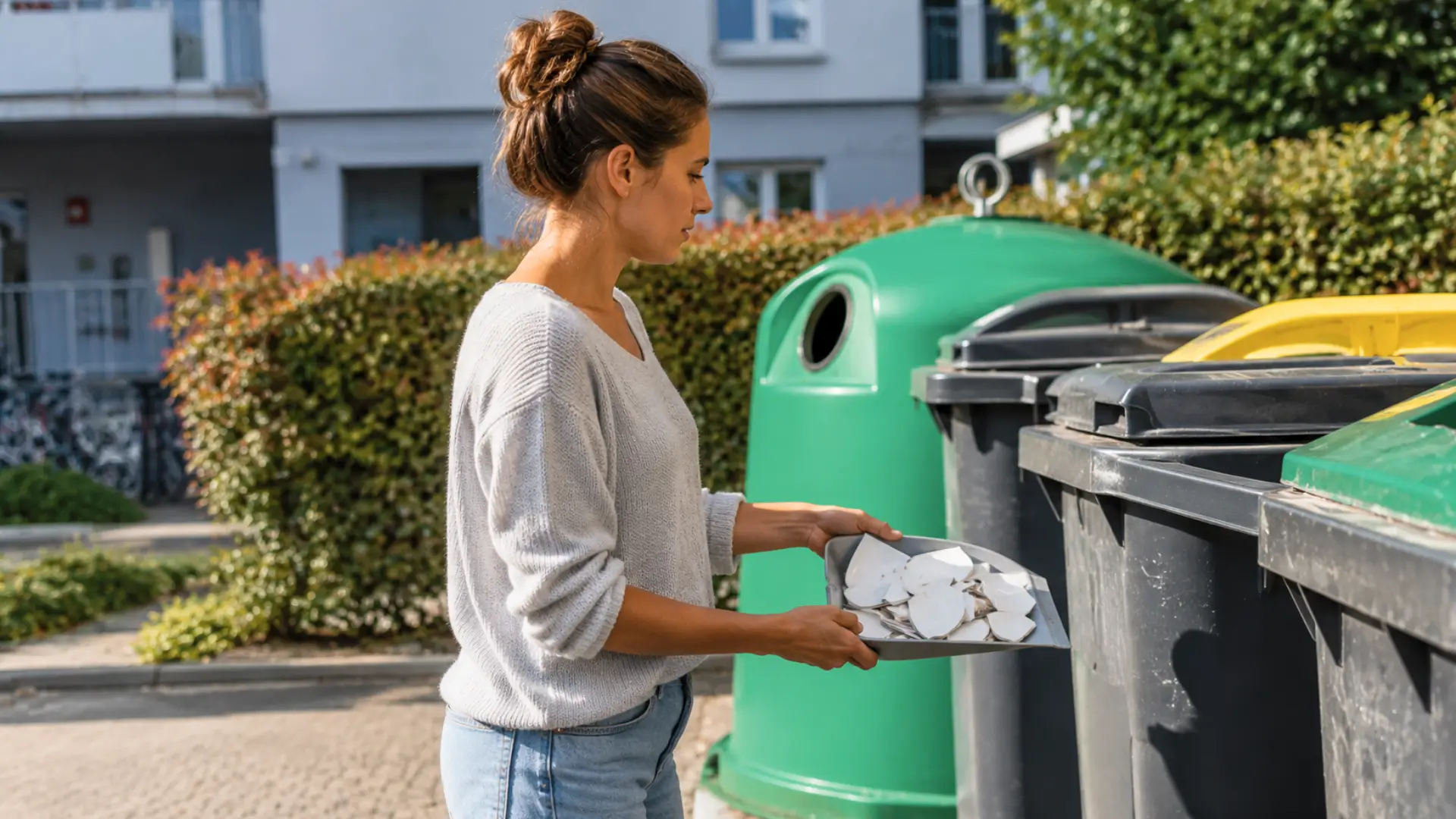
A broken plate and an empty bottle may sound similar, but mixing them up in recycling can disrupt an entire industry. This common sorting error hides an intriguing tale of thermodynamics, materials, and contaminated glass.
Why the recycling bin doesn’t accept all glass items
In many kitchens, it’s a frequent scene: a plate slips from a hand, shattering on the floor, and the pieces end up in the recycling bin. It seems like an obvious choice. However, this assumption is misleading; the green bin is designated only for packaging glass, like bottles and jars.
Bottles and jars are designed for industrial recycling, while dishes, porcelain, and stoneware are made from different materials. While they may feel similar in your hand, the distinction becomes critical in a glass furnace, where their melting temperatures do not match.
In glass furnaces, even tiny fragments become problematic contaminants
Once collected, centers separate unwanted materials from the packaging before crushing the glass into cullet, a mixture of fragments used as raw material. This shiny powder then enters furnaces, where it fuses with other components to create new bottles without significant loss in quality.
However, ceramics and porcelain have a higher heat tolerance and do not melt into the glass mixture; instead, they remain as solid grains. These tiny intruders can cause invisible defects that weaken the packaging during production, filling, or transport.
Modern facilities employ optical and mechanical sorting systems to reduce contaminants, but technology cannot guarantee a perfect sorting process, especially for fine shards. The cleaner the collected glass, the fewer costly operations the centers must perform, allowing recycled material to return more effectively to the furnaces.
Pyrex, mirrors, and bulbs each have their own recycling narrative
The sorting confusion isn’t just about plates. Cooking glassware may look similar to bottles, yet it is designed to withstand thermal shocks. This durability arises from a specific composition, meaning items such as Pyrex must go to designated dump sites as per local regulations.
Mirrors, windows, and windshields present a different challenge. They often contain coatings, films, or multiple layers of materials that complicate their recycling alongside packaging glass. Light bulbs also follow separate disposal paths. LED and low-energy bulbs have dedicated collection points, while older models have varying rules depending on the municipality.
A fifty-year-old gesture still needs refinement
France initiated separate glass collection in 1974. This habit has become entrenched, with around 200,000 recycling bins available nationwide. According to Citeo, 85 percent of glass packaging put on the market in 2024 was recycled, a commendable figure but still with room for improvement.
The simplest rule remains: only bottles, jars, and containers go into the green bin. They can be deposited empty, without the need for washing. Broken dishes, decorative objects, windows, and cooking glass must adhere to local waste management guidelines.
This small detail has significant implications. Some furnaces already operate with over 90 percent cullet, reducing the need for virgin materials. However, this efficiency depends on one simple condition: not confusing packaging with other glass items. Sorting often begins with a straightforward question: did it contain a product?



