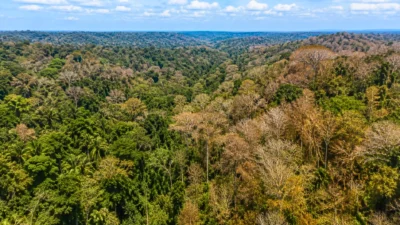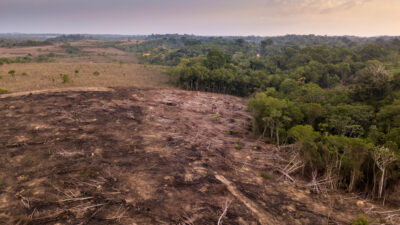
The planet is warming, but not at the same pace everywhere. Why do continents heat up faster than oceans? Two distinct physical properties of water are key to understanding this significant discrepancy in climate change effects.
An invisible boundary in warming separates land and oceans
From space, global warming may appear uniform, but the reality differs greatly. Observations reveal a more significant warming on land. The Intergovernmental Panel on Climate Change (IPCC) suggests that in recent years, the rate of temperature increase on land compared to the oceans is about 1.6 times higher.
The year 2025 served as a stark reminder of this trend, being classified as the third hottest year on record, following 2024 and closely trailing 2023. The last eleven years have now been the hottest on record.
Oceans have a massive thermal reservoir that continents lack
The first reason for this disparity can be likened to a pot of water. It takes a significant amount of energy to raise the temperature of water, far more than it does to heat a dry surface. This high specific heat capacity allows oceans to act as massive climate buffers, absorbing significant energy without a sharp rise in temperature.
This buffering capacity is monumental. According to NOAA, oceans absorb about 91 percent of the excess heat generated in the climate system due to greenhouse gases. Ocean currents then mix and redistribute this energy throughout vast water columns.
However, this slow warming conceals a deeper issue. A warming ocean does not escape climate change effects. Its thermal content continues to rise, contributing to ocean expansion and intensifying marine heatwaves. In 2025, the oceans reached record levels of stored heat, underscoring this ongoing trend.
Evaporation transports valuable heat away
The ocean benefits from another significant advantage that acts almost like a natural air conditioning system: evaporation. When the ocean surface absorbs excess energy, part of that energy goes towards converting liquid water into vapor rather than directly increasing temperature. This process consumes energy and mitigates surface warming.
On land, however, this mechanism has limitations. While humid forests and waterlogged soil can also evaporate and provide cooling, as reserves dwindle, this cooling effect weakens. Consequently, more energy directly raises the temperature, leading to heat spikes.
This physical gap transforms human summers
This is where physics intersects with human experience. Most of humanity resides on land, precisely where warming intensifies. Higher average temperatures promote more severe heatwaves and increase soil evaporation, directly impacting agriculture, water resources, and urban areas.
This phenomenon can become self-reinforcing. When soil dries out, it evaporates less water, sending more energy back into the air as heat. This feedback loop enhances certain heatwaves, as a few weeks without rain can create conditions ripe for extreme temperatures.
Thus, oceans are not a “cold” element of climate change. Instead, they serve as the enormous heat reservoir of the Earth system, while continents reveal the warming effects more rapidly in the air that humans breathe. An essential question remains: how can we adapt our territories to a world where land continues to heat up faster than the global average?