A flower deprived of water doesn’t just wither away. Before its petals show any signs of stress, its chemistry begins to change. This transformation impacts its scent, leading to unexpected consequences for pollinators.
Changes begin before wilting
At first glance, a flower appears to be healthy. It remains open, maintains its vibrant colors, and its fragrance is still noticeable. However, the lack of water can significantly alter its cocktail of volatile organic compounds. These compounds form a distinctive chemical signature that is highly responsive to external conditions, far beyond what its physical appearance suggests.
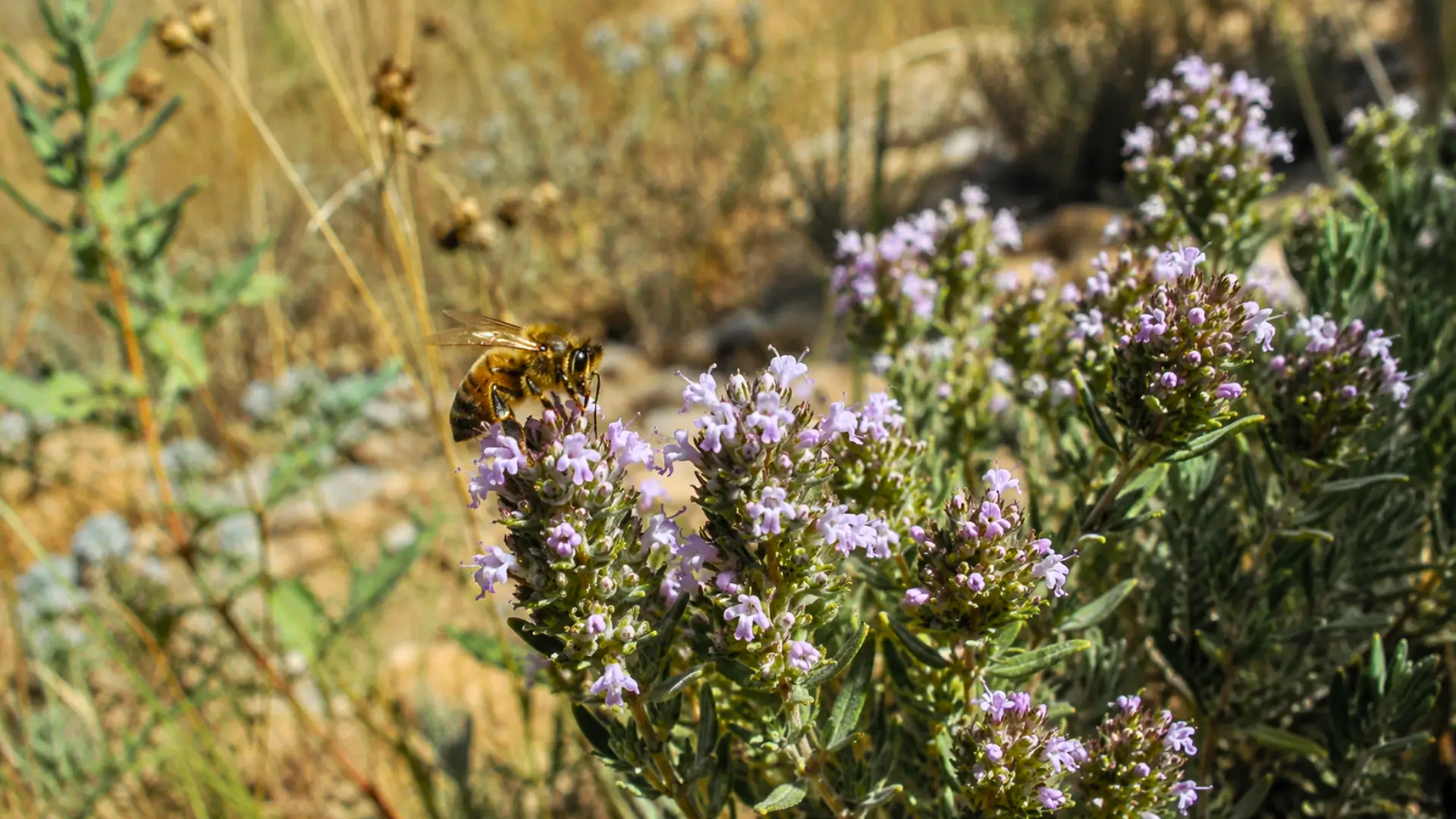
In a study conducted in a Mediterranean scrubland, researchers observed that drought affects the scent of thyme, rosemary, and rockrose. The alterations noted primarily involve molecules linked to stress. The findings, published in the Journal of Ecology, demonstrate that plants can chemically signal their thirst before they visibly show any signs of distress.
The chemistry of scent production
Producing a scent requires energy and an intricate biochemical machinery. One key pathway in this process is the MEP pathway, located in plant cell plastids, which is crucial for synthesizing monoterpenes -a large family of aromatic compounds, including familiar ones like linalool and certain pinene molecules.
However, drought does not simply trigger an increase or decrease in fragrance. The response is influenced by the species, the intensity of the stress, and its duration. Some plants might temporarily increase their volatile emissions, but severe or prolonged water shortages can lead to a significant decrease in production due to limited available resources.
Recent research further supports this. In a 2026 study on cultivated blueberries, scientists identified 28 floral volatile compounds. They found that drought significantly altered certain chemical families, suggesting that a combination of heat and lack of water drastically reduces overall emissions. Thus, a stressed flower does not merely smell “stronger”; its entire chemical message can be rewritten.
The impact on pollinators
This transformation might seem trivial if floral scents were only decorative. However, for many pollinators, scent acts as a navigational cue. Bees and other insects can learn to associate specific scent blends with valuable resources. Consequently, altering this bouquet has the potential to change directional signs on their foraging routes.
Field observations in the Mediterranean region indicated that domesticated bees and certain bumblebees preferred control plots over those experiencing drought. Surprisingly, some wild bee species reacted differently, favoring the dryer plots. Therefore, while the disruption does not eliminate all visitors, it can reshape their communities.
Drought’s broader implications
The narrative doesn’t end with scent changes. In the Mediterranean experiment, thyme nectar production dropped significantly under drought conditions. Other studies have shown that water scarcity can also alter flower size, resources, or numbers. Pollinators must then simultaneously interpret multiple signals that have become less reliable.
A 2025 study on white mustard examined these effects further. Under water deficits, some attractive compounds decreased while stress-related molecules increased. Pollinators tended to favor less stressed plants, highlighting how physiological disruptions can directly influence plant reproduction.
This phenomenon encourages a reevaluation of dried landscapes in summer. A meadow may remain blooming while being chemically altered for the insects traversing it. In a warming climate, the invisible networks between flowers and pollinators may shift before any visible changes are apparent to the human eye.