A surprising new study from Brazil uncovers that the infamous zombie fungus, previously known for its deadly effects on ants, also targets a different victim: moss.
The endophyte phase
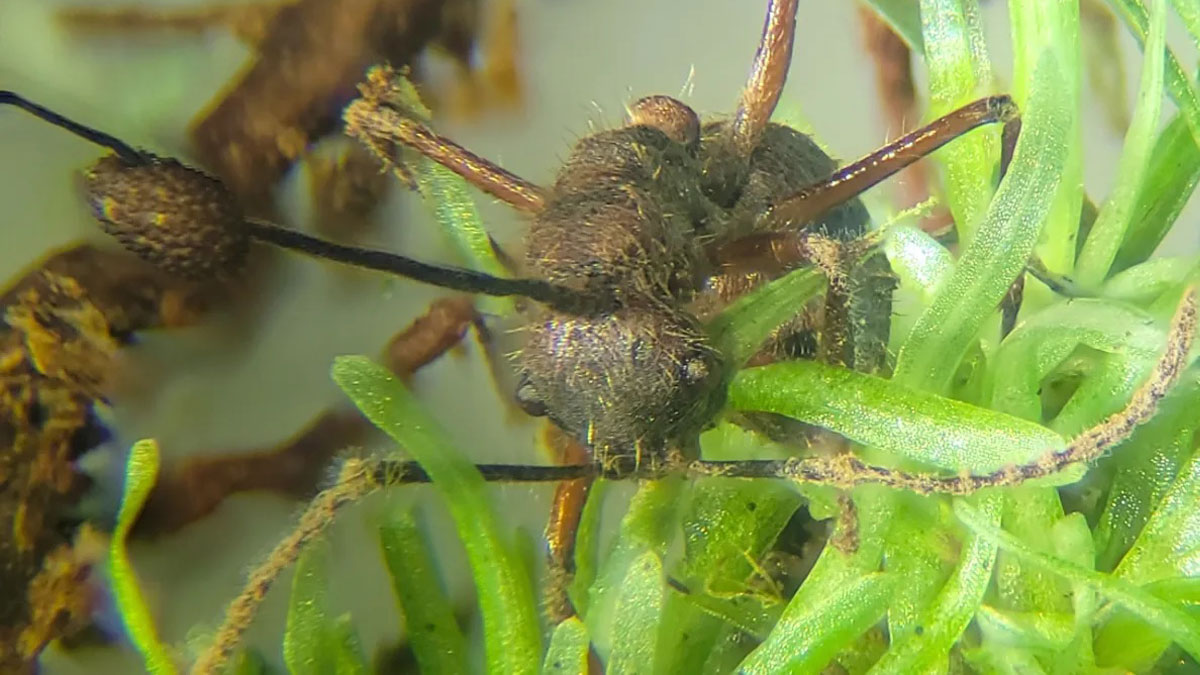
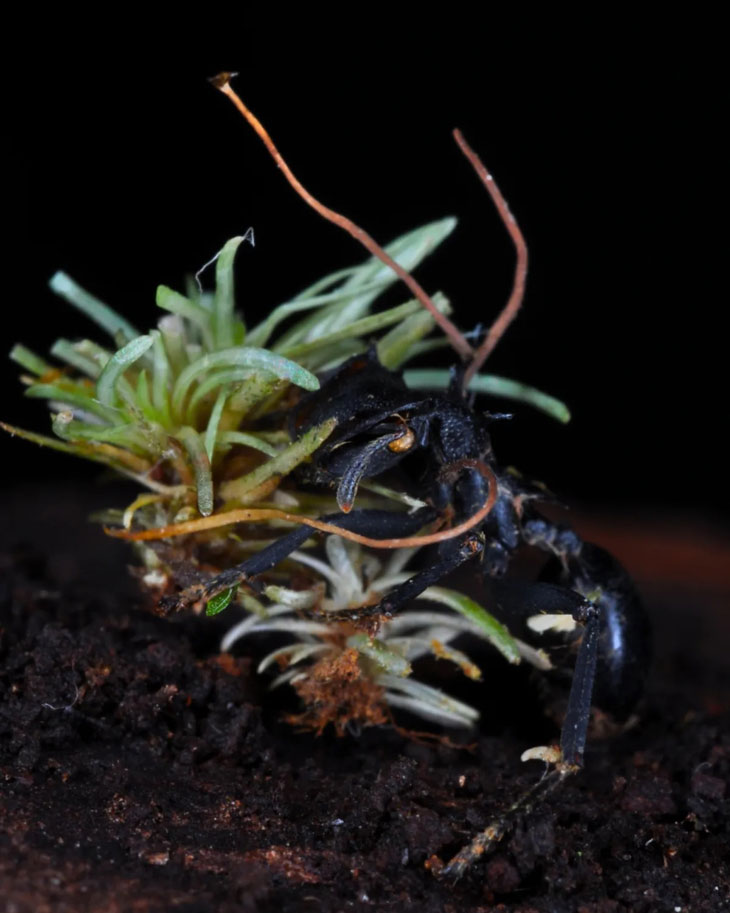
The fungus Ophiocordyceps famously manipulates the behavior of ants, causing them to climb vegetation and latch on before they die. After their demise, fungal stalks emerge from the remains, releasing spores that can infect nearby ants, thus continuing the cycle of “zombification.” However, researchers recently discovered something unexpected when they sequenced genetic material from moss found in the Adolpho Ducke forest reserve, close to Manaus. They consistently identified the fungus in moss samples sourced far from known “ant graveyards,” indicating that these specimens had no direct contact with infected ants.
This discovery suggests an “endophyte” phase of Ophiocordyceps, during which the fungus lives inside the moss without causing any visible symptoms. João Paulo Machado de Araújo, a co-author of the study published in the journal IMA Fungus, highlights that this dual life of the fungus indicates a more extensive trend. “We are increasingly discovering distinct lineages of entomopathogenic fungi associated with plants, but this is the first documented instance of such a phenomenon in the Amazon and more broadly in the tropics,” he explains.
Disturbing similarities
Intriguingly, back in 2018, Araújo and his team described several new species of parasitic fungi from the Manaus region, including O. monacidis. This species develops structures strikingly similar to the sporophyte of the moss Octoblepharum, where the infamous “zombie ants” affix themselves and where Ophiocordyceps has also been detected.
“Plants harboring the endophyte form of the fungus may attract the corresponding infective form in insects. Proving this could have significant implications for biological pest control,” he concludes.
In case you didn’t know, there’s a parasite that makes snails… dance.