In the vast Libyan Desert, an ambitious hydraulic project aimed to transform arid sands into fertile land, yet three decades later, it barely achieves its promises.
Hosni moubarak’s vision for transforming the Egyptian desert
In 1997, Egyptian President Hosni Moubarak launched a groundbreaking initiative designed to reshape the nation’s economic future. Known as the Toshka Project or New Valley Project, it aimed to increase arable land from a mere 6 percent to 35 percent of Egypt’s total area.
At the time, much of the Egyptian population was concentrated along a narrow strip by the Nile, with cultivable land diminishing each year. The project was intended to alleviate pressure from this crowded region and create new urban and agricultural hubs for generations to come.
Moubarak envisioned a transformed Egypt where water would reclaim the desert, making the inhospitable Libyan Desert a symbol of a nation conquering its most challenging environment.
The Sheikh Sayed canal and the Moubarak pumping station: engineering marvels on Lake Nasser
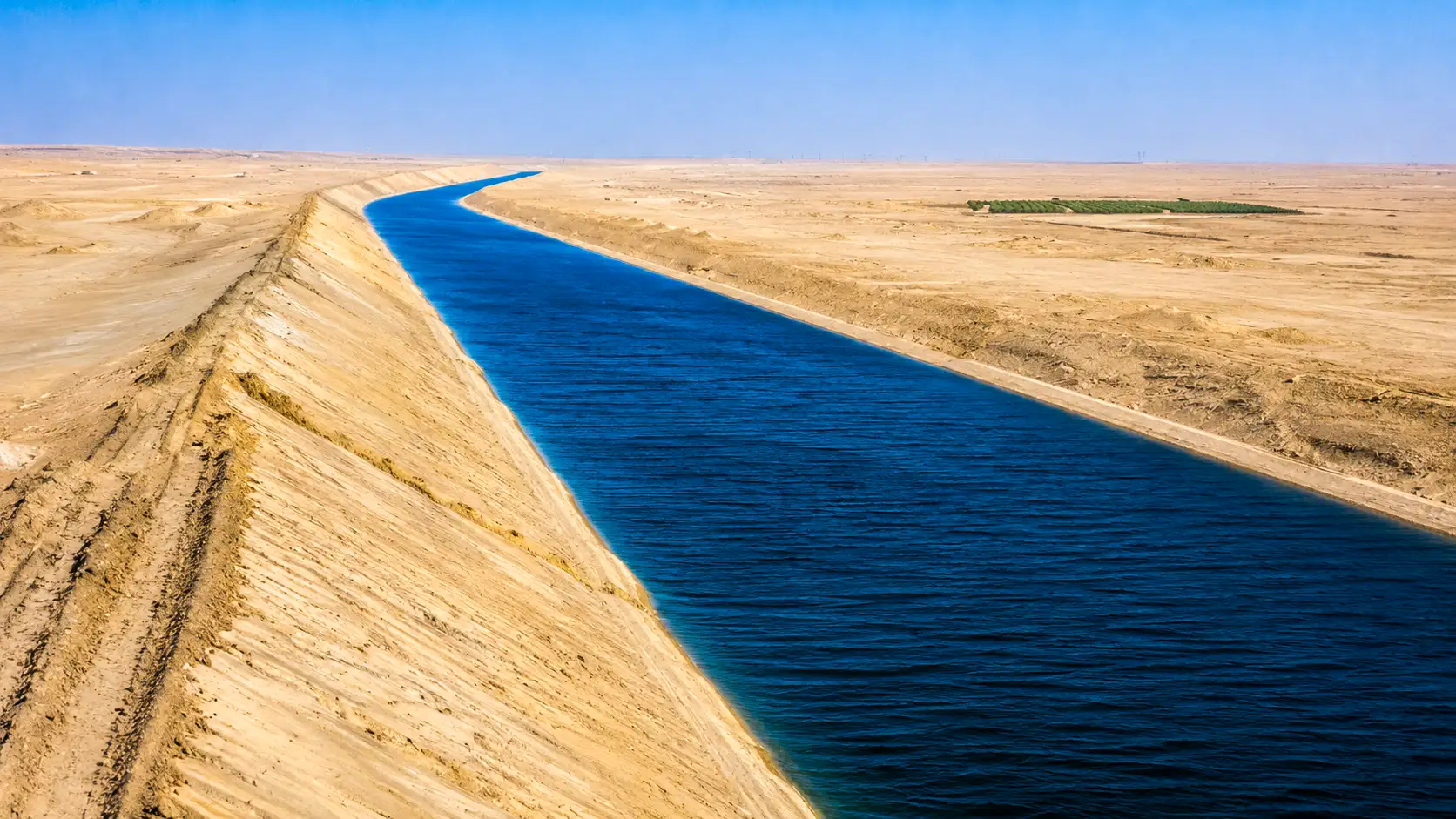
The project relied on an intricate network of canals to channel water from Lake Nasser, the massive reservoir created by the Aswan Dam, into the western Egyptian desert. The Sheikh Sayed canal, stretching 310 kilometers, was designed to transport water to the Baris oasis.
Additionally, a 72-kilometer canal connected Lake Nasser directly to the Toshka depression. Opened in 2003, this system included the Moubarak pumping station, equipped with 24 colossal pumps theoretically capable of moving up to five billion cubic meters of water annually.
Challenges with the Toshka pumps
Despite its impressive design, the reality of the Toshka project has been less than ideal. Out of 24 pumps, only four to six operate fully on any given day, resulting in a mere fraction of their intended capacity being utilized.
Several factors have contributed to this issue. Operating costs are high, and securing private investment has proven challenging. The soil conditions are not conducive to intensive agriculture without ongoing maintenance. Additionally, a significant amount of water is lost to evaporation under the relentless sun. By the late 2000s, the project was labeled a major failure.
In 2016, despite the setbacks, President Abdel Fattah al-Sissi sought to revive the initiative by allocating about 4 square kilometers for a new city in Toshka. However, lack of infrastructure -roads, electricity, and water supply -has deterred investors, resulting in several proposed companies withdrawing before any construction could start.
Toshka’s lessons on future water and wheat tensions in Egypt
The story of Toshka reflects more than just a failed urban project; it underscores the growing tensions around water resources in a region increasingly contested. The geopolitical upheaval of 2022, stemming from the war in Ukraine, has prompted Egypt to revisit this long-dormant project.
The nation heavily relies on wheat imports from Russia and Ukraine, making food security a pressing concern tied to this initiative. Thus, Toshka serves as a dual symbol of aspirational vision and the stark realities of environmental limitations, even faced with grand undertakings.