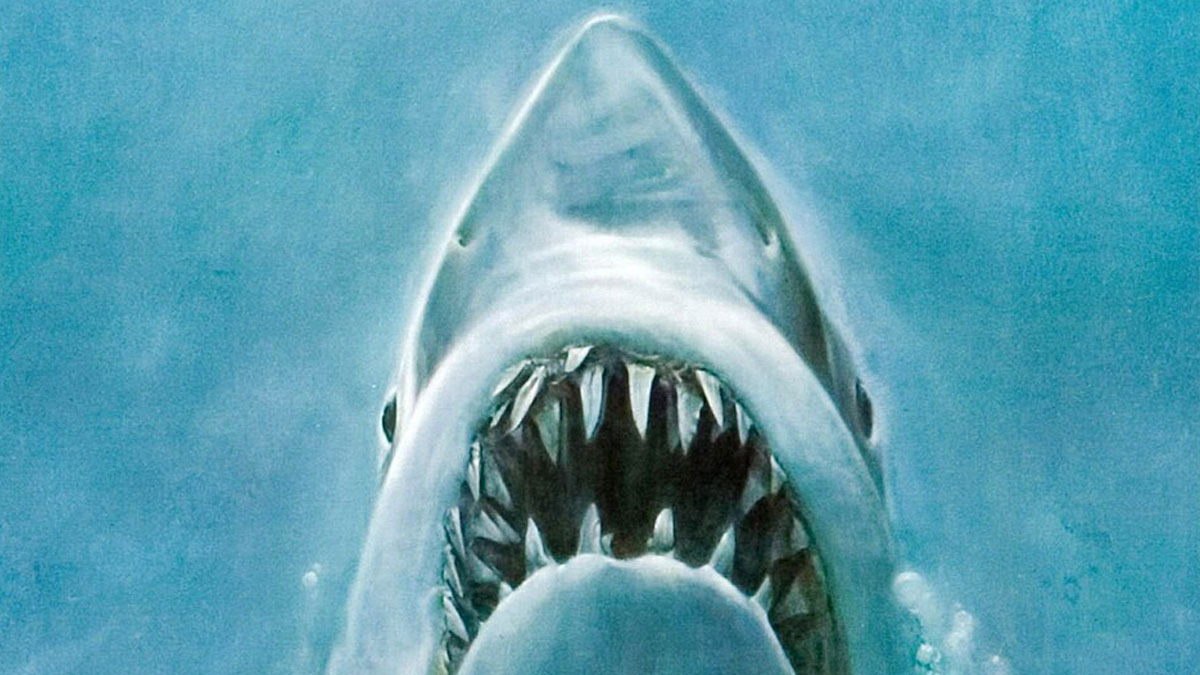
The iconic film “Jaws” celebrated its 50th anniversary in 2025, creating quite a stir upon its release. While the plot revolves around a great white shark terrorizing a fictional beach town, the creature showcased on the original poster is actually of a different species.
The museum specimen reconstruction
The sharp snout and jagged rows of teeth, ready to shred an unsuspecting swimmer, are actually based on a model created from a specimen preserved in ethanol since 1939 at the American Museum of Natural History. In the 1970s, artist Roger Kastel was captivated by the morphology of a shortfin mako shark (Isurus oxyrinchus) and chose to directly draw inspiration from it for this iconic illustration.
Less formidable than its cousin, the great white shark (Carcharodon carcharias), the shortfin mako has been involved in at least ten attacks on humans, including one that was fatal. Besides its formidable bite, it is unmatched in speed among sharks, capable of swimming up to 70 kilometers per hour.
A monumental piece of pop culture, “Jaws” has contributed to amplifying a concerning trend. A 2021 study estimated that since the 1970s, oceanic species, including the mako, have suffered drastic declines due to rampant and unregulated fishing practices.
In a 2022 interview with the BBC, director Steven Spielberg expressed his concern. “It’s one of the things that haunts me. That the sharks somehow resent me for the fishing frenzy, especially sport fishing, that followed 1975,” he lamented.
A curse or a blessing?
Simultaneously, the film has spurred numerous scientific efforts focused on sharks, without which their troubling decline would likely not be understood with such accuracy.
Data collected over the decades has become vital in guiding conservation efforts for iconic species like the great white shark, tiger shark, and hammerhead shark, with some populations showing signs of recovery in various regions around the world.
One can easily imagine how the movie poster would have looked if Kastel had depicted the far more massive jaws of a great white shark.