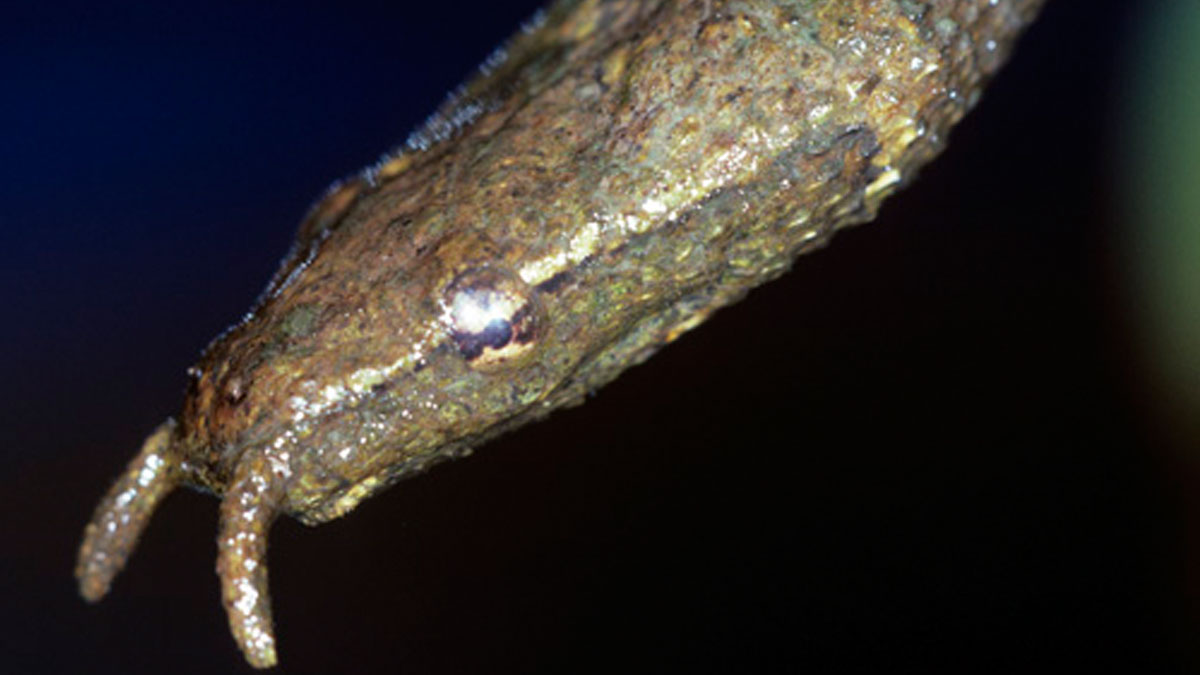
In the animal kingdom, extraordinary adaptations abound, from frogs that can freeze without perishing to axolotls with remarkable regenerative abilities. Today, our focus is on the tentacled snake, an elusive predator capable of anticipating its prey’s movements.
Erpeton tentaculatum
Natively found in the wetlands of Southeast Asia, Erpeton tentaculatum is easily recognized by its tentacle-like protrusions on its snout. Growing up to one meter in length as adults, this nocturnal fish hunter employs a distinct and deadly feeding strategy.
Research published in 2010 in the Journal of Experimental Biology revealed that these appendages are packed with tiny nerve endings, allowing them to detect even the slightest vibrations and movements in the water.
While these signals generally complement the snake’s visual system, scientists found that in low-light conditions, the tentacle sensors alone are remarkably effective. The snake relies on them almost exclusively when visibility is poor.
Interestingly, these solitary reptiles have evolved an adaptive response to the escape behaviors exhibited by the fish they hunt. When fish sense danger, they tend to swim away in a “C” formation, which the tentacled snake can exploit to its advantage.
Deadly ambush
In action, E. tentaculatum adopts a J-shaped stance, utilizing its eyes and tentacles to locate potential meals. When it spots a fish, the snake makes a subtle disturbance in the water, causing the fish to flee in the opposite direction. At that crucial moment, it strikes.
This skillful ability to track and predict its prey’s movements exemplifies the co-evolutionary arms race between predator and prey, where the reptile exploits the fish’s natural escape mechanisms as a vulnerable opportunity.
Even more fascinating, studies published in PLOS One demonstrate that this predatory strategy is innate. Even newly hatched tentacled snakes engage in this sophisticated hunting technique right after emerging from their eggs.