In the fight against invasive species, timing is everything, and a recent case in France highlights this truth. The electric ant, still limited to a mere seven hectares, presents a unique opportunity for eradication. But will the moment be seized in time?
To tackle the issue, understanding the legal framework is essential. European Regulation No. 1143/2014 outlines a list of invasive alien species of concern to the Union. Once a species is added to this list, its import, transport, sale, possession, cultivation, and introduction into the environment become illegal throughout the Union.
This list has recently expanded. A revision effective August 7, 2025, introduced eight new plant species, bringing the total to over ninety invasive animal and plant species. Among these additions is a well-known pest: Japanese knotweed. We explored the case of the Asian hornet earlier, just as its national management plan began its first full season in March 2026.
This article provides a different perspective. Instead of focusing on how to combat specific invasive species, we explore how newly arrived species are ranked and why some will remain local nuisances while others become entrenched. This fills in gaps left by our previous discussions on mosquito control.
The arrival of new invasive species
| Species | Status in France | Is eradication still possible? |
|---|---|---|
| Electric ant Wasmannia auropunctata | 3 locations in Var, approximately 7 hectares | Yes, and now is the time |
| Japanese knotweed Reynoutria japonica | Present in almost all departments | No, only containment |
| Asian hornet Vespa velutina | Almost fully established in metropolitan territory | No, national regulation plan since March 2026 |
| Tiger mosquito Aedes albopictus | 81 out of 96 departments | No, only health monitoring |
| Ragweed Ambrosia artemisiifolia | Strong presence in the Rhône Corridor, on the rise | No, local destruction required |
The rightmost column spells out the status for each species. Only the electric ant, which few have heard of, is marked with a ‘yes’ for eradication potential. The other four are widely known precisely because their invasion is now too advanced. Invasive species tend to gain media attention only after it is too late to remove them.
Electric ant: the window is closing
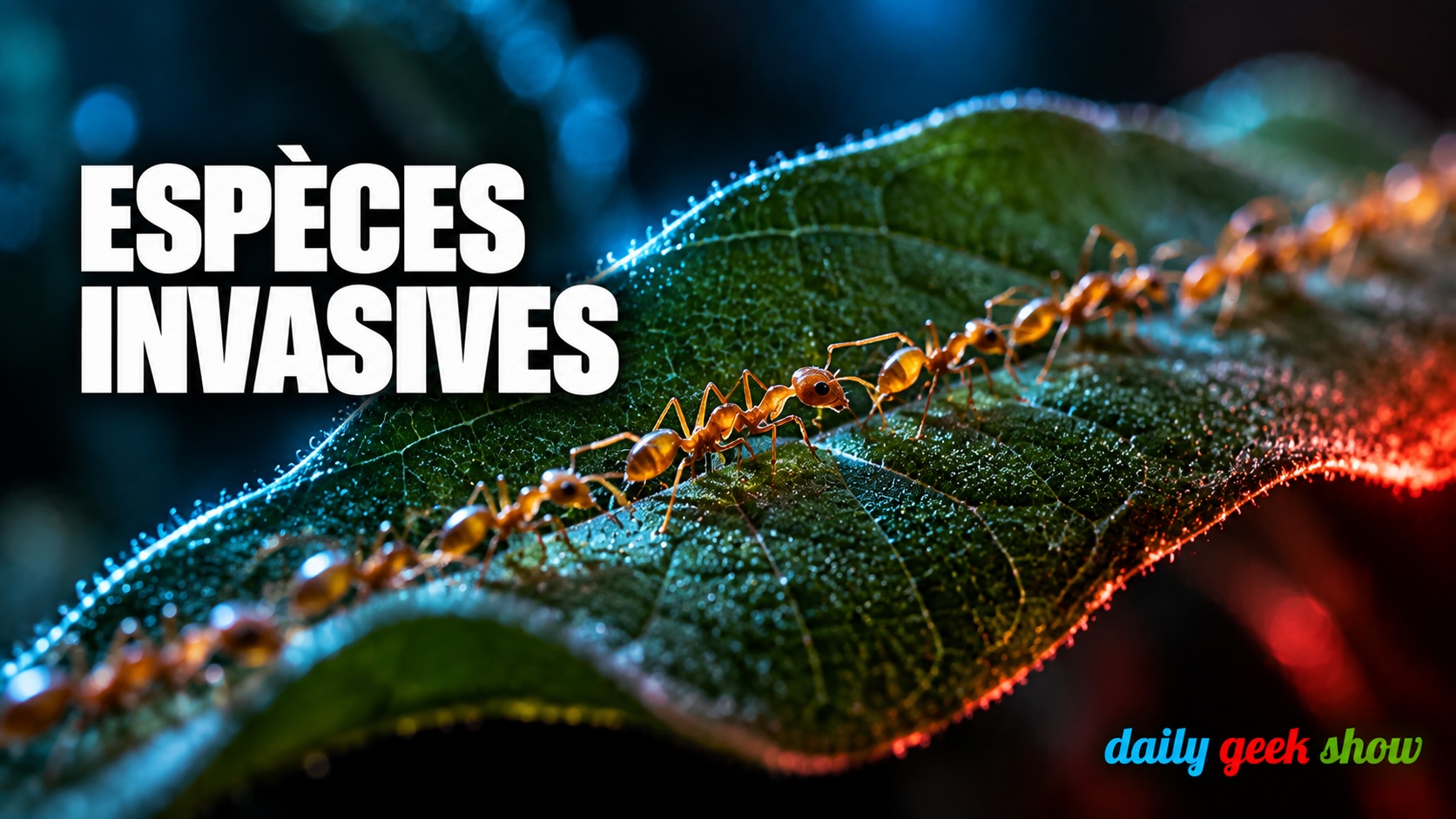
Measuring only 1.2 to 1.5 millimeters, these ants are yellow-orange to light brown and appear golden under natural light. They move in dense lines and can easily go unnoticed until someone gets stung.
The sting, which gave the species its name, is an intense, localized sensation that can last for up to three hours, followed by red welts and prolonged itching. There’s a risk of anaphylactic shock for allergic individuals. Pets are also at risk, as repeated stings to their faces can lead to partial or total blindness.
The spread of electric ants in France has been documented recently. The first detection was in Toulon in 2022, covering about one hectare. This was followed by observations in La Croix-Valmer in 2023 (about four hectares) and Cavalaire-sur-Mer in 2024 (approximately two hectares). Their presence is suspected in Bouches-du-Rhône and Alpes-Maritimes, indicating ongoing surveillance issues.
What this species causes elsewhere reveals the stakes involved. In New Caledonia, invaded zones see electric ants making up to 92% of captured ant fauna -indicating they replace, rather than add to, the ecosystem. In the Mediterranean region, they facilitate the proliferation of scale insects which threaten crops like citrus, olives, and vineyards.
Japanese knotweed changes status
This regulatory update is news that has not reached many homeowners. Since August 7, 2025, Japanese knotweed has been added to the European list of species, alongside its relatives, Bohemian and Sakhalin knotweed.
The practical implications of this inclusion are severe: it prohibits transport, sale, and environmental introduction -exactly how this plant spreads. It reproduces through small fragments of rhizomes; even a few centimeters can establish a new colony.
Homeowners should avoid three common behaviors. Disposing of cut stems or roots in green waste redistributes them via communal composting. Moving soil from contaminated areas to new locations is a primary mode of spread on construction sites. Cutting the plant without managing the debris multiplies fragments instead of containing them.
For those already harboring this plant in their gardens, while the new regulations do not necessitate complete eradication -which is impractical -they do create responsibilities regarding the mobility of plant fragments. A crucial takeaway is to ensure no material leaves the property without going through appropriate treatment channels.

Why detection matters
The four established species listed above share a common trait: they were all detected too late, at a stage when the areas occupied exceeded intervention capabilities.
The tiger mosquito demonstrates this clearly. First detected in Menton in 2004, it took fifteen years for an effective monitoring system to be established. During that time, it spread to over fifty departments, aided by its own movements along transportation routes.
The Asian hornet follows a similar trajectory, arriving in 2004 through a shipment of pottery. By the time a national management plan was adopted, it was nearly ubiquitous. The current plan initiated in March 2026, focuses not on eradication but on regulating its impact on honeybee populations.
Currently, the electric ant is where the tiger mosquito was in 2005: a few small locations, a measurable area, and technical feasibility for complete intervention. The difference now lies in the existence of a detection network. The crucial question remains whether it will be utilized effectively and promptly.
The impact of reporting
Reporting is the only tool individuals have at their disposal, and its effectiveness is significant. Many of the initial departmental detections for both the tiger mosquito and new arrivals have come from residents sending in photographs before operators could capture specimens.
A clear protocol exists for reporting the electric ant. Take a close-up photo of the insect, including a scale reference if possible. Preserve a few individuals in alcohol or in a freezer, as formal identification requires examination under a microscope. Record the exact geolocation. Then report to your regional FREDON, your town hall, or through the national platform for reporting invasive species.
It’s important to distinguish between useful and unhelpful reports. A blurry photograph of any ant adds no value and complicates the work for teams. A clear photo, accompanied by a sample and precise location, triggers verification. The difference between the two can often be achieved in just five minutes of attention.
What not to do
Attempting to treat a suspected ant colony yourself is a common mistake. A consumer-grade insecticide applied to an electric ant nest often results in colony fragmentation, allowing surviving queens to disperse and establish multiple new colonies. This species typically contains multiple queens per colony, making it particularly easy to fragment.
Another misstep is moving potted plants, soil, or mulch from an affected area. This is the main mode of spread for both the electric ant and Japanese knotweed, and it’s an action that is often overlooked as a risk.
The third error is more subtle: waiting for official confirmation before reporting. Early reporting is crucial for official verification. A resident who thinks it’s better to wait and see is potentially missing the only critical season available for intervention.
Three others to monitor
Brown marmorated stink bug, Halyomorpha halys, has arrived via freight and is spreading from the eastern part of the country. It does not sting and poses no health risks, but it attacks a wide range of fruit and vegetable crops and seeks shelter in homes during the fall. Its status is that of an established pest; the issue now is not containment but protecting orchards.
Asian clam is a small freshwater bivalve that has colonized French waterways since the 1980s. It filters water at a rate that alters aquatic ecosystems and clogs industrial intake pipes. This example illustrates a species often overlooked because it lives beneath the surface, with costs borne by network managers.
Jussie, an aquatic plant imported for ornamental ponds, grows into such dense beds that it suffocates habitats and blocks navigation. It is on the European list of invasive species. Its case highlights a common introduction vector in France: ornamental horticulture and the seemingly harmless act of emptying a pond into a ditch.
Who pays, and how much
The question of cost is pivotal in determining the resources allocated to combat invasive species, though the debate around it is often poorly framed, as expenses are distributed among various stakeholders who do not communicate.
Local governments pay for the removal and mowing of invasive species on public land, with ragweed and knotweed demanding entire teams along roads and riverbanks each year. Farmers incur losses in yield and extra treatment costs, as seen with the brown marmorated stink bug in orchards and the potential threat of electric ants to Mediterranean crops should they spread. Network managers bear the costs of clogging from invasive species. Beekeepers suffer losses from hornets.
Residents incur costs twice: through local taxes that fund eradication campaigns and directly when they need to treat their land or deal with contaminated soil through specialized routes. One thing is certain in this landscape: eradicating a seven-hectare infestation is far less costly than managing an established species across eighty departments. This economic argument highlights the importance of early detection.
Gardener’s frequently asked questions
How can I distinguish the electric ant from a regular ant? Its very small size, around a millimeter, its golden color in natural light, its slow movement in dense lines, and especially the sting: a focal discharge far more intense than a bite from a typical ant.
What should I do about an existing knotweed patch? Contain it rather than fight it: repeated mowing without leaving fragments behind, no export of soil or residues outside your property, and especially not in green waste. Eradicating an established patch is beyond the means of an individual.
Should I report ragweed? Yes, this is already mandatory in many departments where regulations require destruction before flowering. Ragweed pollen is a major allergen, with the critical period spanning from August to October.
What about traps sold at garden centers for invasive species? The answer is the same as for traps for hornets: selectivity is the issue. A non-selective trap captures many unintended insects, and its effectiveness for the targeted species remains low. The same goes for anti-mosquito devices we have compared.
Can I still buy a plant listed on the European list? No. Its commercial sale is prohibited throughout the Union, including between private individuals and online. Always check the list before purchasing any exotic ornamental plant, especially from foreign sellers.
Frequently asked questions
Where is the electric ant present in France?
Three confirmed sites in Var: Toulon since 2022, La Croix-Valmer since 2023, and Cavalaire-sur-Mer since 2024, covering approximately seven hectares in total. Unconfirmed presence is suspected in Bouches-du-Rhône and Alpes-Maritimes.
Is the sting of the electric ant dangerous?
It causes intense localized pain that can last for up to three hours, leading to welts and prolonged itching. Anaphylactic shock is a risk for allergic individuals. For pets, repeated stings to the face can lead to vision loss.
Is Japanese knotweed banned in France?
It has been on the European list of invasive alien species since August 7, 2025, prohibiting its transport, sale, and environmental introduction. Existing patches do not require eradication but prohibit the removal of fragments or soil from the property.
How many species are on the European list?
Over ninety animal and plant species have been recorded since the update effective August 7, 2025, which added eight plants, including the three knotweeds. This framework is set by European Regulation No. 1143/2014.
How can I report an invasive species?
By providing a clear photograph, precise geolocation, and, for insects, a sample preserved in alcohol or in a freezer. Reports can be made to the regional FREDON, your municipality, or via the national platform dedicated to invasive alien species.
Can I treat an electric ant colony by myself?
No, this is counterproductive. A consumer-grade insecticide typically disperses surviving queens, converting a single nest into several colonies. Since this species often has multiple queens per colony, fragmentation is easy. Reporting always precedes treatment.
Key takeaways
In France, an invasive species ranked among the top hundred worldwide occupies only seven hectares, is still technically eradicable, and remains largely unknown to the public. This summary encapsulates the essence of the issue at hand, emphasizing the often-late arrival of articles on invasive species.
The crucial factor is not climate, budget, or technique but rather the time elapsed between a species’ arrival and its detection. The tiger mosquito and Asian hornet had fifteen years of invisibility; the electric ant has had only four, with three identified locations. This difference is the only one that truly matters.
For individuals, the battle relies on one simple act that costs nothing: taking a clear photograph and reporting it. This might seem trivial in the face of the enormous problem, yet it remains the most effective individual contribution. Unfortunately, advising on specific products or treatments usually proves more harmful than beneficial.