
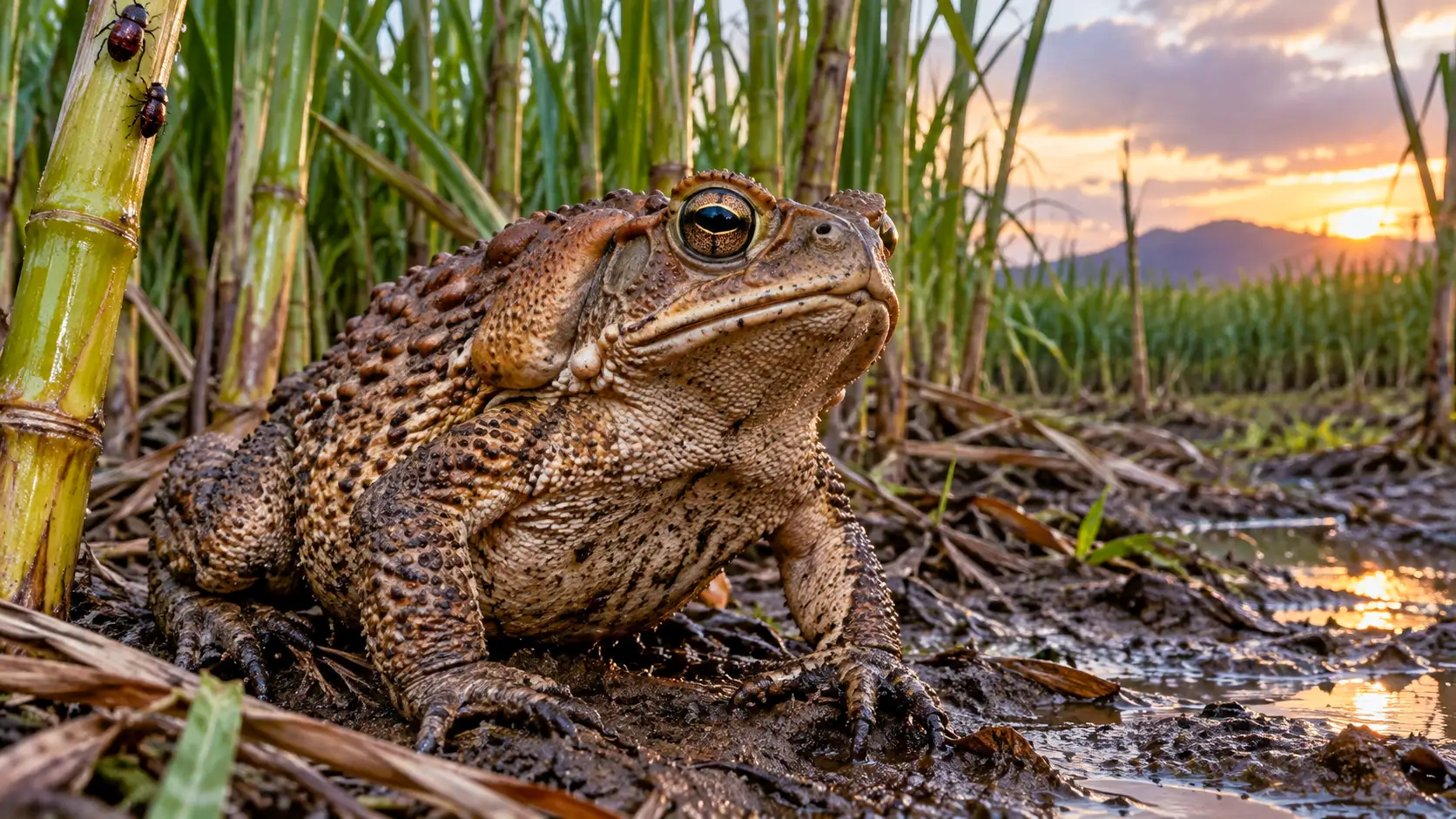
The fight against agricultural pests can lead to significant ecological disasters. In Australia, the introduction of an exotic amphibian has disrupted local ecosystems without saving the sugarcane crops. This historical mistake serves as a cautionary tale about the dangers of unchecked human intervention.
The introduction of a tropical amphibian in 1935
In 1932, researcher Arthur Bell discovered the use of the cane toad as a pest control method in Puerto Rico. By 1935, entomologist Reginald Mungomery had captured several specimens in Hawaii. Though one toad died during transit, 101 individuals arrived in Gordonvale, near Cairns.
By August 1935, scientists released 2,400 capitive-bred toads into the wild. However, the Bureau of Sugar Experiment Stations had not conducted any prior environmental assessments. Agricultural officials based their strategy purely on speculation, overlooking scientific principles.
The toad fails to target the intended pests
Two beetles, the greyback and the Frenchi beetle, were wreaking havoc on Queensland’s sugarcane crops. Their larvae feasted on the roots underground, but the adult beetles resided high on the plant stalks, making them inaccessible to a toad that remained close to the ground.
Moreover, the biological rhythms of the two beetle species complicated any potential predation. The greyback beetle rarely ventured to the ground, while the Frenchi beetle was active only when the toad was asleep, rendering the farmers’ hopes futile.
By 1936, entomologist Walter Froggatt raised serious concerns about the looming invasion. The federal government issued a temporary ban in December 1935. However, pressure from sugarcane producers led to its reversal by September 1936, exposing Australia’s wildlife to devastation.
The toxic invader decimates local fauna
With no natural predators, the cane toad quickly spread through wild lands. Its skin secretes potent toxins, poisoning local predators like monitor lizards, snakes, and quolls if they attempt to eat it. The local carnivore populations suffered due to their lack of genetic adaptation to this new poison.
The toads advanced at a frightening pace of 40 to 60 kilometers per year. By 1945, they had reached Brisbane; by around 1980, they made it to Burketown. The species expanded further to Iron Range in 1983 and eventually reached the tip of Cape York by 1994.
Faced with this ecological disaster, authorities finally changed their stance. By 1950, the Australian state officially classified the toad as a pest and an invasive predator. Fifteen years of neglect had transformed a supposed agricultural aid into an ecological menace.
Grassroots efforts against the cane toad invasion
The official failure prompted community action against the cane toad. Several municipalities in the northeast began collaborating with the organization Watergum. Together, they trained residents to capture adult toads and destroy their eggs in local ponds.
Almost a century after the release of the toads in Gordonvale, the battle left government labs and entered the hands of civilian volunteers. These citizens actively protected their gardens and billabongs, making grassroots efforts to slow the invasion. While this mobilization is making an impact, it cannot erase the mistakes of the past.



