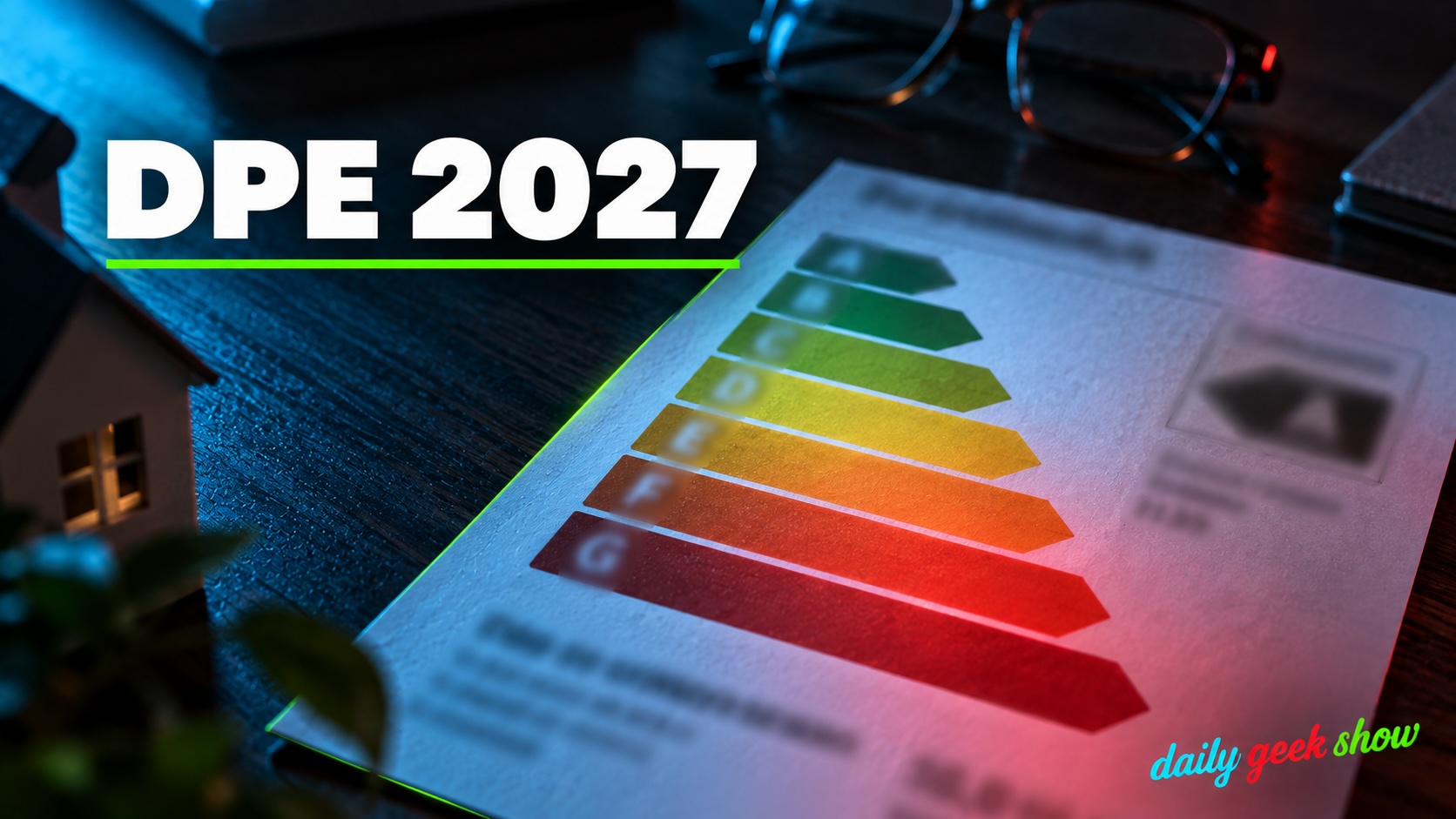
A new regulation announced for January 1, 2027, will lead to a significant change in energy performance ratings for residential properties in France. A tweak in the calculation will affect around 300,000 homes, particularly benefiting those heated by electricity.
The change involves a reduction in the primary energy coefficient for electricity from 1.9 to 1.7. As a result, approximately 200,000 homes currently rated F and 100,000 rated G will improve by one classification. In the private rental sector, around 125,000 properties will be reclassified, leading to a 10% reduction nationally in homes rated F and G, with a drop of 14% in the rental market.
This modification, while discreetly introduced in August, affects all homeowners relying on electric heating, landlords facing potential rental bans, and buyers negotiating based on energy performance certificates. The crux of the matter is not how many homes change class, but whether a specific property will see a shift. Most importantly, the update shows that while the ratings change, bills and actual energy consumption will remain the same.
Understanding the new coefficient
The new energy performance rating (DPE) does not measure what you consume directly. It reflects the primary energy utilized to generate what you use in your home.
For fuels such as gas, oil, and wood, the coefficient is standardized at 1, meaning one kilowatt-hour used corresponds to one kilowatt-hour produced. However, for electricity, this coefficient was once 2.3, reflecting inefficiencies at power plants. A previous adjustment lowered it to 1.9, and this latest change brings it further down to 1.7, justified by France’s cleaner energy mix and recent European directives on energy efficiency.
This arithmetic means that the primary energy consumption for fully electric homes is shown to drop by 10.5% on paper, without any reduction in actual energy use. The system remains unchanged; only the divisor in the calculation has altered.
Importantly, homes heated by gas, oil, or wood will not benefit from this adjustment, as their coefficients remain at 1. This change mainly shifts the advantage towards electricity without improving overall energy performance across the residential sector.
Will your home change classification?
The DPE categorizes homes based on primary energy consumption in kilowatt-hours per square meter per year. The thresholds determining whether an electric-heated property drops a class starting January 1 are as follows:
| Class | Consumption (kWhEP/m²/year) | Threshold for downgrade |
|---|---|---|
| A | less than 70 | – |
| B | 70 to 110 | from 70 to 78 |
| C | 110 to 180 | from 110 to 123 |
| D | 180 to 250 | from 180 to 201 |
| E | 250 to 330 | from 250 to 279 |
| F | 330 to 420 | from 330 to 369 |
| G | more than 420 | from 420 to 469 |
To check your status, find the kWhEP/m²/year reading on your DPE. If it falls within the ranges listed, your home will slide down a category on January 1, 2027. If it’s higher, it will remain unchanged.
Here are some concrete examples:
| Current value | Current class | Value on January 1 | Class in 2027 |
|---|---|---|---|
| 450 | G | 403 | F |
| 430 | G | 385 | F |
| 400 | F | 358 | F, no change |
| 360 | F | 322 | E |
| 335 | F | 300 | E |
| 300 | E | 268 | E, no change |
| 270 | E | 242 | D |
| 200 | D | 179 | C |
It’s noteworthy that a home rated at 400 kWhEP sees no benefit, while a home at 360 kWhEP improves its rating. This change does not reward the worst-performing homes but rather shifts threshold boundaries. A property at 400 will remain classified as F and could be impacted by rental restrictions by 2028, while a neighbor at 360 will no longer face such restrictions, even with only a 10% performance difference between them.
Remember that the DPE considers the lowest rating between energy and climate. For electric-heated homes, the climate label is favorable and energy is the determining factor. For mixed heating systems, both labels should be checked before making conclusions.
Do you need a new diagnosis?
No, and this is good news. Existing valid DPEs can be updated with a free attestation for a new label, provided by ADEME. There’s no need to hire a new diagnostician or incur costs ranging from 150 to 250 euros.
Nonetheless, three things to keep in mind:
Wait for January. Getting a DPE done in October or November 2026 would mean paying for a document that will become outdated just three months later. If a sale or rental is not urgent, delaying this for a few weeks can be beneficial.
Check the validity. The attestation applies only to currently valid diagnostics. If a DPE is outdated, a new one must be completed using the updated coefficient.
Do not sign based on an outdated letter. For any sale or lease agreement signed late in the year, the mentioned classification will be the old one. While this is legal, it could impact negotiations, especially if buyers are informed.
Impact on rentals
This aspect has raised significant concern. The rental ban schedule is linked to the energy ratings.
| Class | Rental status |
|---|---|
| G | Banned from renting since January 1, 2025 |
| F | Ban set for 2028 |
| E | Future ban announced for 2034 |
A rental home that upgrades from G to F can once again be rented, while a property moving from F to E gains an additional six years in terms of rental eligibility. Of the 125,000 affected rental properties, the impact is immediate and significant for their owners.
The public consultation regarding this regulation saw 110 contributions, with 78 against and 29 in favor. The primary criticism is that this reform reduces pressure for renovations without improving any existing units.
This point is certainly backed by facts. However, it can also be countered with an equally factual observation: the previous coefficients penalized electric heating compared to its actual performance in a decarbonized mix, driving owners toward equipment replacements that did not necessarily lower bills or emissions. Both criticisms can hold truth simultaneously. What remains clear is that the classification has never been a measure of comfort or actual costs.
The hidden trap: improving a rating can mean losing aids
This is perhaps the most counterintuitive element of the reform, and it often goes unnoticed.
Several renovation aid programs specifically reserve or prolong assistance for the lowest-rated homes. From September 1, 2026, certain actions have been removed from the MaPrimeRénov’ eligibility criteria, including biomass heating, thermodynamic water heaters, and thermal solar installations. Only homes rated F and G will retain access to these programs until December 31, 2027.
A landlord whose F-rated property shifts to E on January 1 could find themselves losing out on previously accessible aid. No changes were made to their property, yet help that was available at the end of 2026 will be off the table at the start of 2027.
For anyone planning renovations, it’s crucial to look at the timeline now rather than waiting until spring. Just three months separate the current situation from the new rating system.
Buying or selling between now and January
The period leading up to the new system has its own considerations.
For sellers. If the property is electric-heated and falls within a downgrade zone, waiting until January will yield a better rating displayed in listings without any cost. The price difference between neighboring classes is significant in the French market, particularly affecting lower ratings, where a change in classification often prompts renovation discussions rather than mere preference. A home rated at 360 kWhEP will be listed as E if sold in February, but will still be F if advertised in November.
For buyers. The reverse is true and presents a strategic opportunity before the year ends. A property currently marked F, with a kWhEP value between 330 and 369, will transition to E without any renovations. If buyers perform the calculations, they will see the depreciation linked to the rating is set to diminish, allowing them to act accordingly, either by advancing their purchase or negotiating based on actual performance rather than the label.
In both cases, the critical data to request is the numerical value, not just the classification. An advert stating “class F” without the specific kWhEP figure is useless for proper analysis, and sellers withholding this detail are inviting scrutiny.

Particular considerations for co-ownerships
In the case of apartments in collective buildings, two types of diagnostics often overlap in conversations.
The individual DPE for a unit is what appears in sales or rental listings and determines whether the unit is subject to rental bans. This DPE will be affected by the regulations if the property is electric-heated, as is often the case in buildings from the 1960s to 1980s. These older apartments generally have convectors, making them the most commonly reclassified units.
On the other hand, the collective DPE for the building itself is governed by the building’s association and follows a different timeline concerning requirements based on the size of the structure. A building heated collectively with gas will not see any benefits from these changes, even if certain units have electric supplemental heating.
Practically, for a co-owner: if the heating is individual and electric, the January transition directly impacts you, and no other steps are necessary from the co-ownership. If the heating is collective and powered by gas or oil, the regulation changes are irrelevant, and decisions made in the assembly will remain the only course of action.
What the reform does not change
There are five key points to remember before celebrating a rating upgrade.
The bill. No energy consumption is saved. A property moving from F to E will consume exactly the same amount on January 2 as it did on December 31, and the heating costs will remain unchanged.
Heat loss. Walls, windows, thermal bridges, and roofs remain unaddressed. A poorly insulated home stays poorly insulated, with the same drafts and thermal inertia.
Summer comfort. This is an important caveat, especially for smaller urban units heated by electricity. Studios and one-bedroom apartments that are poorly insulated and south-facing can exit the classification of energy sieves without experiencing any significant temperature change in July.
The climate label. This is based on greenhouse gas emissions and is not affected by the energy update. A gas-fueled home that is hindered by its climate label will remain so.
Usage value upon resale. An improved letter does not guarantee a buyer will overlook the real value in kWhEP and the specifics around heat loss. The depreciation from poor performance does not disappear simply because an administrative boundary has shifted.
What remains to be done, with or without reform
The hierarchy of actions doesn’t change due to a mere adjustment in coefficients. The steps for owners of electric-heated properties, in order of cost-effectiveness, remain:
Insulation of lost attics, the most cost-effective building improvement. Sealing drafty areas. Regulation, which continues to provide an excellent return on effort versus results; our study on smart thermostats outlines potential gains based on starting points. Replacing old convectors can improve regulation without changing performance, as discussed in our report on so-called economical radiators.
For electric-only homes, tariff arbitration may often have a greater impact than shifting ratings: the thresholds for lower-rate electricity plans like off-peak usage and actual benefits from programs such as Tempo are detailed in our comparison. An owner gaining a rating on January 1 but remaining on an unsuitable tariff will only improve the grading, not their bill.
Finally, on-site production becomes relevant, with profitability depending more on daytime consumption patterns than on installed capacity; our guide on plug-and-play solar kits distinguishes where calculations work and where they do not.
Frequently asked questions
What changes in the DPE on January 1, 2027?
The primary energy conversion coefficient for electricity will drop from 1.9 to 1.7, as per a regulation signed on August 19, 2026. This mechanical change decreases the primary energy consumption measurement for electric homes by 10.5%, without any alterations to the physical structures.
How many homes will change classification?
Approximately 300,000 principal residences will be affected, including around 200,000 currently rated F and 100,000 rated G. In the private rental market, about 125,000 homes will move from being classified as energy sieves. The national stocks of F and G ratings will decline by 10%, and by 14% in the rental market.
How can I tell if my house gains a class?
Check the kWhEP/m²/year value on your DPE. An electric-heated home drops a class if its measurement falls between 330 and 369 (from F to E), 420 and 469 (from G to F), 250 and 279 (from E to D), or 180 and 201 (from D to C). If it exceeds these ranges, there is no change.
Do I need to redo a DPE for the new calculation?
No. Valid existing DPEs can receive a free attestation of the new label, generated by ADEME. However, any expired DPE must be renewed, incorporating the new coefficient from the start.
Does a gas-heated house also gain a class?
No. The primary energy coefficients for gas, oil, and wood remain at 1 and will not change. This reform only impacts electricity, shifting relative advantages between energy types while leaving overall sector classification unchanged.
Will my bills decrease?
No, not by a single euro. The DPE measures a conventional primary energy amount, not billed consumption. The house continues to consume the same energy, insulation remains constant, and heat loss is unchanged. Only the label improves.

Key takeaways
For landlords facing rental bans, this reform offers genuine relief, with 125,000 rental units escaping legal restrictions come January 1. The key step is straightforward: check the kWhEP value on the existing diagnosis, compare it against the threshold table, and request the ADEME attestation in early January.
For tenants, however, this change offers no benefits. The letter may improve, but the property and costs remain the same. Homeowners considering renovations supported by funds designated for F and G classes should move quickly, as the window closes come December 31.
An unresolved question remains: can an indicator that has shifted three times in five years still serve as a credible signal? Owners, buyers, and tenants have learned to interpret a label. However, successive adjustments to the calculation method may cause skepticism, which is arguably the exact opposite of intended outcomes.