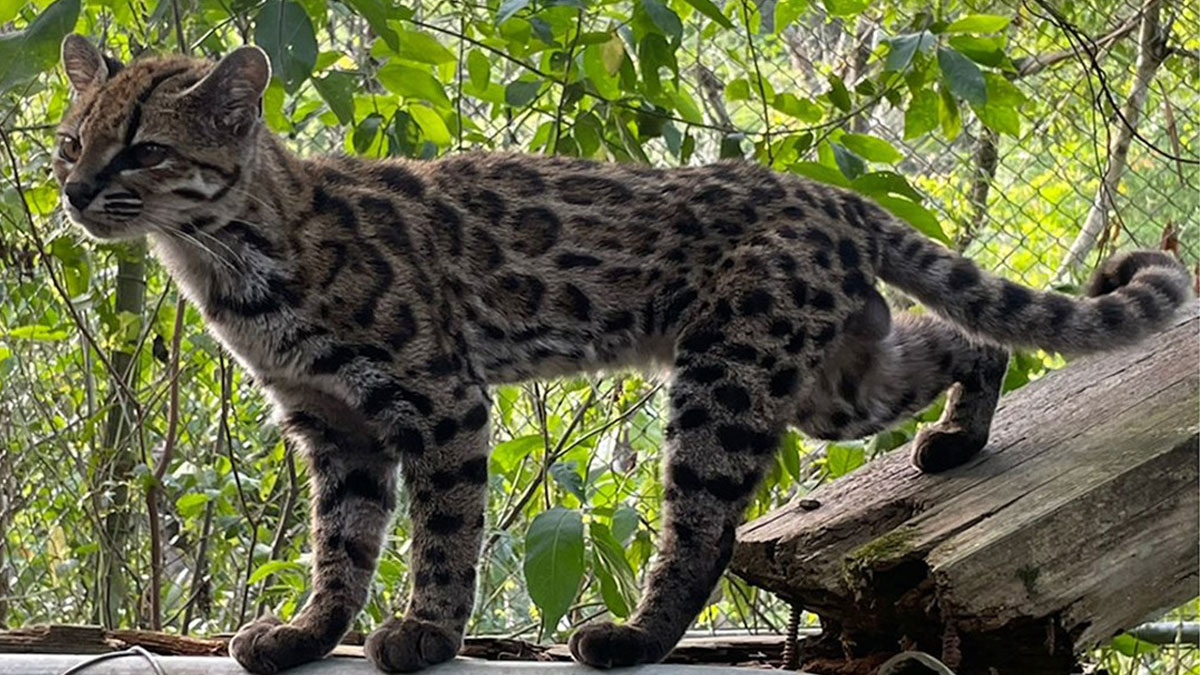
The dense forests of Bolivia are home to a wide variety of unique and elusive wildlife. Recently, researchers have identified a new species of feline in these areas, marking the first such discovery in over a century.
Pocket tigers
The American feline genus Leopardus includes several small cats, such as the ocelot, margay, and the tiger cats. Due to their wild habitats and nocturnal behaviors, identifying and classifying these cats has been a significant challenge. For many years, they were thought to be a single species called Leopardus tigrinus, which the International Union for Conservation of Nature classifies as vulnerable.
It was not until the early 2010s that genetic sequencing of these small, domestic-sized predators, found across much of Central and South America, began to take place. Although local names and slight physical differences had long hinted at their diversity, this research led to the identification of the southern tiger cat (L. guttulus), L. emiliae, and the clouded tiger cat (L. pardinoides), in addition to L. tigrinus tigrinus.
In a study published in Current Biology, Eduardo Eizirik from the Pontifical Catholic University of Porto Alegre and his team examined the complete genomes of 38 individuals from the Leopardus genus, including 26 tiger cats representing their entire known range from Costa Rica to the Andean regions and the tropical forests of eastern South America.
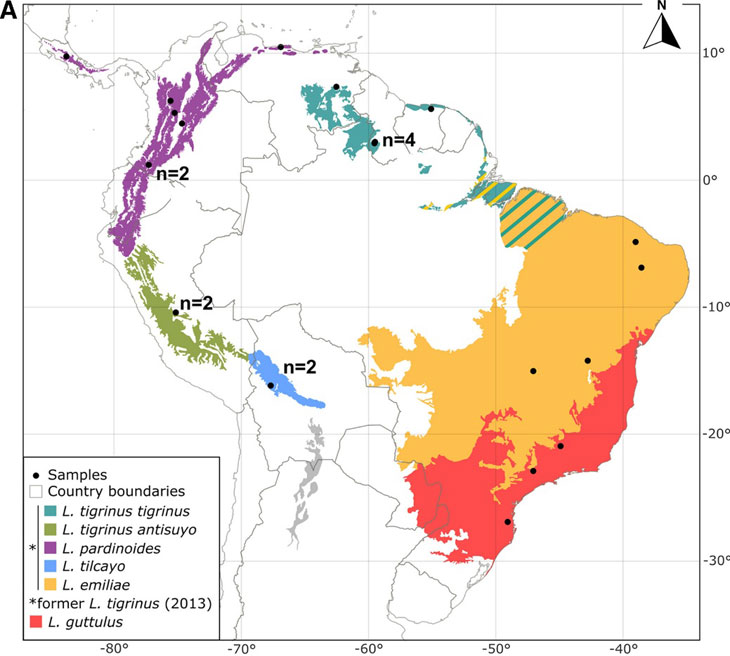
Leopardus tilcayo and L. tigrinus antisuyo
This new genetic data revealed a previously unidentified fifth species, evolving in the Yungas of Bolivia, located on the eastern slopes of the Andes. Measuring between 42 and 50 centimeters in length and weighing 1.5 to 2 kilograms, Leopardus tilcayo diverged from its relatives, including L. tigrinus tigrinus and L. pardinoides, approximately 1.4 million years ago.
The research team also identified a new subspecies residing in Peru, named L. tigrinus antisuyo. Like L. tilcayo, this subspecies displays the typical morphology of tiger cats but possesses distinct coloration and patterning.
The dense forest environments in South America and the numerous natural barriers separating them suggest that even more feline species remain to be discovered. Gaining a clearer understanding of the diversity within tiger cats will aid in directing conservation efforts, particularly as their historical habitats face threats from agricultural expansion.
Previously, researchers have unraveled long-standing mysteries regarding feline evolution.