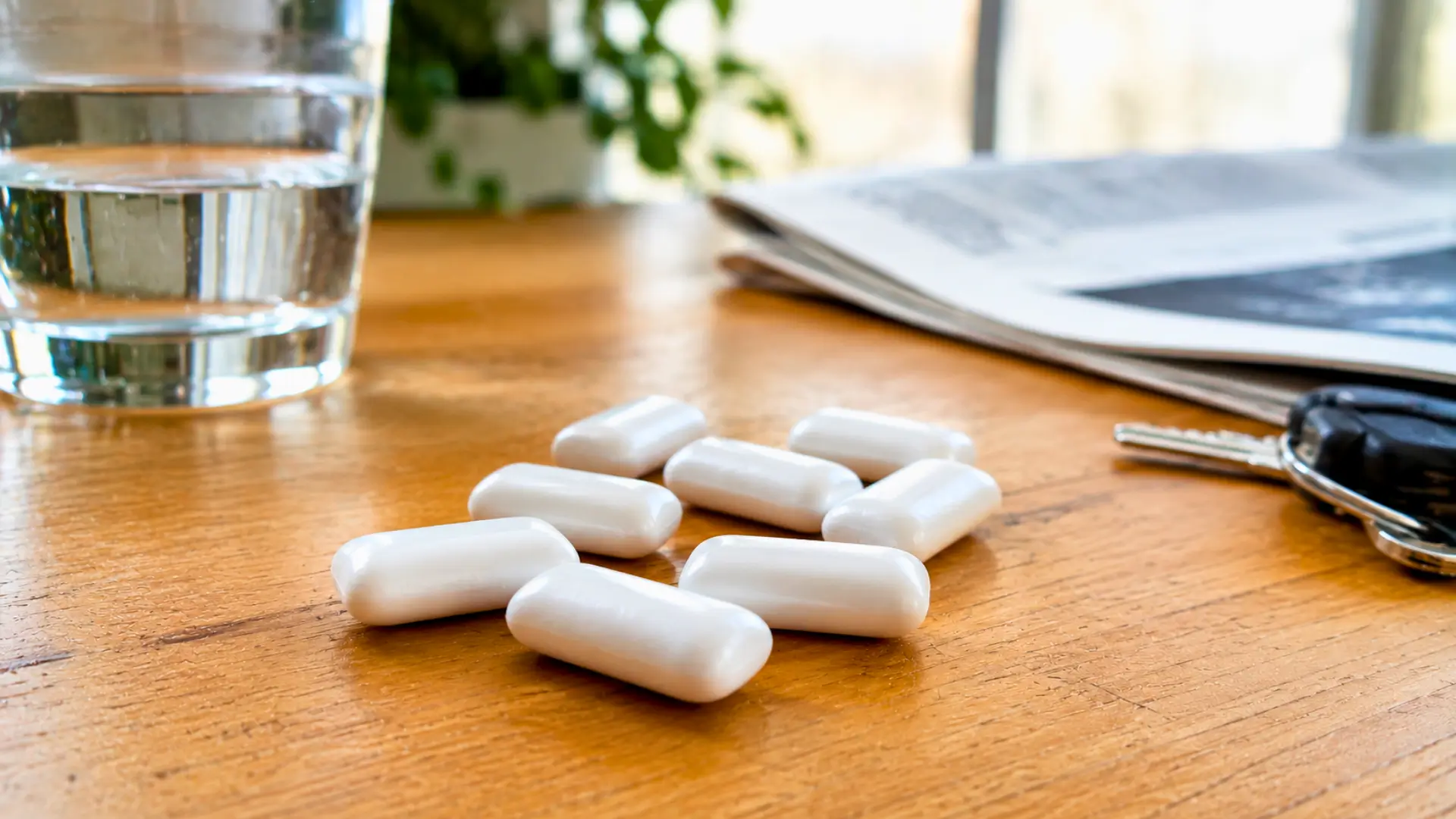
Beneath its minty aroma and seemingly innocent facade, chewing gum may release hundreds, if not thousands, of plastic particles into saliva. How do these particles detach, and should we rethink our daily indulgence?
Rapid release of microplastics during chewing
The experiment seems straightforward: volunteers chew different gums while their saliva is collected at regular intervals. However, an unexpected scene unfolds under the microscope. Tiny fragments detach from the chewing gum, making their way into the mouth and potentially being swallowed with saliva.
Researchers at UCLA found an average of about 100 microplastics per gram of gum, with some samples exceeding 600. Given that a single piece can weigh several grams, this means that some gums might release close to 3,000 particles. This is startling information for something casually chewed during a commute or after lunch.
Mechanical abrasion as the primary cause of gum fragmentation
The process is not due to a gradual chemical dissolution but primarily stems from the mechanical action of our teeth. With each bite, stretch, and friction, the gum undergoes repeated abrasion. Tiny elements from its structure break away, much like bits coming off a school eraser.
This release of particles occurs quickly. Measurements reveal that 94 percent of the detected particles emerge within the first eight minutes, peaking right at the start of chewing. Frequently switching gums could increase exposure significantly more than keeping the same piece for an extended period.
This timing also coincides with that initial burst of freshness that accompanies the first few chews. While flavor and microplastics may not originate from the same source, they appear simultaneously. This connection offers a troubling perspective on that first bite, making it feel less harmless.
Similar microplastic levels in natural and synthetic gums
Researchers initially expected to find more plastic in synthetic gums, made with industrial polymers. Surprisingly, products labeled as natural released comparable amounts. Simply having a plant-based label does not guarantee a gum free from plastic particles.
Analyzes detected various materials including polyolefins, polyacrylamides, polystyrene, and substances similar to PET. The source of these materials in natural gums is still debated -they could stem from production processes, industrial equipment, or packaging, rather than the plant resins commonly used.
These findings do not imply that chewing gum directly causes illness. The specific health effects of ingested microplastics are not well understood. The study highlights a new, direct, and easily measurable exposure pathway, without confirming clinical consequences for consumers.
A revealing but limited study on health and environmental concerns
While the work sheds light on the issue, it has its limitations. The tools used detected particles only larger than approximately 20 micrometers, meaning potential nanoplastics smaller than this could have gone unnoticed. Additionally, the small sample size of the pilot study makes it difficult to draw broad conclusions applicable to all brands and chewing habits.
Since its presentation at the American Chemical Society conference in March 2025, the research has been published in the Journal of Hazardous Materials Letters. This transforms an initial alert into a documented scientific result, while leaving open a critical question: what really happens to these particles once they are swallowed?
Another concern arises after chewing. The fraction released into saliva represents only a small portion of the total plastic content in gum. The remainder often ends up on sidewalks, under tables, or in nature. This tiny sugary waste could then contribute to environmental pollution long after it has lost its flavor.