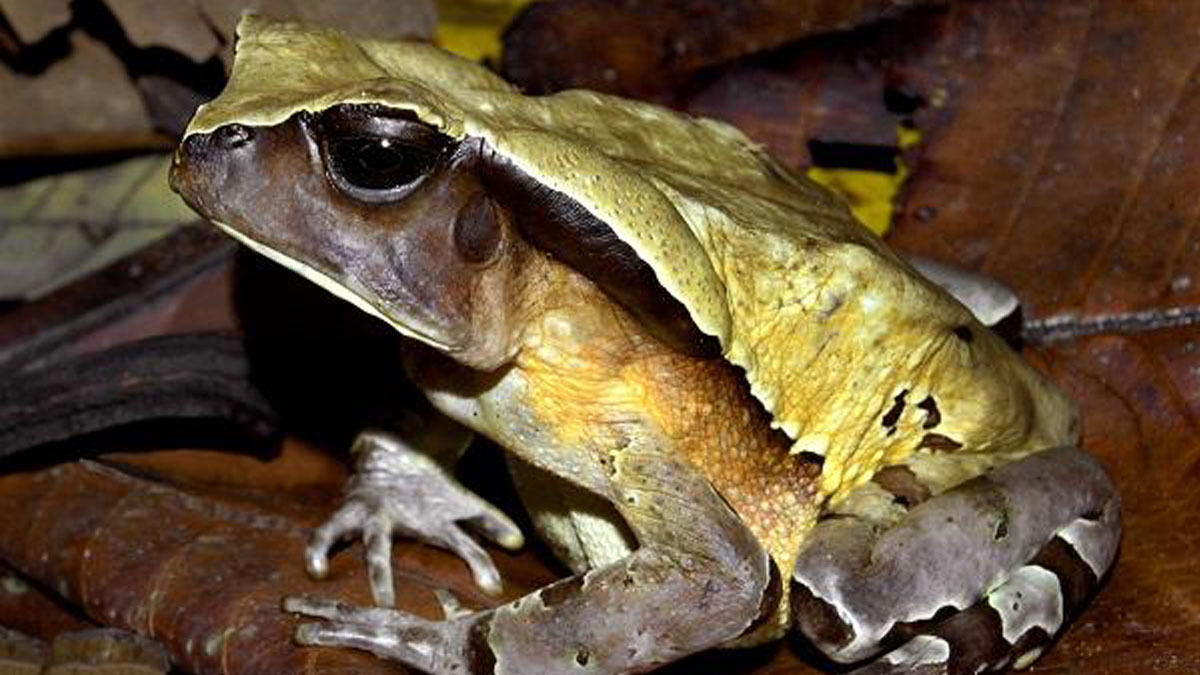
The African giant toad is not just another amphibian; it has developed a remarkable strategy for survival. Living alongside one of Africa’s most feared snakes, the Gaboon viper, this toad has learned to mimic its deadly neighbor, making it less appealing to predators.
The first case of Batesian mimicry in an amphibian
Mimicry is a fascinating aspect of the animal kingdom. Various species use it for protection and predation. For instance, certain mantises disguise themselves as orchids, while burrowing owls have adopted the threatening rattle of a rattlesnake to scare off invading squirrels. Recent research published in the Journal of Natural History has identified a unique case of Batesian mimicry involving a harmless species imitating a dangerous creature in order to evade predators.
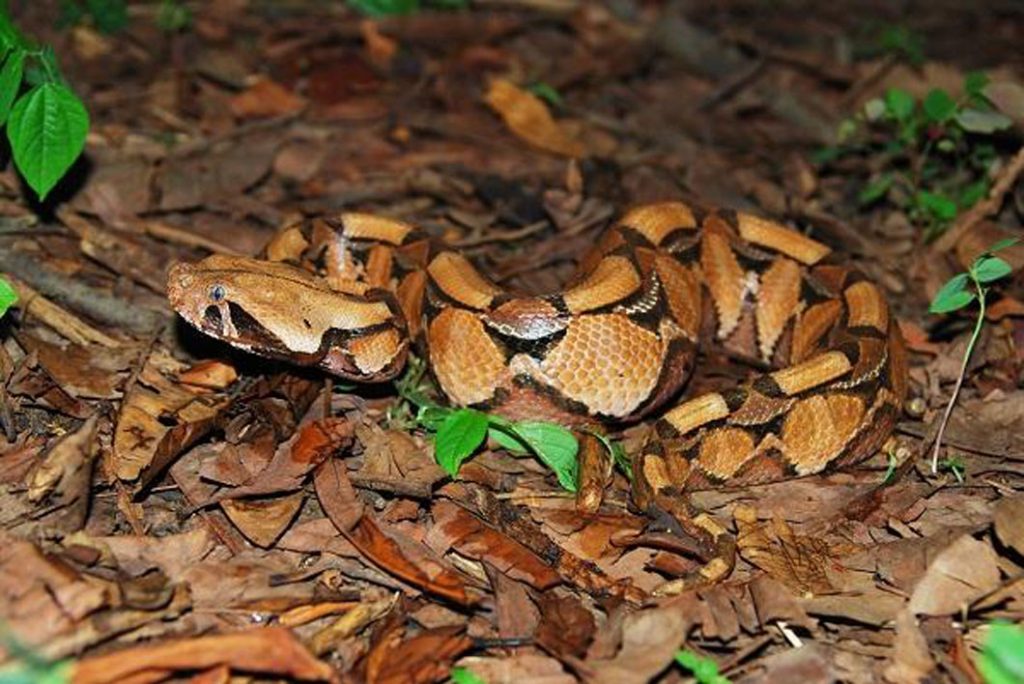
The Gaboon viper, which can grow over six feet long and weigh up to 44 pounds, stands out as Africa’s largest venomous snake. It shares its humid tropical forest habitat in the Democratic Republic of the Congo with the African giant toad. Intriguingly, the toad’s striking resemblance to the viper appears to significantly aid in its survival. Studies have shown that predators are more likely to avoid the toad compared to other frog species, despite its sizable, meaty presence making it an appealing target.
With its tawny color, the toad features two distinctive spots and a brown stripe running along its back. The dark brown coloration extends from its snout to its hind limbs, mimicking the viper’s gaping mouth. Additionally, the toad’s slightly raised “eyebrows” resemble the viper’s horn-like protrusions. The mimicry extends beyond appearance; the toad also emits a hissing sound reminiscent of a deflating balloon when threatened and can puff itself up, increasing its size to appear even more intimidating.
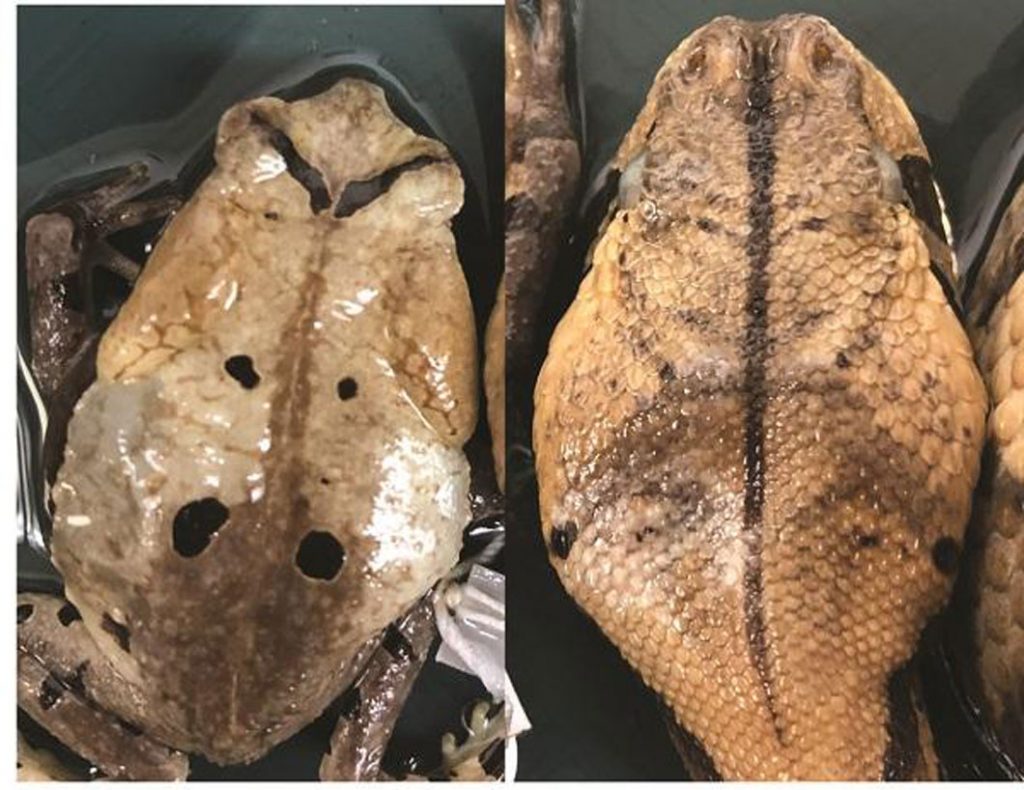
A convincing disguise
“From above, the toad makes for a convincing viper,” states Eli Greenbaum, a researcher at the University of Texas at El Paso and lead author of the study. “It is not a perfect imitation, but when the model is as feared and venomous as the Gaboon viper, predators often cannot tell the difference.”
The researchers have noted that many species, particularly primates inhabiting the same areas as the Gaboon viper, exhibit an innate fear of it. Therefore, it is plausible that they might instinctively avoid the toad as well, although further research is needed to conclusively confirm this.
Another intriguing case of mimicry can be found in the Indonesian octopus, which can imitate as many as fifteen different species.