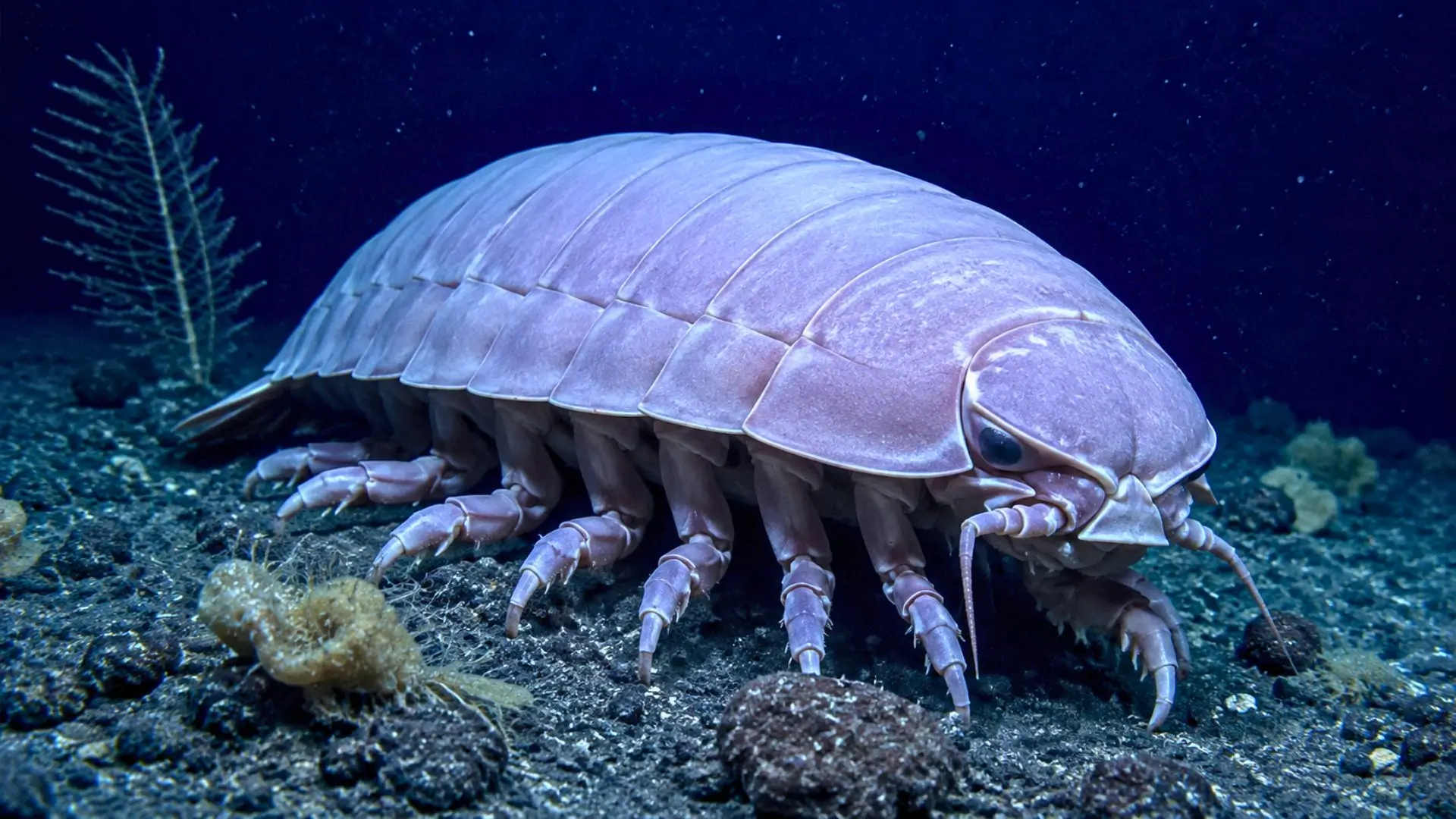
The depths of the ocean hide fascinating creatures that can withstand extreme hunger. Researchers have recently uncovered how a giant crustacean can survive for five years without food, relying on unique anatomy and an unexpected genetic secret.
The paradox of the deep-sea giant isopod
Deep in the ocean, temperatures hover near freezing, and food is a scarce resource. Despite this harsh environment, supergiant isopods measuring over 45 centimeters and weighing several kilograms manage to thrive. This remarkable phenomenon has puzzled scientists for decades.
Typically, sustaining such a large organism requires a steady energy supply. The ability to grow to such size in nutrient-poor waters contradicts biological norms. Recently, a team of Chinese researchers shed light on this enigma.
An oversized internal anatomy for long-term nutrient storage
Researchers from the Chinese Academy of Sciences examined the internal structure of these crustaceans. They discovered that the isopod’s stomach occupies two-thirds of its body, allowing it to consume vast quantities of food when a carcass sinks.
The digestive system hosts a distinctive gut microbiome, featuring a high concentration of Chlamydiae bacteria. This unique relationship aids the isopod in absorbing and storing lipids, ensuring efficient calorie storage.
In between rare meals, the isopod undergoes a drastic resource conservation strategy. It enters a state of deep metabolic dormancy, slowing vital functions to minimize energy expenditure and preserve its stored energy.
A bacterial gene that slows cellular activity in cold conditions
The most astonishing aspect lies within the crustacean’s genetic makeup. The study identified the presence of the ND1 gene, a fragment inherited from a bacterium. This uncommon occurrence, known as horizontal gene transfer, illustrates how an animal can assimilate bacterial DNA.
This borrowed DNA acts like a thermal switch. In warmer temperatures, it accelerates cellular functions, but in the frigid depths of the ocean, it has the opposite effect. It inhibits mitochondrial energy consumption, putting the cells into a protective rest mode.
Promising medical applications validated by human cell tests
To scientifically validate this mechanism, researchers introduced this genetic code into different species in the lab, including zebrafish and human cells. When subjected to cold temperatures, these organisms demonstrated unprecedented adaptation capabilities.
The modified subjects exhibited a 37 percent increase in cold fasting tolerance. Additionally, analysis revealed fine biological regulation through histone acetylation, enabling gene activation or deactivation in response to environmental changes.
These findings extend implications far beyond marine biology. They could guide research in longevity medicine and nutritional deprivation studies, enhancing our understanding of human and extraterrestrial life under extreme conditions.