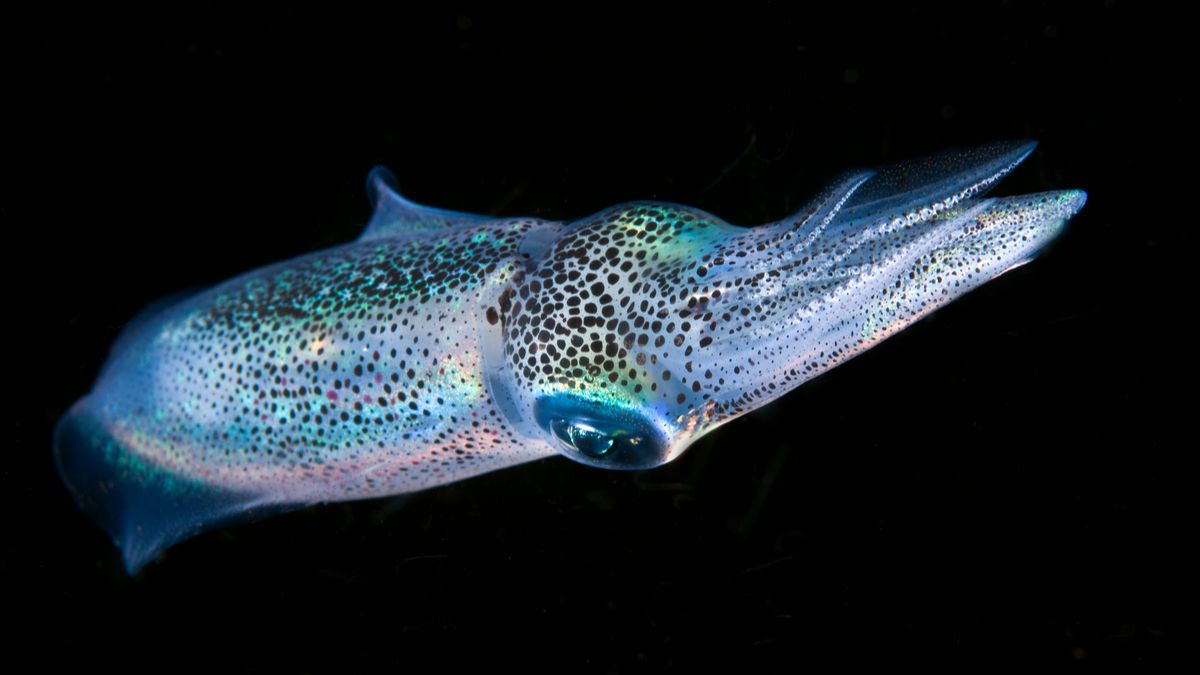
The rising levels of CO2 in the atmosphere are causing ocean acidification, significantly impacting marine life, as shown by recent studies on squids.
A very real threat
Cuttlefish and octopuses, classified as cephalopods, are known for their exceptional cognitive abilities. Similar to dogs, they possess a comparable number of neurons, making them the most intelligent invertebrates on the planet.
These fascinating creatures, along with various marine species and ecosystems like mollusks, crustaceans, and coral reefs, are increasingly affected by the acidification of the oceans.
To better understand the impact of this phenomenon on squid physiology and behavior, Garette Allen and colleagues from Acadia University in Canada conducted experiments using two separate tanks.
The first tank maintained a pH level of 8.2, which reflects the current average ocean pH, while the second tank’s pH was lowered to 7.8, representing the predicted ocean acidity levels by 2100 according to climate models.

Physiological and behavioral changes
After 90 days, the brain structure and size of the studied bigfin reef squid (Sepioteuthis lessoniana) were analyzed using MRI technology. On average, squids in the second tank exhibited a brain volume 49 percent smaller, likely linked to oxidative damage.
Notably, the most significant volume losses were observed in the cephalopods’ visual systems, particularly in the optic lobes (52 percent) and optic pathways (62 percent), which are essential for processing information from the retina.
Researchers noted, “In individuals exposed to higher acidity from hatching, we also observed a 42 percent reduction in hunting behaviors,” a finding presented at the annual meeting of the Society for Experimental Biology.
Earlier studies have revealed that ocean acidification reaches troubling depths.