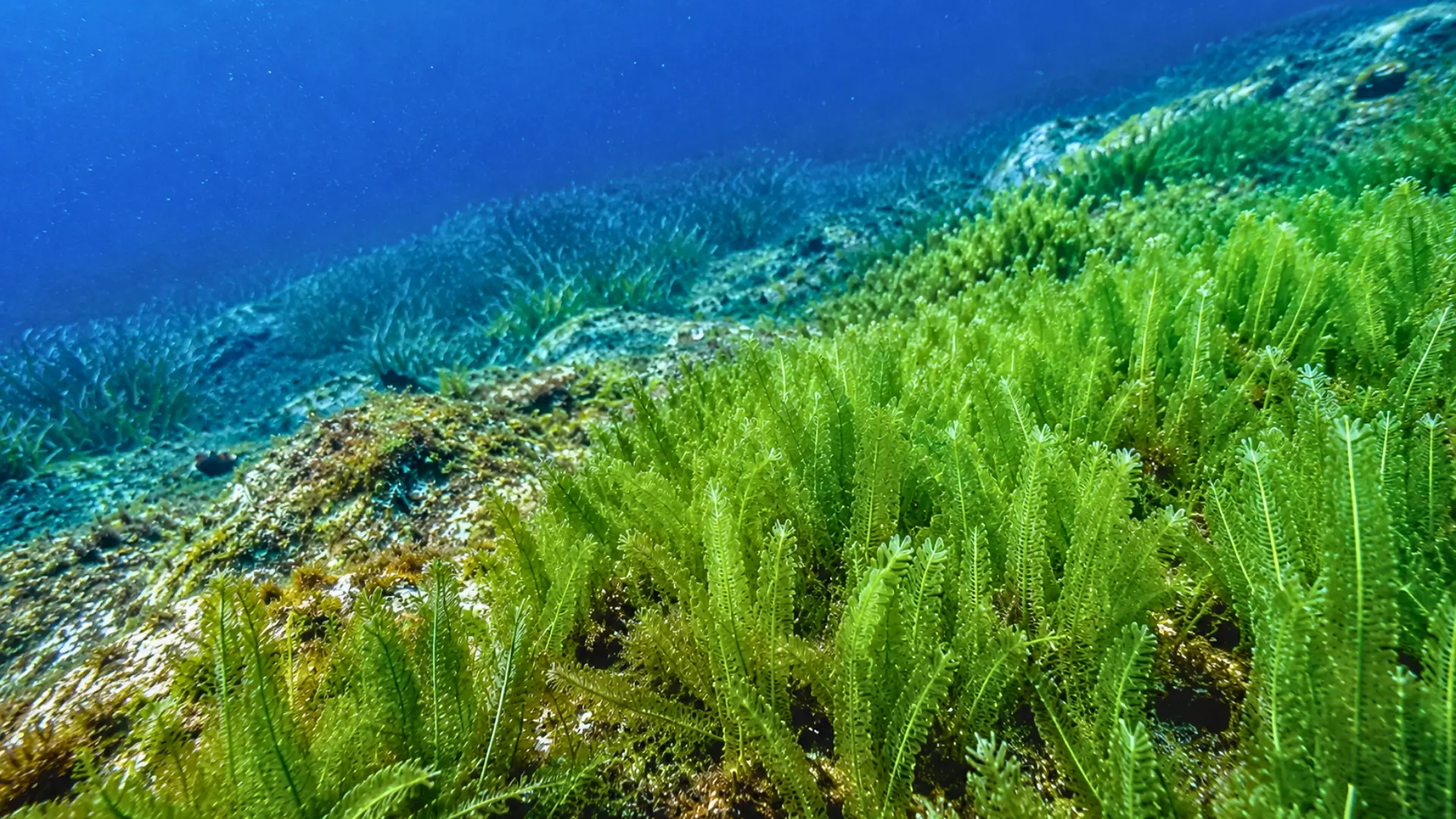
A tiny square of green algae spotted near Monaco in 1984 was poised to spark a Mediterranean invasion. Within a few years, Caulerpa taxifolia spread across thousands of hectares, disrupting local herbivores and presenting scientists with a striking ecological case study.
A strange green patch appears near the Monaco Museum in 1984
The story begins quietly in 1984, when divers near the Monaco Oceanographic Museum discover a tropical algae covering about one square meter of seafloor. Caulerpa taxifolia, already popular in aquariums for its vibrant green color and rapid growth, had found an unexpected new home.
Further investigations yield surprising findings. Molecular analyses reveal a direct connection between the Mediterranean population and aquarium strains from Western Europe. The leading theory suggests an accidental release near Monaco, although no one observed the algae’s journey into the sea.
From humble beginnings to a formidable colonizer
The key to Caulerpa taxifolia’s success lies in its ability to reproduce. It can regenerate from small fragments, which simplifies its spread. These fragments can easily hitch a ride on currents, anchors, and human activities, leading to new colonies. Scientists are astonished by the speed at which it expands.
By the end of 2000, approximately 131 square kilometers of seafloor had been colonized, covering over a hundred sites along nearly 191 kilometers of Mediterranean coasts in France, Italy, Spain, Croatia, and Tunisia. Media outlets label it the “killer algae.” While the term exaggerates, the real impact is undeniable: a tiny introduction blossoms into a major phenomenon across the Mediterranean.
What makes it so effective
In marine ecosystems, abundant algae usually provide food for many herbivores. Caulerpa taxifolia changes the rules. It produces caulerpene, a compound that deters several species from eating it. Sea urchins, for instance, show little interest.
Without the grazing pressure, the algae quickly fills available space, competing with local species. Researchers closely monitor its effects on posidonia seagrass beds, essential for Mediterranean biodiversity. Results vary by location, making it difficult to assess its overall impact.
Efforts to curb its spread have been ongoing for years. Teams have attempted to remove colonies and tested both physical and chemical methods. However, the discovery of just one fragment can reignite growth. On a large scale, complete eradication is nearly impossible, although some early interventions show local success.
A surprising decline of a long-considered unstoppable invasion
Researchers encountered an unexpected turn. After a spike around 2007, many areas report a significant decline in the invasive algae. The exact reasons remain debated, considering environmental conditions, biological competition, and the fragility of certain populations.
However, the story does not end here. The Mediterranean continues to be susceptible to exotic species. Other Caulerpa species remain under active surveillance. Reports still emerge in 2025 along the French Mediterranean coastline, indicating that the phenomenon continues to evolve.
This tale serves as a stark reminder: a tiny introduction can alter an ecosystem for decades. As the Mediterranean faces the pressures of warming waters and increased human exchange, the question lingers. Which species will write the next silent invasion beneath the surface?