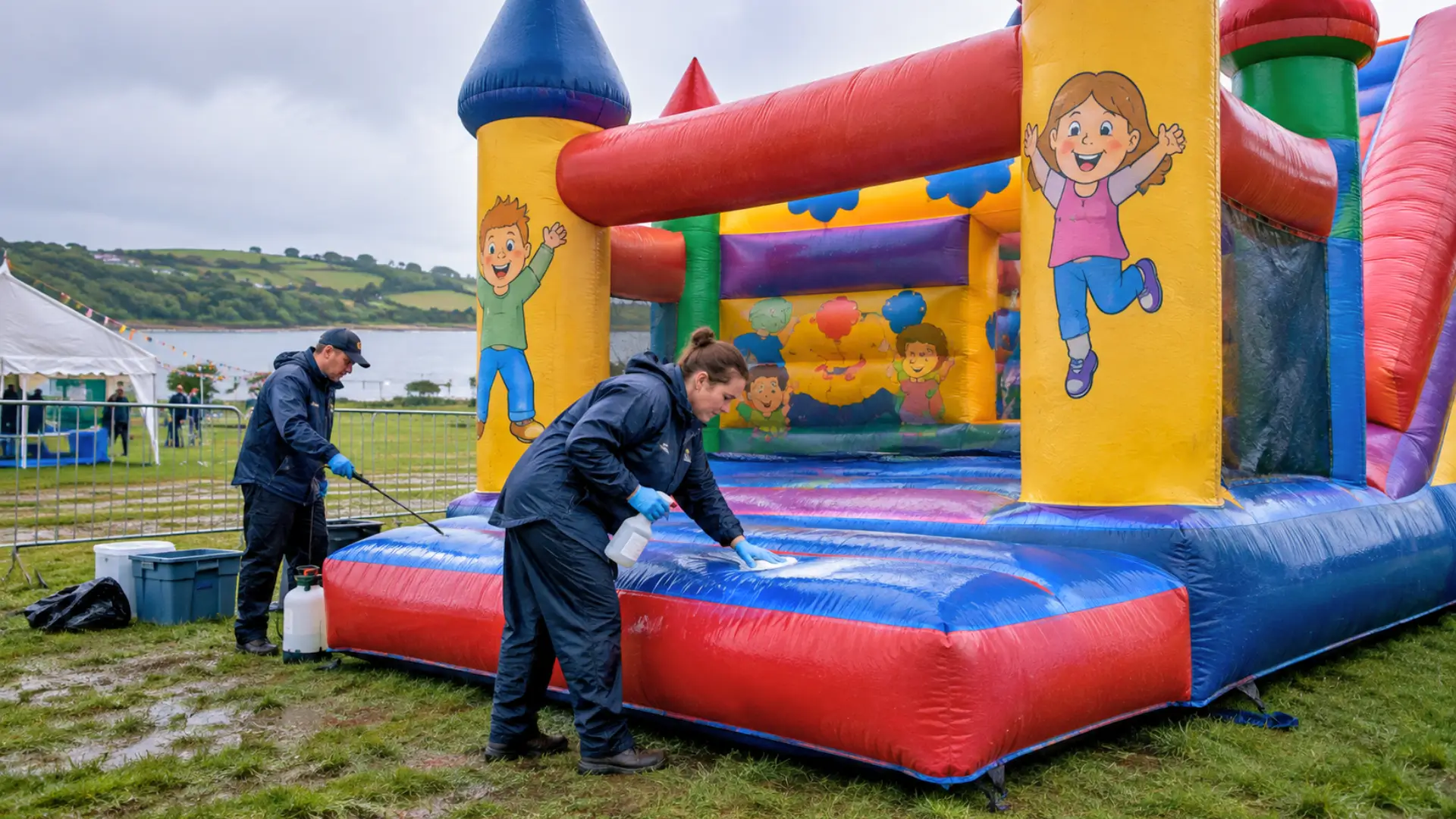
A seemingly innocent outdoor gathering in Ireland turned into a health alert as a series of unusual skin infections emerged among children just days later. Investigators traced the source of these infections to a set of inflatable play structures, raising concerns about hygiene in such environments.
A peculiar outbreak begins with unusual lesions
At the end of summer 2025, a health alert loomed in eastern Ireland. Following an outdoor gathering, several children began exhibiting unusual skin lesions, ranging from pustules and redness to blisters and abscesses. Alarmingly, some of these symptoms did not appear until two or three days after the event.
Healthcare professionals quickly recognized that these infections were linked. In total, 48 young people matched the criteria established by investigators. Of these, thirty-three visited their general practitioner, fifteen sought emergency care, and four required hospitalization. Fortunately, there were no fatalities.
Investigators trace the infections to inflatable play structures
Interviews with families brought an important detail to light: 47 of the 48 affected children had attended the same event, where they spent considerable time in inflatable castles. The infections primarily appeared on the legs and thighs, areas that experienced friction during play.
This scenario began to take on a plausible explanation. In crowded inflatable structures, children run, fall, sweat, and bump into one another. This environment can lead to tiny abrasions that often go unnoticed. Such small breaks in the skin may provide a welcoming entry point for bacteria.
Weather conditions may have exacerbated the situation, with heat, humidity, and rain at play. Many children played while already damp from sweat or water. Researchers caution that while no direct microbiological proof was obtained from the inflatables, their findings suggest a common source rather than a series of isolated infections.
Sequencing identifies a rare and aggressive strain of Staphylococcus
In the laboratory, the investigation deepened. Tests revealed that the 22 confirmed cases shared the same strain of Staphylococcus, designated t016-ST22-MRSA-IV. This methicillin-resistant Staphylococcus aureus (MRSA) is capable of producing a toxin known as Panton-Valentine leukocidin (PVL).
This toxin is associated with aggressive skin and soft tissue infections. Experts classify this strain as rare in Ireland, noting its highly virulent properties, which also complicate treatment due to its antibiotic resistance. However, several treatment options remained effective. This outbreak presented an unusual occurrence in the country.
A concrete lesson lies behind this unusual inflatable incident
Health authorities acted swiftly to contain the outbreak by identifying cases rapidly, treating affected children, and implementing measures to eliminate the bacteria from patients and their families. They also alerted operators of the inflatable structures to clean and disinfect the equipment before further use.
This case serves as a reminder that antibiotic-resistant bacteria do not circulate solely in hospitals. MRSA can thrive in community settings, especially when close contacts, sweat, and minor injuries are frequent. Researchers emphasize the need for appropriate hygiene measures during activities where children engage in prolonged close contact.
While banning inflatable castles is unlikely after this isolated incident, this situation illustrates how a seemingly ordinary activity can inadvertently create ideal conditions for an infectious outbreak. Now the pressing question remains: should cleaning protocols for these structures be reconsidered between use by different groups of children?