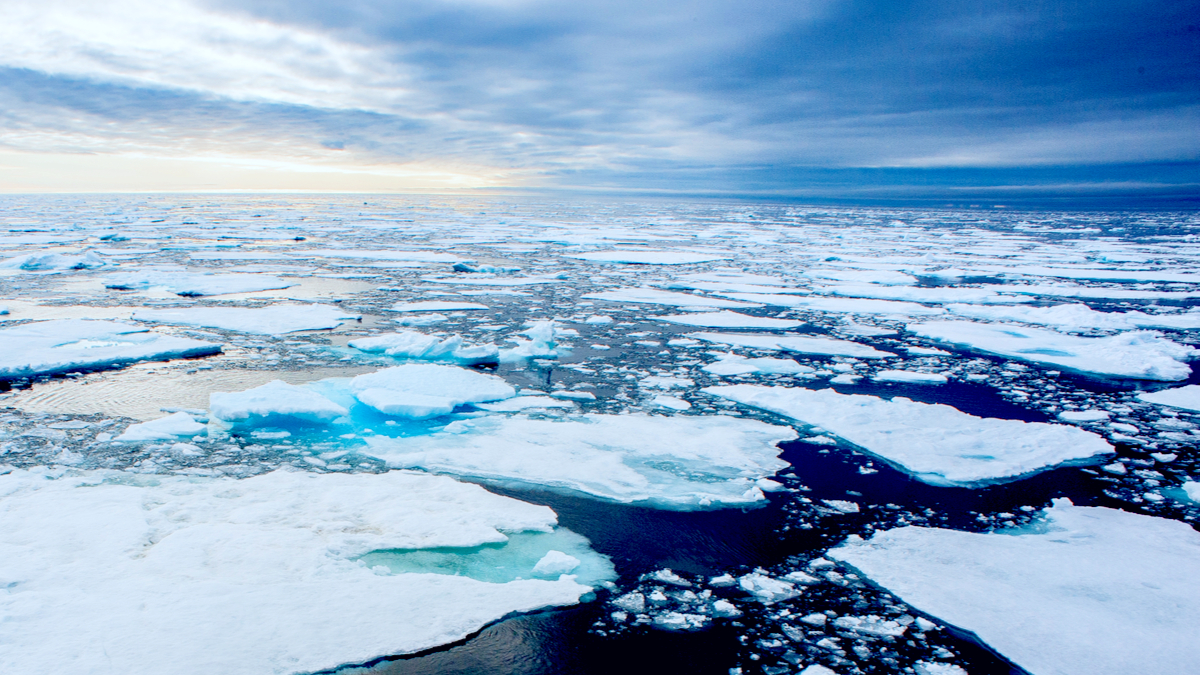
Recent research highlights the severe impacts of climate change on Arctic marine ecosystems, particularly as melting ice alters nutrient availability.
Cascade reactions
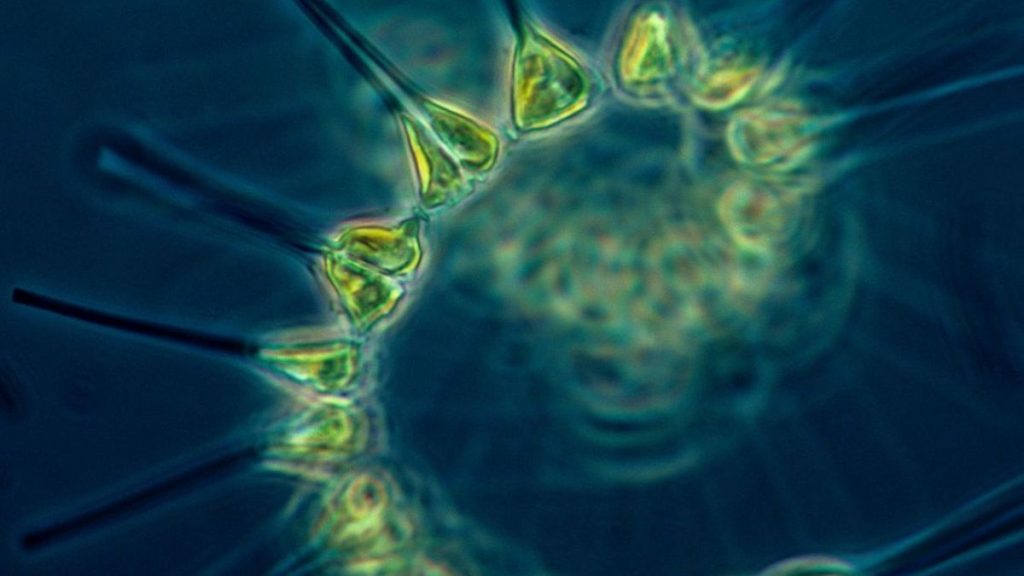
A study published in Communications Earth & Environment discusses the crossing of a critical chemical threshold, identified by unusually low nitrate levels. These nutrients are vital for the growth of plankton, which serves as a crucial foundation for Arctic food webs.
The research team notes that “these tiny animal and plant organisms carried by currents form the base of the diet for a wide variety of species, from small fish to whales.” The resulting disruption initiates a domino effect, contributing to the decline of numerous marine mammals and birds.
The increased exposure of Arctic waters to sunlight due to ice melt boosts the growth of phytoplankton. However, this phenomenon coincides with the stratification of surface waters, limiting exchanges with deeper layers that are rich in nitrates. Over decades, this leads to a global reduction in the availability of this essential food resource.
Marta Santos-Garcia of the University of Edinburgh explains that “this process, known as benthic denitrification, transforms nitrates into nitrogen gas within the sediments of the continental shelves that cover nearly half of the Arctic Ocean.” She adds that “the system seems to have shifted from being primarily light-limited to one that is low in key nutrients, resulting in dramatic consequences for its ecosystems and food chains.”
A tipping point crossed over a decade ago
Analyzing two decades of data from the Fram Strait, located between Greenland and Norway’s Svalbard archipelago, researchers identified that this critical tipping point was reached around 2009.
Given its relatively recent nature, closely monitoring the evolution of the Arctic food web will be essential. “This also has profound implications for commercial fishing in the North Atlantic,” points out Raja Ganeshram, the lead author of the new study.
Unfortunately, the implications extend beyond this. The decline of plankton populations, which are crucial for capturing atmospheric carbon and converting it into sugars through photosynthesis, is also contributing to the acceleration of the greenhouse effect.