On a a Mexican island, wildlife is creatively adapting to human waste, highlighting both their ingenuity and the challenges posed by local tourism.
Creating play balls on cozumel’s shores
Cozumel is home to the tiny Cozumel raccoon, scientifically known as Procyon pygmaeus, a species found exclusively in this region of Mexico. Biologists have recently been examining their behavior around tourist facilities to assess the impact of human activity.
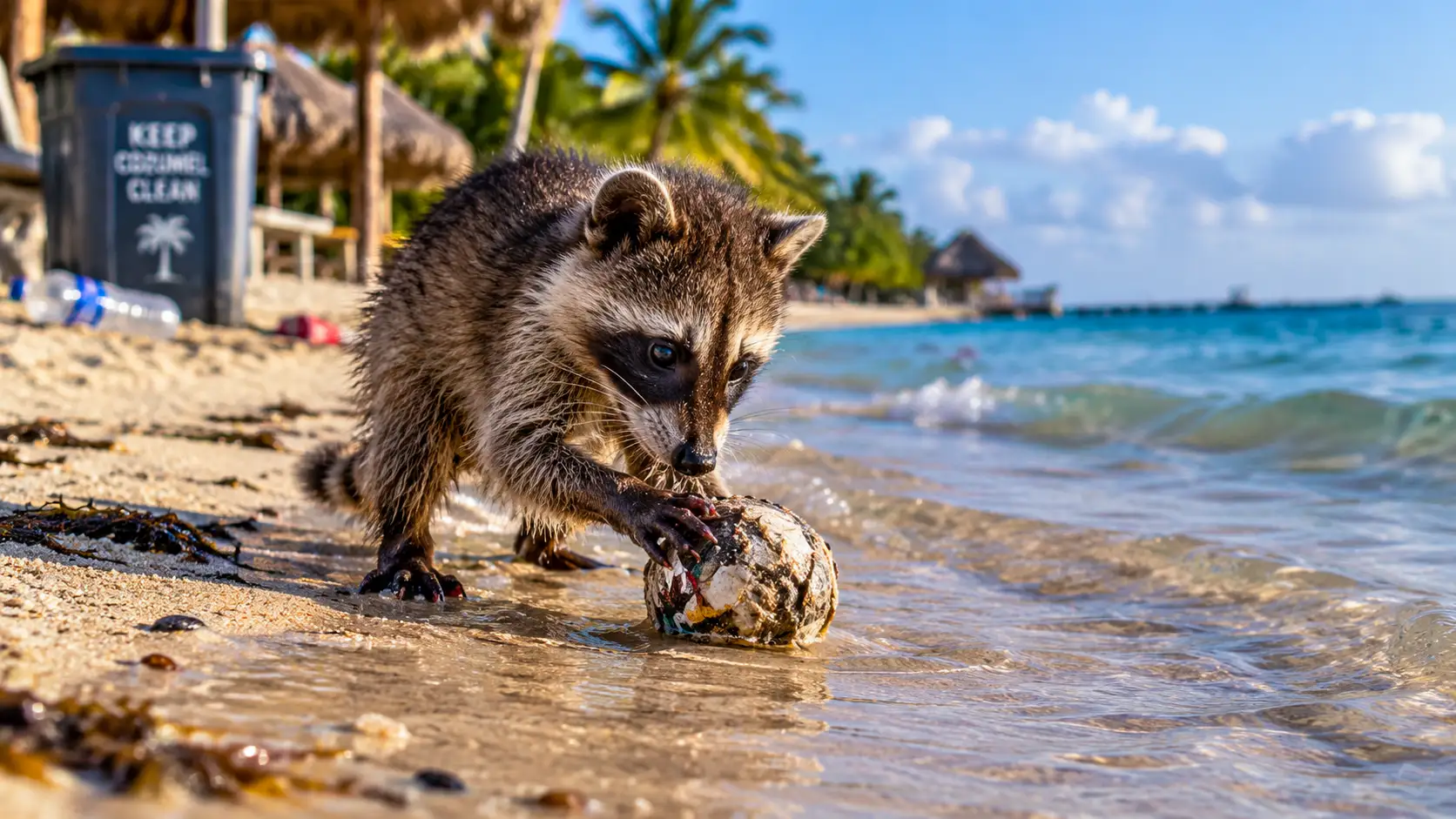
Researchers observed an intriguing scene near the trash bins of a beach club. An adult female raccoon first dampened a piece of paper waste before discarding it. Shortly after, her juvenile offspring dove into the water with the paper, rolling it in the sand.
This careful manipulation turned the wet waste into a dense round projectile. The two sisters then tossed this object with their front paws and chased after it in friendly competition.
Social learning among young females showcases a unique behavior
The younger raccoon attentively watched her sibling before attempting to mimic the technique. However, she struggled to compact the paper on her own, prompting her elder sister to finish the round object, demonstrating social learning.
This observation, detailed in the journal Wild, highlights the rarity of such behavior. While many mammals are known to use tools for feeding, deliberately modifying waste for play suggests the beginnings of a material culture.
Local customs emerge among this unique clan
These repeated observations are hardly coincidental. The on-site team recorded fourteen complete sequences near the waste bins, indicating that the young raccoons consistently engaged in their playful behaviors with great care.
To compare behaviors, the researchers also investigated a second site located 30 kilometers away. Here, other raccoons had access to dirty towels and clean water, yet none attempted to create any playful spheres.
This geographical contrast suggests that an innovative behavior is being shared within a specific group. However, the authors remain cautious about extrapolating broader conclusions, as the sample size is still too small to establish a stable cultural tradition.
Tourism-related hazards threaten these vulnerable animals
While the creation of these toys may be entertaining to watch, it masks a serious threat. Tragically, one of the young sisters died shortly after at a rehabilitation center. Veterinarians suspect that severe malnutrition compounded by toxic substances in human waste led to her demise.
Classified as critically endangered, this island’s fauna is severely impacted by the influx of humans to its shores. The abundance of trash may pique their curiosity but simultaneously disrupts their fragile metabolism. This precarious balance underscores the urgent need to protect wild habitats from the detrimental effects of tourism.