Innovative farming practices in France have demonstrated that it’s possible to sustain productive and profitable agriculture without any pesticides. This conclusion comes from a comprehensive study conducted over the last decade that challenges existing beliefs about agricultural profitability.
Technical viability and financial profitability of zero-pesticide farming
Led by the National Institute for Agricultural Research, the long-term project named Rés0pest focused on eliminating pesticide use across nine locations in France. While it maintained mineral fertilizer use, this approach differs from organic farming methods. The findings confirm that this significant break from traditional practices is technically feasible, offering agricultural professionals viable financial opportunities. The tested systems generated incomes ranging from one to three times the minimum wage for farmers.
Nonetheless, the absence of chemical protection increases vulnerability to pests, causing fluctuating yields depending on the season and region. For instance, while crops like wheat, beets, and potatoes thrive in northern France, chickpeas have faced challenges in the Occitanie region.
Above-average yields in trial plots in the Somme
In Estrées-Mons, located in the Somme region, farmers are witnessing commercial success with an anticipated yield of 75 to 80 quintals per hectare for wheat, surpassing the national average for 2025. This achievement comes despite the region’s humid climate, which is conducive to plant diseases such as mildew and yellow rust. Key to this success is Géopolis, a recently developed wheat variety known for its resistance to diseases.
Biodiversity and natural barriers replace intensive chemical treatments
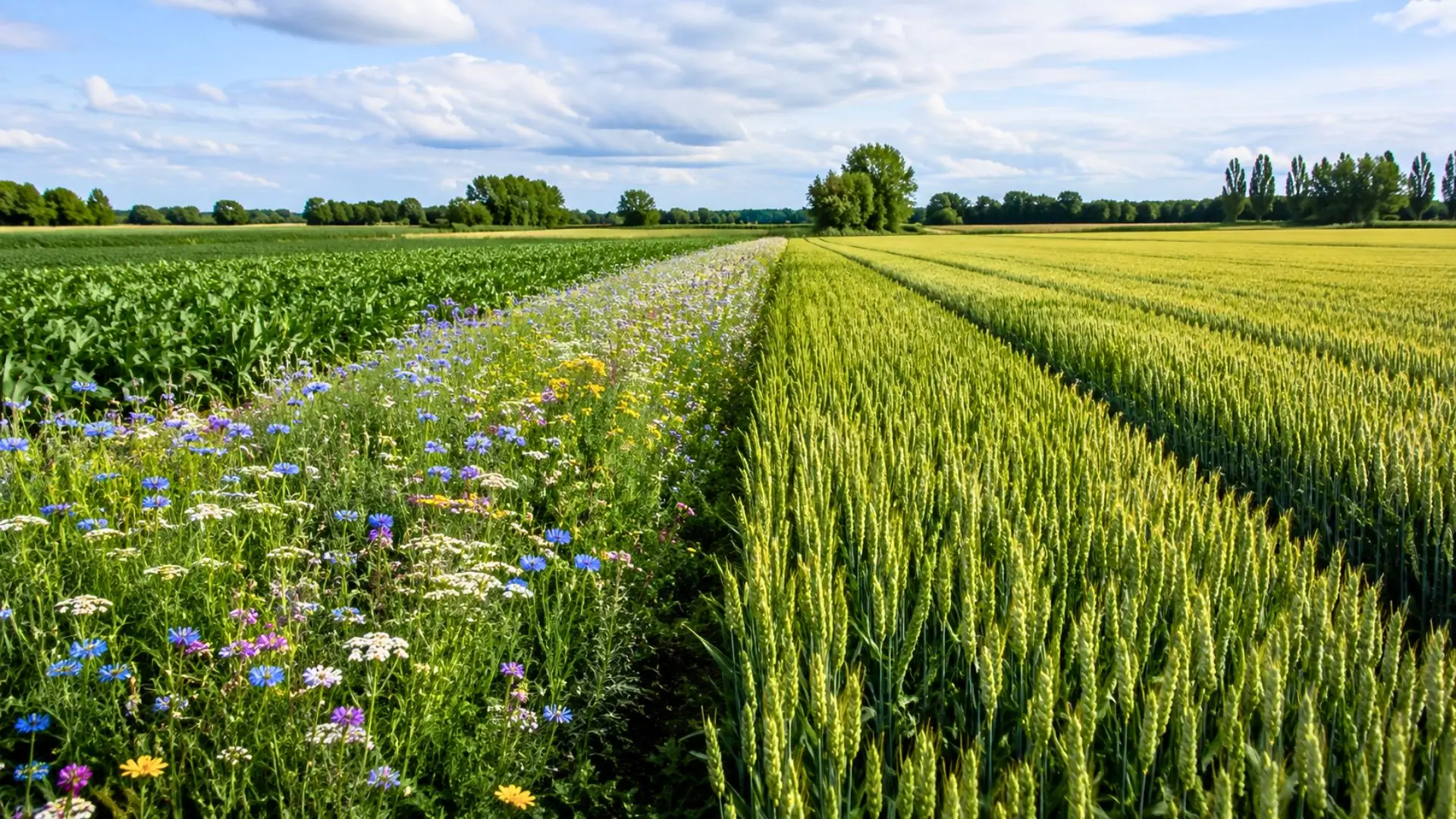
To offset the loss of chemical treatments, agronomists are leveraging natural mechanisms. Flower strips, consisting of 22 plant species, surround cereal fields, providing habitat for beneficial insects like hoverflies, which prey on harmful aphids. Additionally, the return of wild predators such as birds of prey has assisted in regulating rodent populations, enhancing the natural ecosystem’s protective capacity. However, this shift towards biological methods still faces challenges, notably the management of weeds, which remains the primary technical hurdle for farmers.
New mechanical weeding practices compensate for reduced yields
Farmers are adopting innovative soil management techniques to control weeds without chemicals. These strategies include extending crop rotations and employing mechanical weeding methods. Moreover, teams are adjusting their planting calendars by staggering sowing times. Overall, crop yields in this system are lower than those in conventional farming, although they surpass organic yields. Agronomists believe this reduction is more than compensated by the significant ecosystem services provided by these practices.
Evaluating this agricultural model should also take into account its positive impacts on broader community well-being. Sustainable biodiversity regeneration, improved human health, and water resource preservation can prevent massive public expenditures on environmental cleanup.