
Washington is making a significant leap forward in modernizing its electrical grid. Official agreements now regulate the establishment of marine nuclear reactors in federal waters, aiming to expedite the U.S. energy transition through advanced underwater technologies.
Agreement between federal agencies clarifies the legal framework for marine nuclear reactors
On July 22, 2026, the Nuclear Regulatory Commission (NRC) and the Marine Minerals Administration (MMA) formalized their cooperation through a memorandum of understanding. This document outlines a clear distribution of responsibilities to manage the development of nuclear infrastructure in U.S. federal maritime space.
Under this arrangement, the NRC will maintain primary oversight of technical safety, issuing permits, and mandatory environmental assessments. The agency will directly supervise the design, construction, and daily operation of these power generation units.
Meanwhile, the MMA will handle the allocation of legal leases on the outer continental shelf. Although no commercial underwater projects have been proposed yet, this agreement removes regulatory uncertainties for industry players.
Proven underwater technology: how future submerged installations will operate
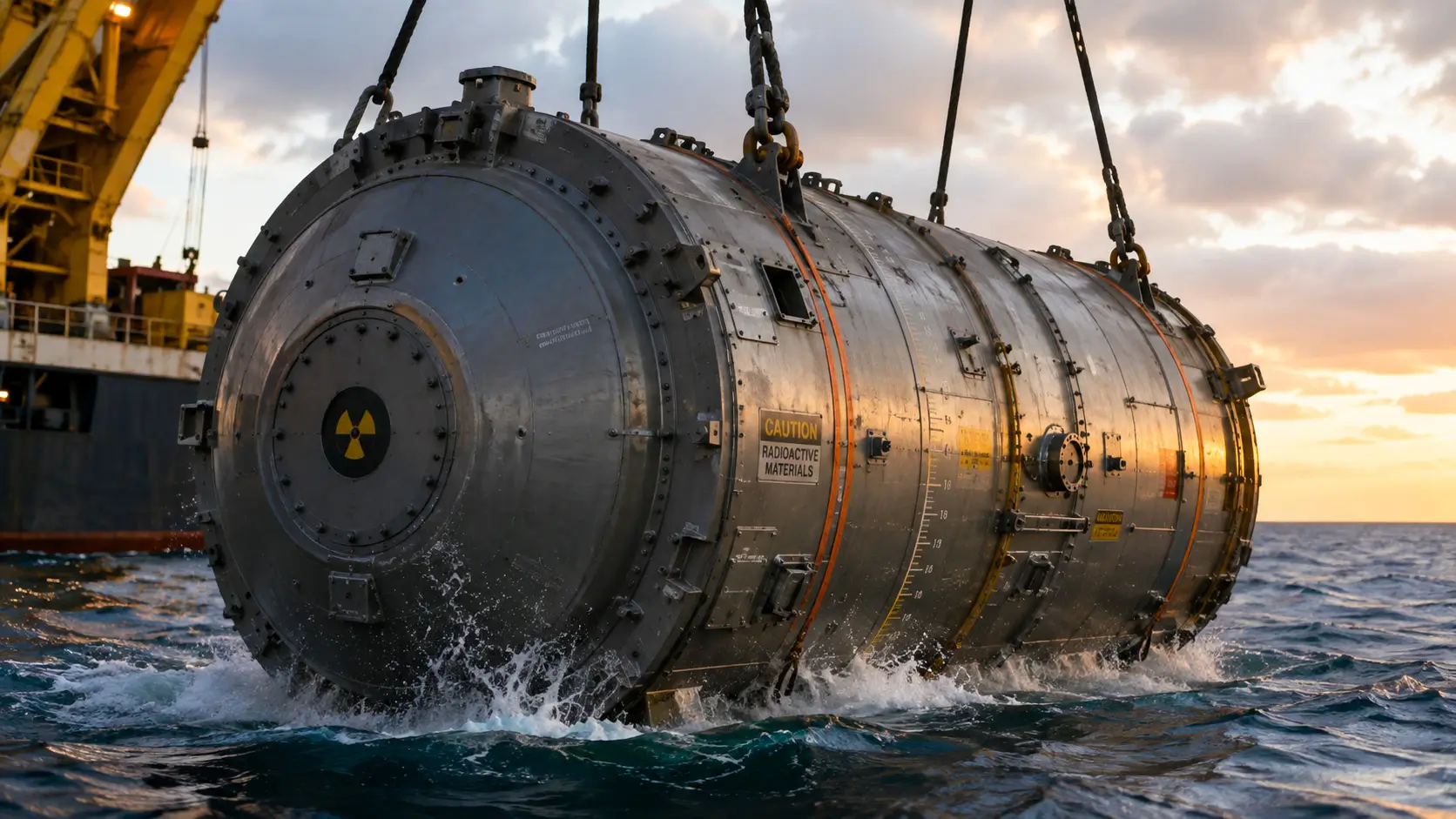
The system primarily relies on reactors sealed within watertight capsules, positioned several dozen meters deep. The heat generated powers surface-installed generators or those located on a secure artificial island, thus avoiding the use of coastal land.
These submerged structures utilize principles already established over decades in military naval applications. Matt Giacona, director of the MMA, notes that this maritime area encompasses 3.2 billion acres under federal jurisdiction, representing significant industrial potential for the nation.
A strategy to quadruple the United States’ nuclear capacity and support the electrical grid
This regulatory push aligns with the Trump administration’s plan to accelerate national energy development. The United States aims to increase its nuclear capacity to 400 gigawatts by 2050, compared to the current 100 gigawatts deployed across the country.
To achieve this ambitious goal, authorities are looking to diversify low-carbon electricity production methods. Incorporating marine nuclear units addresses the need to strengthen the overall energy security of American grids in the long run.
While offshore wind is rapidly advancing along U.S. coasts, its production suffers from natural variability. Marine nuclear energy, on the other hand, provides a continuous energy source, ensuring steady baseline electricity regardless of local weather conditions.
Submarine plants naturally shielded against earthquakes and heat waves
Placing these installations underwater addresses one of the major vulnerabilities of traditional land-based reactors. These reactors are directly affected by droughts and warming water bodies, thermal constraints that do not apply at the ocean floor.
Additionally, the mass of water effectively dampens terrestrial seismic shocks and provides an unlimited passive cooling mechanism. Inspired by petroleum engineering, these offshore structures can also withstand Category 5 hurricanes and deep-sea tsunamis.



