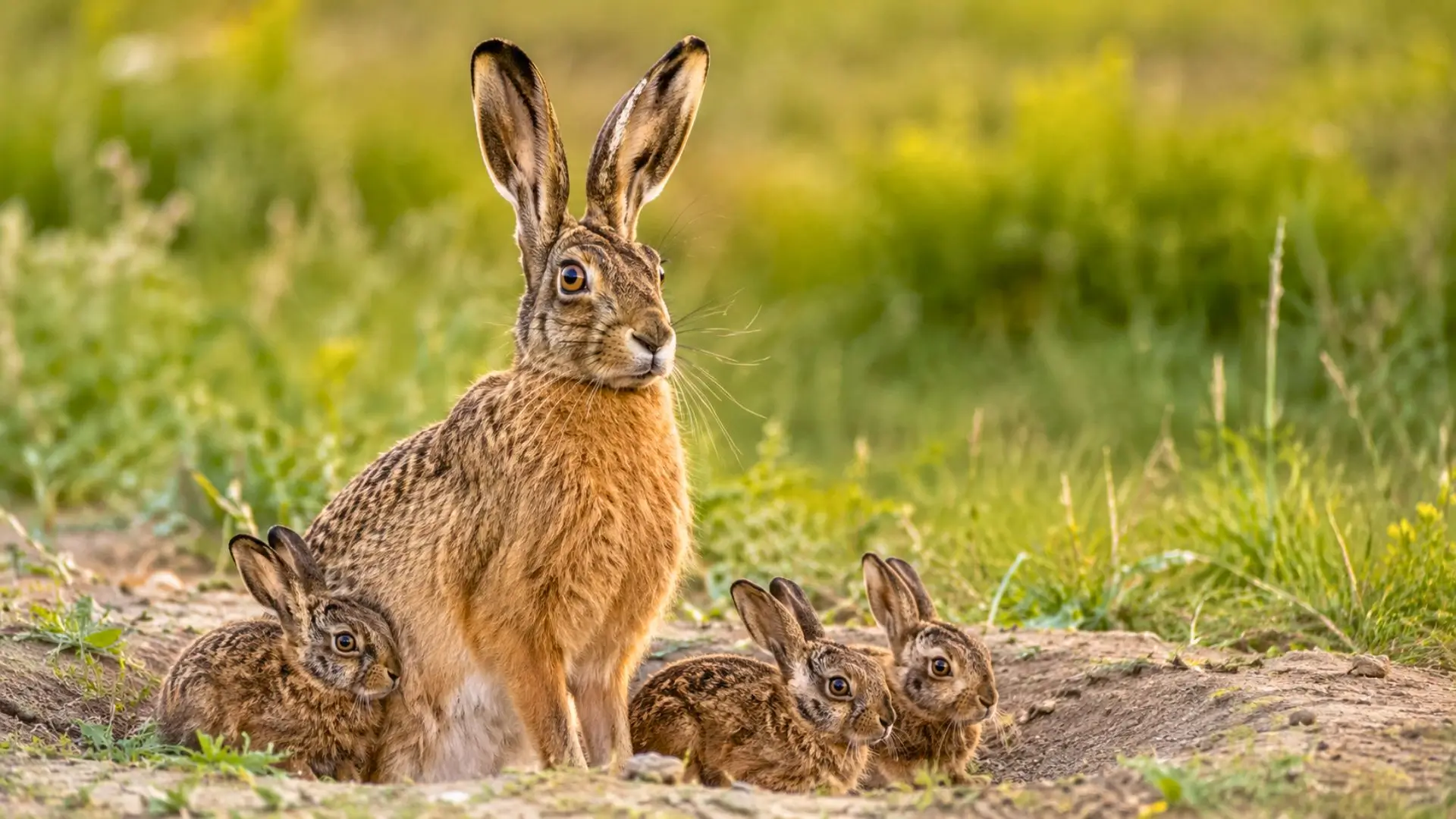
The female hare is often mistaken for a rabbit, yet it possesses unique traits and survival skills that set it apart. This subtle mammal employs extraordinary biological strategies to thrive in the wild, far from the safety of burrows.
Understanding the term ‘hase’ for female hares
The word hase has its roots in the old Dutch term haas, once broadly used to refer to hares. Over time, the French language has narrowed its application to designate only the female. This specific terminology is predominantly used by wildlife specialists and hunters.
In this animal family, the male is called a bouquin, while their offspring are known as leverets. A typical litter usually consists of two to four young, which must face the perils of their outdoor environment almost immediately.
Key differences between hares and rabbits
Despite their similar appearances, these two lagomorphs belong to different biological genera and have done so for millions of years. Hares prefer a solitary existence above ground, residing in open fields and plains without seeking refuge underground.
Conversely, the European rabbit thrives in cohesive communities. These animals construct and maintain extensive complex burrows, adapting their physical traits to accommodate these habitats. Hares, on the other hand, have streamlined bodies built for speed.
This robust anatomy allows hares to reach speeds of up to 70 km/h, escaping predators by performing rapid zigzag movements. An attentive look at their heads reveals particularly long ears, often distinguished by a black tip.
Superfetation: the remarkable reproductive strategy of the female hare
The female hare astounds scientists with its ability to undergo two simultaneous pregnancies, a rare biological phenomenon known as superfetation. This means that a female can conceive a new litter of leverets while still carrying an existing one, thereby optimizing her reproductive cycle.
Furthermore, leverets are born fully furred and with their eyes open. They are classified as nidifugous, indicating their immediate independence. To protect them from predators, the mother only nurses them once a day at twilight, minimizing the risk of detection.
Vulnerability due to environmental changes and population decline
Unlike rabbits that grow up sheltered, leverets remain motionless on the ground in a shallow depression known as the form. This lack of underground protection makes them particularly vulnerable to environmental changes and human activity.
Currently, the rise of intensive agriculture significantly disrupts the breeding grounds of these wild animals. The gradual removal of hedgerows also deprives hares of hiding spots to evade predators, critically undermining their ability to sustain their litters.
Consequently, surveys conducted by conservation organizations and hunting federations indicate a worrying decline in populations across various regions. Preserving traditional landscapes is thus crucial for securing the future of this remarkable open-field runner.