
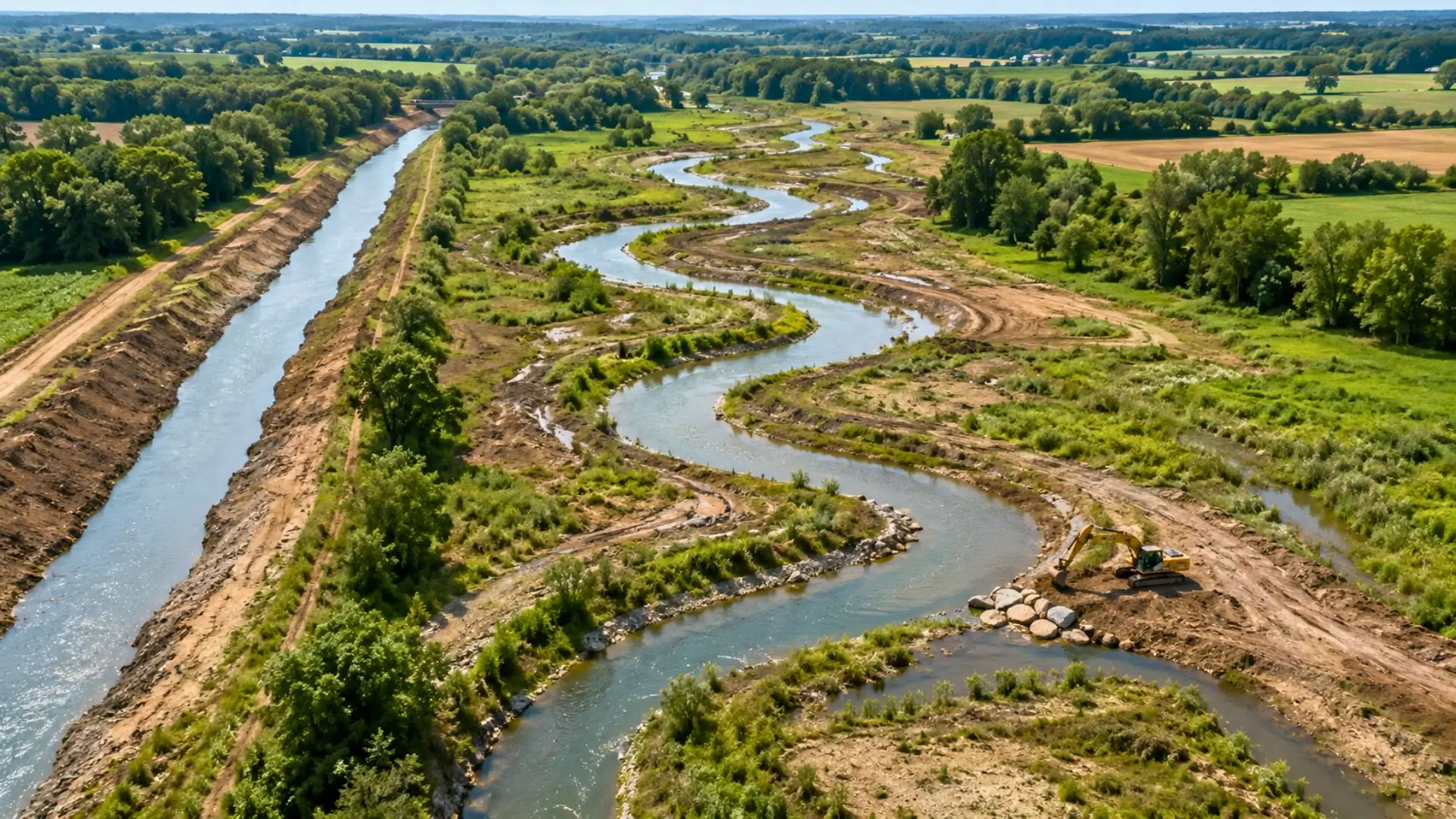
For decades, the French state has straightened rivers to enhance agricultural practices, leading to increased flooding and loss of biodiversity. In response to this environmental damage, authorities are now investing heavily to restore rivers to their natural curves.
The impact of post-war agricultural modernization on rivers
From 1955 to 2000, France undertook a systematic campaign to straighten its waterways. Engineers aimed to optimize farmland for intensive agricultural machinery, which resulted in severe degradation of aquatic ecosystems spanning thousands of kilometers.
Today, only 45 percent of surface water bodies in France are in good ecological condition. The artificial channels exacerbate warming and sedimentation issues, meaning fewer than half of rivers can fulfill their natural regulatory functions.
The high costs of river restoration
Addressing these environmental oversights has placed a significant financial burden on authorities. Water agencies are allocating 10 to 20 percent of their budgets, roughly half a billion euros annually, to restore the rivers. Local communities and private entities are also contributing generously to these efforts.
Restoring these waterways requires extensive excavation work and land purchases. The average cost for these complex projects is around one million euros per kilometer. For instance, restoring the small Veyle River near Biziat is expected to cost between 600,000 and 700,000 euros per kilometer.
The government has recently intensified its efforts through initiatives like the Water Plan and funding from the Green Fund. In 2024 alone, over 1,100 projects received 142 million euros in support, with the overall approved budget exceeding one billion euros.
Mixed results from restoration efforts
Despite the hefty investments, the ecological benefits of these projects often fall short of expectations. A comprehensive analysis of 7,000 restoration projects reveals an effectiveness score of only 0.15 out of 1. Simply altering the shape of riverbeds is insufficient if upstream pollution remains unaddressed.
However, specific targeted projects do show promise. In Occitanie, for example, the restoration of the Vistre River has led to the reestablishment of freshwater organisms. These enhancements have helped retain 40,000 cubic meters of water in wetlands, shielding homes from flooding.
Goals for ecological restoration by the end of the decade
France has set ambitious targets for the coming years, pledging to restore 50,000 kilometers of waterways by 2030. This monumental goal underscores both the scale of the task and the serious transformations that have affected aquatic environments in the past.
Engineers from previous decades believed they were acting in the public’s interest by building levees and rock structures to secure agricultural production and limit overflow. Unfortunately, this short-sighted approach has drastically altered the natural dynamics of rivers.
Ultimately, this situation illustrates that preserved waterways are far more resilient against climate variability. Avoiding alterations to natural landscapes would have spared enormous costs in current restoration efforts. Long-term preservation of the original environment remains the most economical and effective strategy.



