In recent decades, rivers across France have undergone significant transformations as efforts to bolster intensive agriculture led to their straightening. Today, the government is investing heavily in large-scale river restoration projects to reinstate these lost bends, marking a critical yet complicated ecological shift.
A sweeping agricultural modernization reshaping ecosystems
Between 1955 and 1975, French authorities executed extensive land consolidation efforts. To facilitate machinery access and optimize space, technicians systematically widened and deepened rivers, eliminating their natural curves.
This drastic reconfiguration continued through the 2000s, leading to a serious decline in biodiversity. With habitats stripped of diversity, ecosystems faced sedimentation and warming, contributing to local extinctions, such as that of the trout. Currently, less than half of surface waters are considered to be in a good state.
A significant investment to correct environmental mistakes
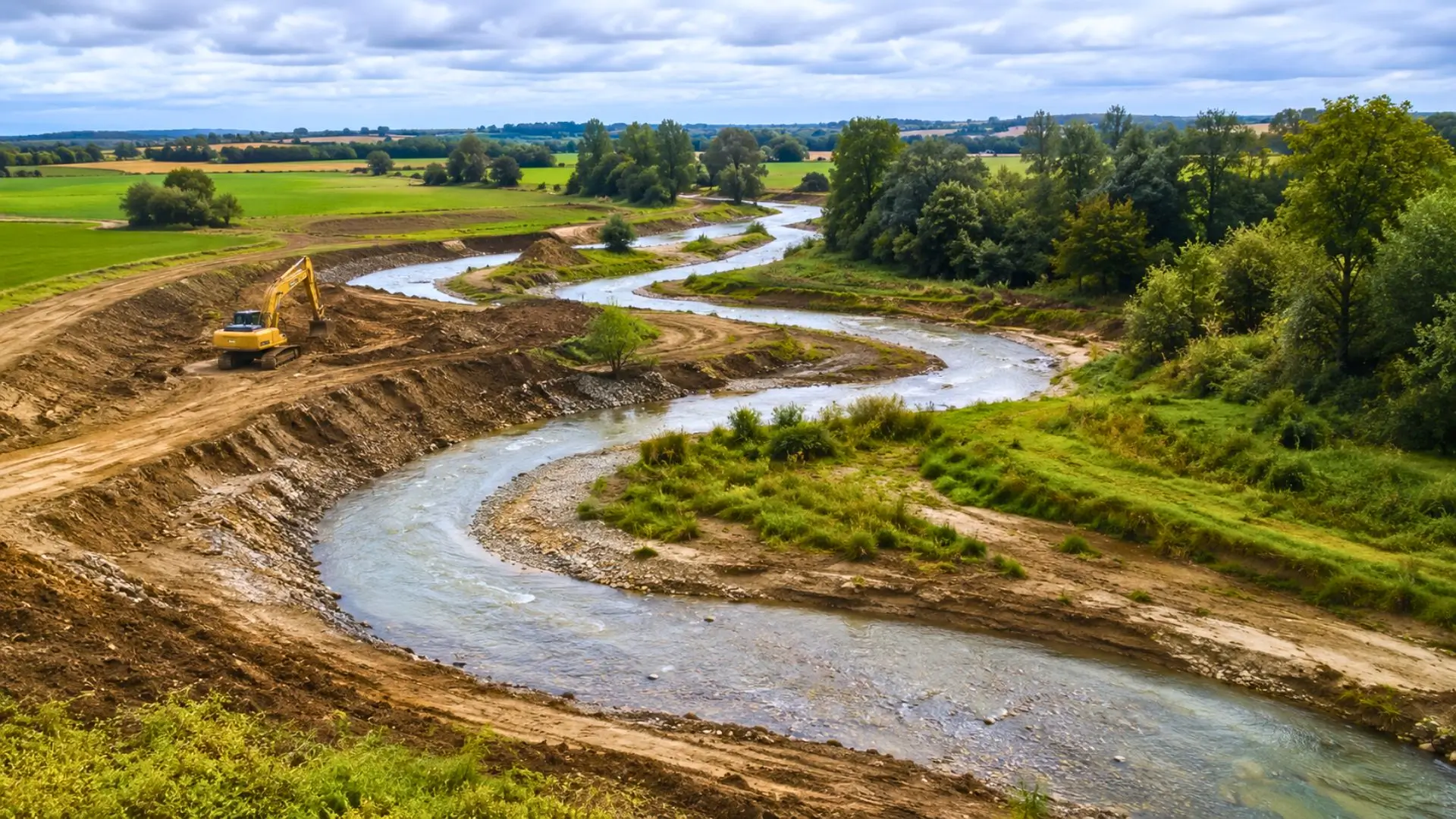
To counteract these trends, modern river restoration techniques aim to artificially recreate the previous meandering paths. However, these restoration projects come at a steep cost, often exceeding one million euros per kilometer of river restored.
Water agencies cover a significant portion of these expenses, which heavily impact local budgets. For instance, restoration efforts on the Veyle in Biziat required between 600,000 and 700,000 euros per kilometer, encompassing preliminary studies and land acquisition.
The national water plan has amplified funding through the Green Fund. In 2024 alone, the total approved interventions surpassed one billion euros, reflecting the vast financial commitment to rebuild what previous decades had destroyed.
Local benefits amid ongoing scientific debates about overall effectiveness
Successful interventions showcase notable local effectiveness. On the Vistre River in Occitanie, the return of meandering flows has facilitated the reappearance of adapted aquatic species. Additionally, recreated wetlands absorb significant volumes of floodwater, providing effective protection for nearby homes against flooding.
However, a scientific analysis of 7,000 restoration projects casts some doubt on these successes, assigning a generally low effectiveness rating. Simply modifying a riverbed is insufficient if agricultural pollutants or wastewater discharges persist upstream from the restored areas.
A national initiative to restore ecological balance by 2030
France has set ambitious goals for ecological transition, planning to rehabilitate 50,000 kilometers of rivers by 2030. This initiative also includes upgrading 5,000 critical physical barriers or hydraulic structures that hinder water flow.
The architects of these projects do not blame past engineers who acted in line with food sovereignty needs of their time. Instead, they acknowledge that repairing ecosystems now requires a holistic approach involving all stakeholders in the area.
Successful case studies illustrate that technology alone cannot rescue a river. Specialists must approach restoration on a watershed scale, creating an environment that allows nature to regenerate itself.