At an altitude of 2,300 meters, the Alps portray a stunning natural landscape. However, in certain alpine pastures, a troubling trend is emerging: water shortages are forcing shepherds to reduce their flocks. Could this subtle shift tell us more about the climate than any thermometer?
Water scarcity disrupts routine practices
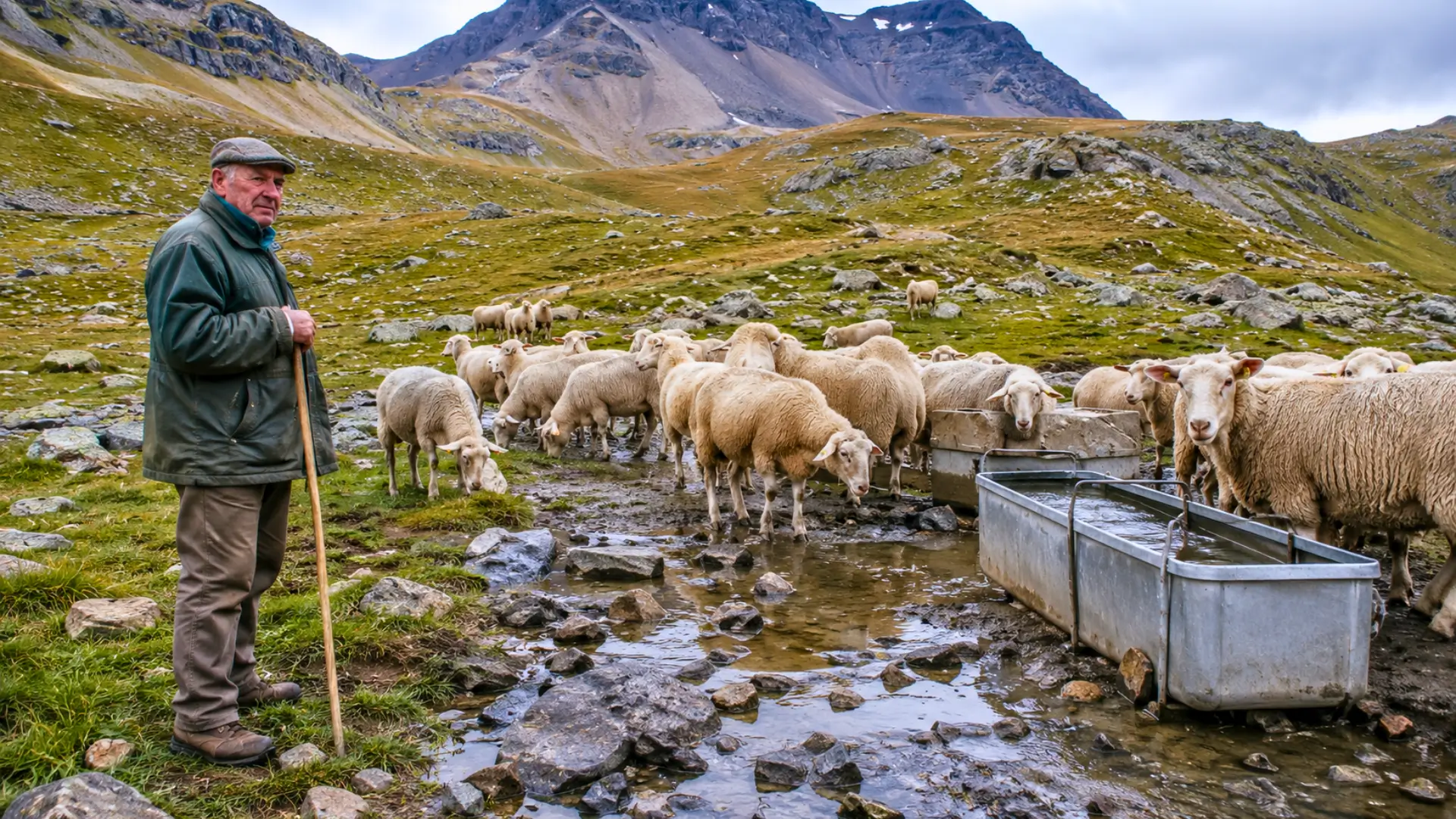
In the Clarée Valley, the scene initially looks idyllic. Dark mountain ridges, the sound of bells, and a shepherd closing an enclosure at the mountainside create a picturesque pastoral scene. Yet, beneath this surface tranquility lies a crucial issue: water distribution is no longer reliable, challenging established flock management practices.
For years, sheep quenched their thirst directly from the streams. Now, this simple act has become a significant challenge. As water flow diminishes, the first animals disturb the mud while the later arrivals are left with murky water. Makeshift troughs, installed to capture dwindling water supply, starkly highlight the altitude’s transition into an era of adjustment.
A lack of water impacts grasslands and shepherding balance
In the Southern Alps, the most striking issue isn’t merely the outright absence of water but its unpredictable availability. A warmer spring, uneven rainfall, or an unanticipated long summer alters the grass’s texture, quantity, and even its nutritional value. Consequently, sheep experience decreased appetites and energy, leading to silent fatigue.
This shift is particularly destabilizing because it undermines traditional knowledge. An alpine pasture that appears lush one year can turn arid by August the next, disrupting the foundational pastoral calendar and forcing shepherds to make more cautious movements and strategic grazing decisions.
Reducing flock sizes may seem counterintuitive in a field reliant on resilience and continuity. Yet, lowering the number of sheep from 1,750 to 1,450 is far from trivial. This adjustment signifies more than just managing a difficult season; it acknowledges that the land can support less livestock than in the past, a realization that carries significant weight in pastoral communities.
Shepherds adapt their practices since 2003
Following the heatwave of 2003, alpine shepherds began reassessing their practices in the face of harsher challenges. The Sentinel Pastures program, initiated in 2008, was designed to monitor thirty pilot pastures and study how climate change is reshaping practices, grasses, water management, and economic balances.
On the ground, adaptation manifests not as sweeping changes but through a series of small, pragmatic decisions: leaving sheep longer on less appealing but still productive areas, conserving parcels to encourage regrowth, and anticipating critical periods. This meticulous approach is becoming as vital as water itself.
Variations in landscape, exposure, altitude, soil quality, and available reserves mean there are no one-size-fits-all solutions. This complexity is what makes climate change so disconcerting -its effects do not unfold uniformly, yet they demand that shepherds maintain a heightened, almost daily vigilance against increasingly severe and unpredictable variations.
Reducing flocks reshapes landscapes, livelihoods, and the future of the Alps
Seen from the valley, reducing a flock may appear to be merely a technical adjustment. In reality, this decision impacts a much broader spectrum. Alpine pastures maintain landscapes, support local economies, preserve traditional knowledge, and continue a longstanding human presence. Thus, water shortages jeopardize this cultural ecosystem.
This issue transcends the agricultural realm, making visible a climate often relegated to abstract graphs. Here, the manifestations of disruption are embodied in the face of a 72-year-old shepherd, a struggling stream, and a yellowed pasture. These subtle yet tangible events affect food sustainability, landscape integrity, and the mountainous future.
As summers lengthen and precipitation patterns become more erratic, a pressing question arises: if alpine pastures must accommodate fewer animals to survive, what further adjustments will be necessary going forward? Meanwhile, shepherds are already beginning to find answers. It is perhaps in these quiet adaptations that the future of the Alps is most clearly written.