
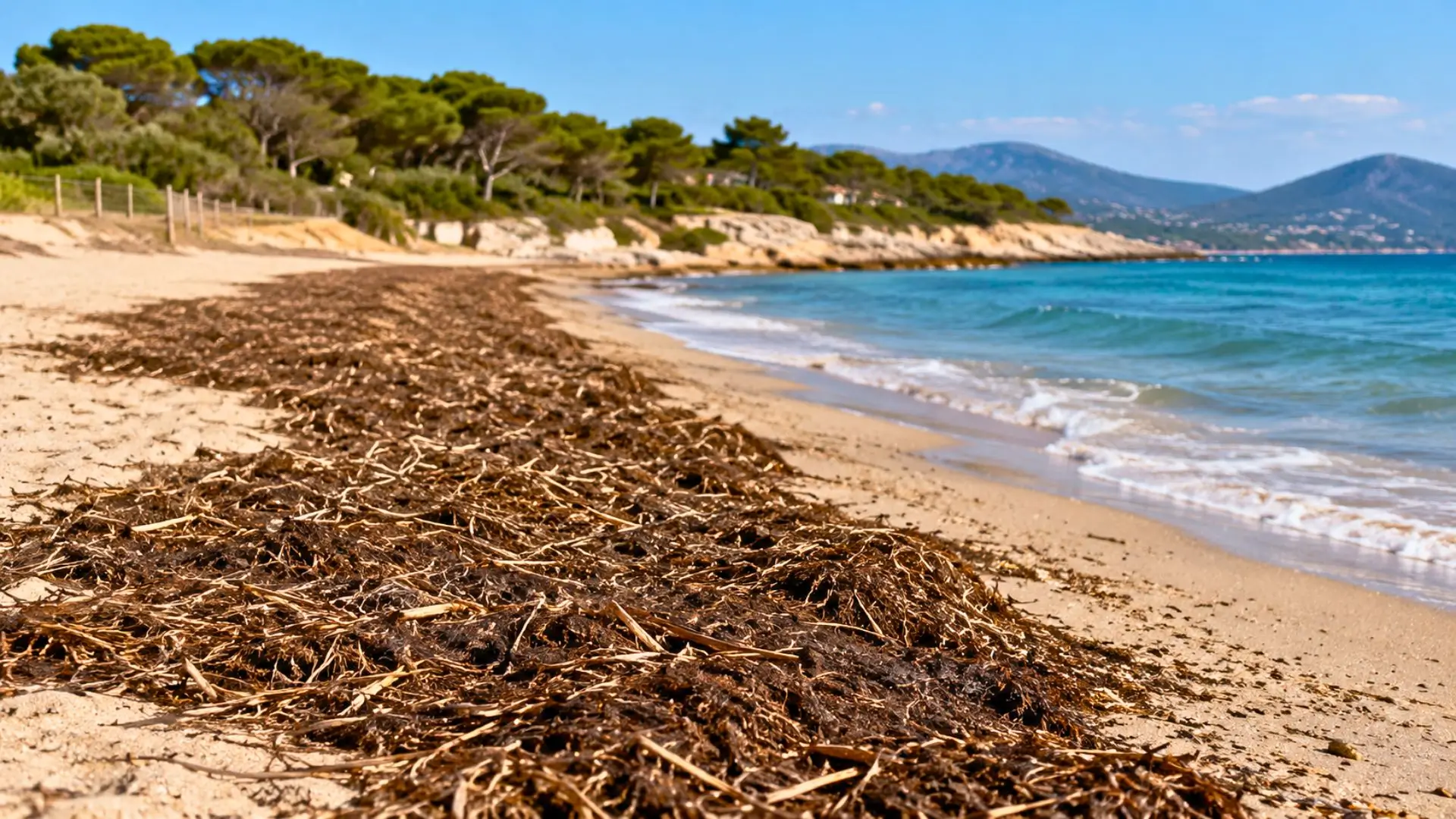
Every year, Mediterranean coastal municipalities clear the brown seagrass littering the sand to attract tourists. However, this extensive cleaning destroys a vital natural barrier, leading to dramatic coastal erosion that scientists are now striving to combat.
Why these brown seaweeds are the best defense for the coast
Posidonia, often mistaken for algae, is a native marine plant that offers significant protection. During autumn, its dead leaves wash ashore, forming thick, dark layers on the beach. Unfortunately, these organic accumulations are frequently cleared away by machinery for aesthetic purposes.
This mechanical intervention greatly disrupts the coastal equilibrium by removing a crucial protective barrier. These plants diminish the impact of winter waves and stabilize sediments. In fact, a single cubic meter of this vegetation can hold between 100 and 300 liters of sand.
Moreover, these ecosystems have the ability to sequester three times more carbon than tropical forests. By eliminating these protective structures, coastal managers leave shores vulnerable to storms, resulting in an irreversible loss of sediment with each passing season.
The illusion of paradise beaches leads to economic and environmental crises
The pursuit of an ideal aesthetic reminiscent of tropical landscapes has led municipalities to bypass a legal ban from 1988. To meet tourist expectations, local governments have opted to alter the natural appearance of their coasts, triggering a destructive vicious cycle.
In an attempt to counteract erosion, towns are spending staggering amounts on artificial beach nourishment. However, this sand is often unstable and quickly washes away, eventually suffocating the seagrass meadows that initially protected the coastline.
The Marseille method redefines coastal management
In response to this urgency, Marseille is adopting a new strategy and testing an innovative method until 2027. This technique involves layering alternating strata of sediments and marine plants, functioning as a natural sponge against repeated wave action.
Initial results from this experiment, particularly on the Prophet Beach, are promising. The area has reclaimed several meters of land in just a few months, securing threatened infrastructure. This success illustrates the efficacy of natural solutions compared to expensive artificial interventions.
Marseille aims to become a model for the entire Mediterranean region. Additionally, a charter encourages mayors to preserve these deposits until May. However, adopting this sustainable coastal management approach remains a minority among elected officials.
An educational challenge to change public perception of beach conditions
The success of this ecological transition heavily relies on a significant cultural shift. Tourists often associate these plant deposits with poor maintenance. Municipalities must communicate that a natural shoreline is essential for long-term sand preservation.
In Var, the town of Lavandou sets an example by employing exclusively manual maintenance. Teams only collect human-made litter without disturbing the ecosystem. This approach proves that visual cleanliness can coexist with biodiversity conservation.



