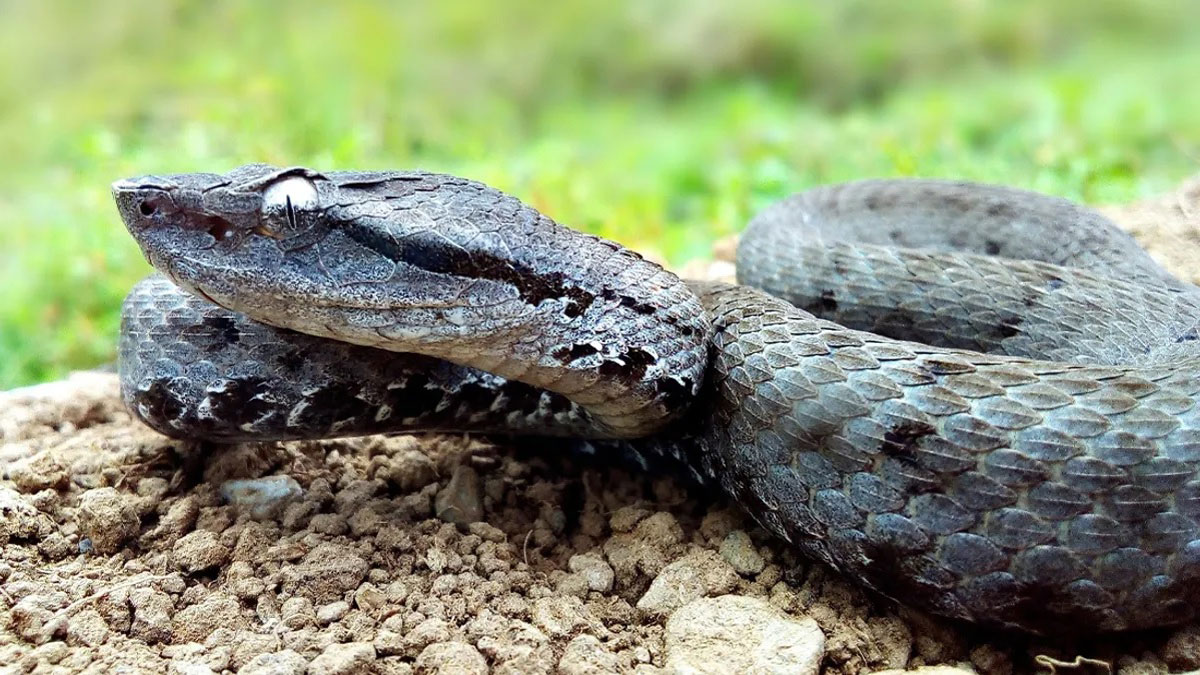
A recent examination of museum specimens and living individuals has unveiled an astonishing discovery about the Himalayan pit viper: rather than just two, there are actually five different species of this venomous snake.
Newly identified species
Distinguishing between species can be a challenging task, especially when physical differences are minimal. In such cases, genetics, geographic distribution, and lifestyle variations can help clarify species boundaries. A team of international researchers recently focused on seven Himalayan pit vipers collected between 2015 and 2023, alongside 11 museum specimens.
The Himalayan pit viper, scientifically categorized under Gloydius himalayanus sensu lato, has been known to science since the late 19th century and is endemic to the Indian Himalayas. These snakes often hide beneath leaf litter, fallen logs, or rocks, and they can sometimes be found near human settlements. Another species, G. chambensis, which was described in 2022, is differentiated by its habitat in the western Himalayas and Kashmir Valley.
The first of the three newly discovered species is the Hazara pit viper (G. hazarensis), which has only been observed in northern Pakistan. Preferring cooler habitats, it occasionally preys on small birds. Found on the eastern slopes of the Hindukush mountains near the Afghan border, G. hindukushensis inhabits much higher altitudes characterized by substantial winter snowfall.
As its name suggests, the Nepal pit viper (G. nepalensis) can be found in high-altitude meadows and scrublands in the western and central parts of Nepal. Depending on local conditions, this species can hibernate for up to seven months, feeding primarily on frogs, lizards, and rodents.

Geographical barriers
The authors of the study, published in the journal ZooKeys, suggest that the rugged terrain and major river valleys surrounding these viper populations have led to their isolation. This geographical separation allowed them to develop unique genetic adaptations and occupy distinct ecological niches.
“The long-held belief that there was only one species of Himalayan viper reflects the remote and wild nature of these environments, as well as the complex political contexts that have hindered fieldwork efforts,” the authors concluded.
In 2024, similar analyses revealed that there are not just one but four species of royal cobra.