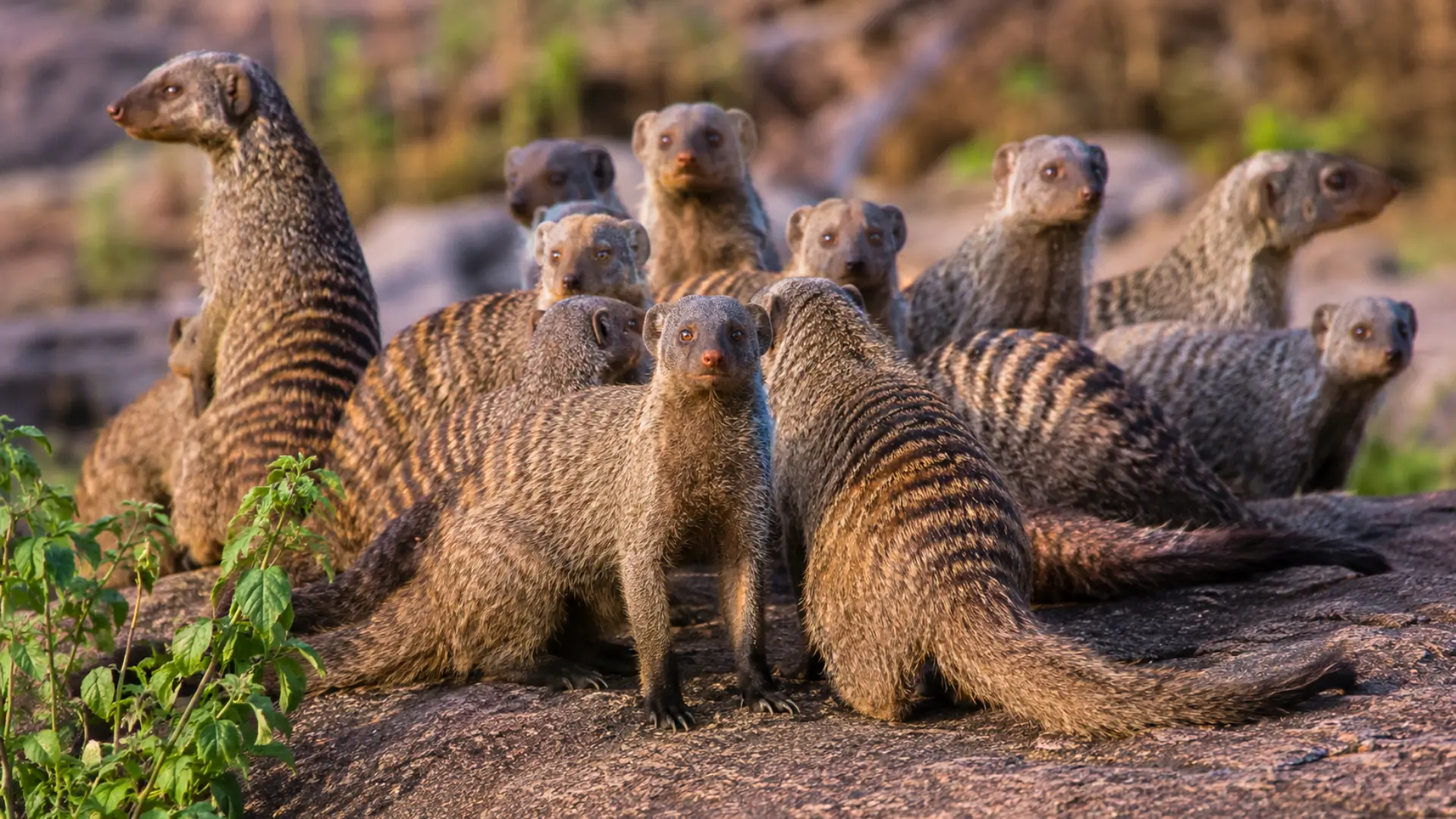
What if the true secret behind animal societies lies not in brute strength, but in the ability of the weaker individuals to limit the dominance of the strong? A theoretical study published in 2026 shows that power dynamics among species, from chimpanzees to guineafowls, are negotiated rather than imposed.
The faltering alpha male myth in the face of field observations
For a long time, the narrative seemed straightforward. In an animal group, one individual appears to dominate while the others acquiesce. This image of the supreme leader has fueled documentaries, fiction, and barroom conversations. It is appealing because it suggests a clear, almost brutally simplistic world where hierarchy flows from the top down without resistance.
However, a new study by Danai Papageorgiou and her colleagues, published in Trends in Ecology & Evolution, disrupts this familiar picture. The researchers introduce the first unified theoretical framework devoted to leveling behaviors, referring to how subordinate individuals curtail the influence of dominants within a group.
The findings are surprising and somewhat counterintuitive. While powerful animals often retain advantages, they do not exert control at all times. According to the team from Humboldt University in Berlin, exerting power in one area can even cost influence in another. The alpha figure is no longer a statue. It represents a contested position, one that is monitored and sometimes weakened.
An anthropological concept reveals the complexity of animal societies
This concept is not emerging from thin air. It is rooted in a well-established intellectual tradition. In the 1990s, anthropologist Christopher Boehm described how certain hunter-gatherer societies prevent excessive concentration of power through criticism, ridicule, disobedience, or exclusion. Now, this framework is systematically applied to the animal kingdom, resulting in striking parallels.
The study is thus compelling. The authors draw comparisons between vastly different species, from chimpanzees and macaques to spotted hyenas and dwarf mongooses, all the way to vulturine guineafowls. Despite their unique social worlds, similar patterns emerge. When one individual monopolizes resources, the others do not always remain passive. Rather, they compensate, sidestep, ally with others, or withdraw.
Coalitions, social boycotts, and group departures reshape power dynamics
In dwarf mongoose groups, counter-power does not manifest through dramatic revolts. Instead, it typically operates subtly. This can involve calculated withdrawal: subordinates may stop grooming, avoid close contact, or refuse social support. To a dominant individual, this may seem trivial. However, it represents a loss of relational capital that erodes the benefits of their status.
In other instances, resistance becomes collective. Many species form coalitions against overbearing individuals, as seen in various primates and hyenas. The goal is not merely to attack but to redistribute power. An isolated animal can be vulnerable, while a coordinated small group can alter the power dynamics significantly.
Lastly, the case of vulturine guineafowls exemplifies this elegantly. When dominant males monopolize a concentrated food resource, the excluded may opt to leave the group. Dominants, however, rely on the collective for survival and movement. By following the others, they abandon their coveted resource.
This discovery sheds new light on social evolution in animals and humans
Researchers are struck by the remarkable overlap between these animal strategies and those observed in small human societies. Withdrawal of support, collective pressure, public dissent, and alliances against abuse do not seem to be exclusively human phenomena. The management of inequality may be a social response far older than anticipated.
Moreover, the study does not merely present anecdotes. It offers a predictive framework based on the costs and benefits of leveling. Subordinates take action when expected gains, such as better access to food or improved group cohesion, outweigh the risks involved. Thus, leveling occurs when the balance tips favorably. Challenging a dominant individual can come at significant physical and social costs.
In this context, future studies hold considerable intrigue. Papageorgiou’s team aims to utilize long-term data, drones, and GPS tracking to observe power dynamics nearly in real time. As resources dwindle, a crucial question arises: what happens when the weakest individuals refuse to endure loss in silence?